April 18, 2026
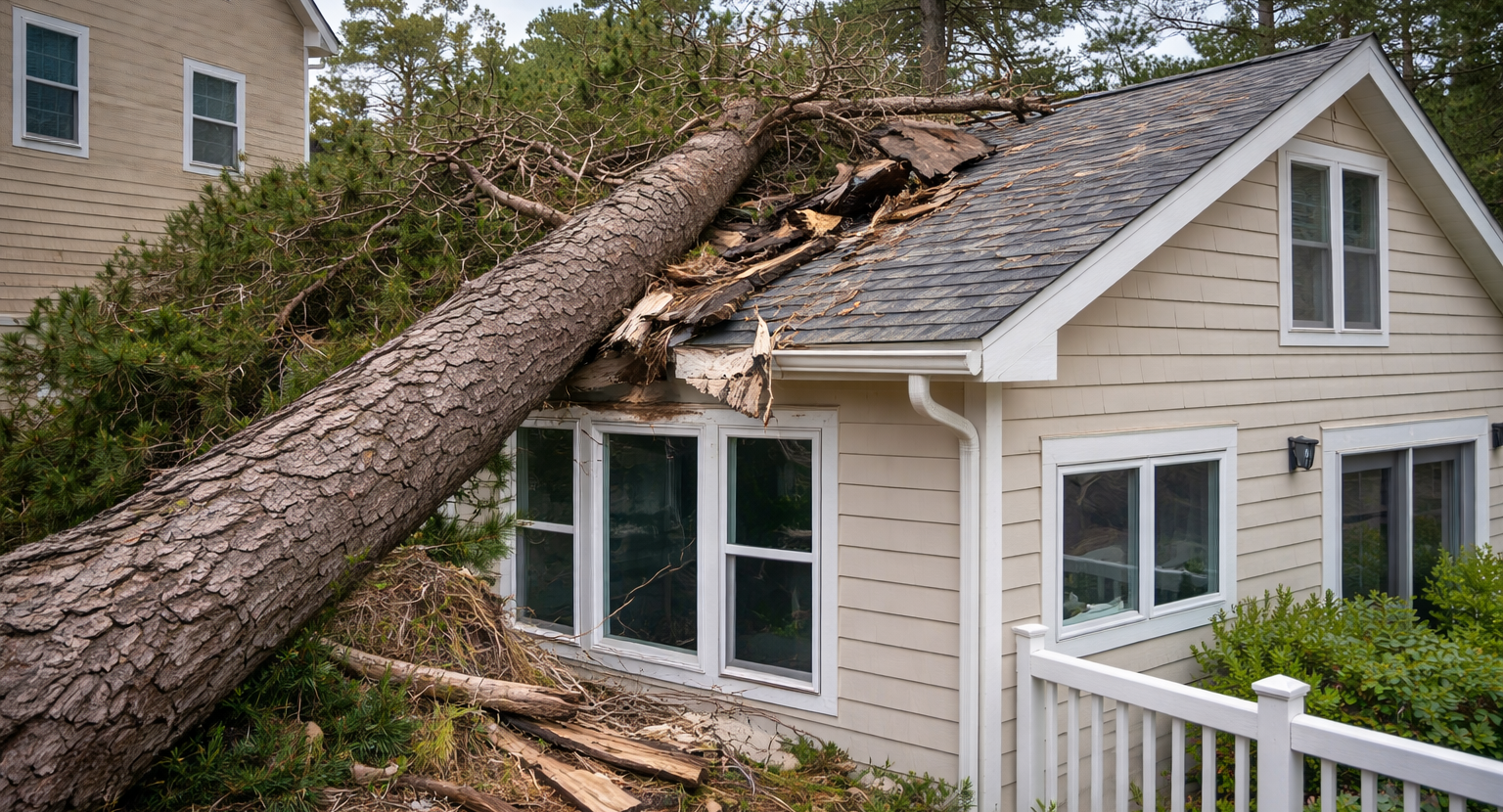
When a tree falls on a neighbor’s property in the Outer Banks, the first question is simple. Who is financially responsible for the damage? In North Carolina, the answer usually depends on one thing. Whether the tree was healthy and failed during a storm, or whether it was already dangerous and ignored. Storm damage alone does not automatically make a tree owner liable. But if a tree showed clear signs of decay, instability, or structural risk before it fell, liability can shift quickly. Understanding how negligence, insurance coverage, and North Carolina common law work together is what ultimately determines who pays after a tree falls in OBX.
Key Takeaways
- In North Carolina, your neighbor’s insurance typically covers damage to their property from your healthy tree if it falls due to an ‘Act of God’ like a hurricane.
- You become liable if your fallen tree was clearly hazardous, and you were negligent in maintaining it after receiving ‘notice’ of its condition.
- Documenting proof of ‘notice’ (e.g., Professional letters, arborist reports) is essential for shifting or proving liability.
- Proactive tree assessment and maintenance by professionals can prevent costly disputes and property damage.
- Always check local Dare or Currituck County ordinances for tree removal permits, as these can impact liability.
Understanding Tree Fall Liability in North Carolina
Understanding who pays when a tree falls on a neighbor’s property in North Carolina starts with its legal framework. As detailed by the NC State Extension, North Carolina follows a ‘Common Law Negligence’ standard regarding tree fall liability. This means a tree owner is generally only liable for damages if they were negligent in maintaining a clearly dangerous tree.
The ‘Act of God’ Doctrine: When Nature Decides
An ‘Act of God’ refers to an unforeseeable natural event, like a severe hurricane or an exceptionally strong windstorm, that causes a healthy tree to fall. In such cases, if your healthy tree falls on a neighbor’s property, your neighbor’s homeowner’s insurance policy is typically responsible for covering the damage to their property. This principle is well-established in North Carolina law, recognizing that no one can prevent truly unpredictable natural disasters. The NC Pro Bono Resource Center’s Disaster Assistance Manual provides further context on how ‘Act of God’ applies in disaster scenarios.
What Qualifies as an ‘Act of God’ in OBX?
In the Outer Banks, the concept of an ‘Act of God’ frequently comes into play due to the region’s susceptibility to hurricanes and severe coastal storms. While strong winds are common, an ‘Act of God’ typically refers to events beyond normal, foreseeable weather patterns. For example, a Category 3 hurricane, as defined by Dare County Government Emergency Management, might be considered an ‘Act of God’ if it causes a healthy tree to fall. However, a weak branch from a visibly rotting tree falling in a moderate storm might not.
Negligence: When Tree Owners Become Liable
While ‘Act of God’ protects homeowners from liability for healthy trees, negligence can shift that responsibility entirely. Negligence occurs when a property owner fails to exercise ‘reasonable care’ in maintaining their trees, leading to foreseeable damage. If a tree was clearly diseased, dead, structurally unsound, or leaning precariously, and the owner knew or should have known about its hazardous condition but did nothing, they could be held liable for damages.
- Visible Decay or Disease: Large cavities, extensive fungal growth, or significant dead branches are clear indicators.
- Structural Instability: A pronounced lean, cracks in the trunk or major limbs, or exposed roots suggest instability.
- Previous Damage Ignored: A tree that was damaged in an earlier storm but never properly assessed or pruned.
- Lack of Maintenance: Years of neglect, leading to overgrown, weak, or crossing branches.
Proving Negligence: The ‘Notice’ Requirement
Proving negligence often hinges on demonstrating that the tree owner had ‘notice’ of the tree’s dangerous condition. This ‘notice’ can be actual (e.g., a Professional letter from a neighbor, an arborist’s report) or constructive (e.g., the danger was so obvious that any reasonable person would have noticed it). Without proof of notice, it’s challenging to establish negligence. Documenting everything is key.
- Professional Letters: Send a Professional letter to your neighbor detailing concerns about a specific tree, requesting they address it. Keep a copy and the receipt.
- Arborist Reports: Obtain an official report from a Professional arborist documenting the tree’s hazardous condition and recommended actions. Share this report with the tree owner.
- Dated Photographs or Videos: Take clear, dated photos or videos showing the tree’s condition, such as significant decay, large cracks, or a severe lean. These can serve as visual proof of a long-standing issue.
- Witness Testimony: If others in the community were aware of the tree’s danger, their testimony could support a claim of constructive notice.
Navigating Insurance Claims for Tree Damage
Understanding how insurance claims work is vital for any homeowner in the Outer Banks. Your homeowner’s insurance policy is designed to protect your property. When a tree falls, regardless of its origin, the insurance policy covering the damaged property is typically the primary payer. This means if your neighbor’s tree falls on your house, your insurance company will likely handle the claim.
Homeowner’s Insurance vs. Neighbor’s Insurance
The general rule of thumb in North Carolina is that your homeowner’s insurance covers damage to your property, and your neighbor’s insurance covers damage to their property. This holds even if the tree originated from your land, provided it was a healthy tree, and the cause was an ‘Act of God.’ However, if negligence is proven, the negligent party’s liability insurance would come into play. This table clarifies common scenarios:
| Scenario | Who Pays (Generally) | Key Factor |
|---|---|---|
| Healthy tree, Act of God, your property damaged | Your insurance | Unforeseeable event |
| Healthy tree, Act of God, neighbor’s property damaged | Neighbor’s insurance | Unforeseeable event |
| Negligent tree, your property was damaged | Your insurance | Your negligence (or shared) |
| Negligent tree, neighbor’s property damaged | Neighbor’s insurance (then subrogates to you) | Your negligence (foreseeable risk) |
Preventative Tree Care: Protecting Your Property and Relationships
Preventative tree care is your strongest defense against liability claims and costly property damage. Regular inspection, proper pruning, and timely removal of hazardous trees can save you significant stress and expense. The NC Department of Agriculture & Consumer Services Forest Service offers valuable resources on assessing tree health and storm preparedness.
- Regular Inspections: Have your trees, especially large or aging ones, inspected annually by a Professional arborist.
- Professional Pruning: Proper pruning removes dead or weak branches, improves tree structure, and reduces the risk of limb failure.
- Hazardous Tree Removal: Don’t hesitate to remove trees that are clearly dead, severely diseased, or structurally compromised. The cost of removal is far less than potential property damage or legal fees.
- Maintain Tree Health: Ensure trees receive adequate water and nutrients to promote strong growth and resilience against storms.
When to Call a Professional Arborist
Identifying a hazardous tree requires an expert eye. A Professional arborist can assess a tree’s health, structural integrity, and potential risks. They can recommend appropriate actions, whether it’s pruning, cabling, or complete removal. Investing in a professional assessment is a proactive step that demonstrates reasonable care, which is vital if liability ever becomes an issue.
OBX Specifics: Tree Removal Permits and Local Ordinances
Beyond state law, local ordinances in Dare and Currituck Counties can influence tree removal and, by extension, liability. Some municipalities have specific regulations regarding tree removal, especially for large trees, protected species, or trees within certain setbacks or public rights-of-way. Failing to obtain a required permit before removing a tree could result in fines and complicate any future liability claims.
- Size and Species: Many local governments require permits for removing trees exceeding a certain diameter or for specific protected species.
- Zoning and Location: Trees within critical areas, near wetlands, or within specific zoning districts may have additional regulations.
- Public Rights-of-Way: Trees located on or near public property often require municipal approval for any work.
- Historic Trees: Some communities protect trees deemed historically significant, requiring special review before any action. Local professional tree services can help you understand and navigate these local requirements.
Frequently Asked Questions
If my healthy tree falls on my neighbor’s house in a storm, whose insurance pays?
Generally, if your healthy tree falls on your neighbor’s property due to an ‘Act of God’ (like a hurricane), your neighbor’s homeowner’s insurance policy is responsible for covering the damage to their property. Your insurance would cover damage to your own property.
When is a tree owner responsible for damage caused by their fallen tree?
You could be held liable if you were negligent in maintaining a tree that was clearly diseased, dead, or unstable, and you knew or should have known about its hazardous condition. Failing to address a visible danger can shift the financial responsibility to you.
What does ‘documenting notice’ mean, and why is it important?
Documenting ‘notice’ means proving you informed your neighbor about a dangerous tree on their property. This can include Professional letters, emails, photos with timestamps, or even an arborist’s report sent to them. This evidence is critical in negligence claims.
Can I force my neighbor to trim their tree that hangs over my property?
In most cases, no. Your neighbor isn’t legally obligated to trim a tree on their property simply because it overhangs your yard. However, you are generally allowed to trim branches that extend over your property line, as long as it doesn’t harm the tree.
What if I don’t have homeowner’s insurance and my tree falls on a neighbor’s property?
Consult with your insurance agent immediately to understand your coverage. If you don’t have insurance, you may be personally responsible for the costs of repair, especially if negligence can be proven against you. Legal counsel might be necessary.
Do I need a permit to remove a tree in the Outer Banks?
Always check with your local Dare or Currituck County planning department before removing large trees. Permits are often required for trees of a certain size, age, or species, especially in coastal areas or if they are near public rights-of-way.
Who pays if a tree falls on a car?
If a tree from your property falls on a car parked on the street or your neighbor’s driveway, your homeowner’s liability coverage typically applies if you were negligent. If it were an ‘Act of God’ and the car belongs to your neighbor, their auto insurance (comprehensive) would usually cover it.
Protecting Your Property and Legal Responsibility
Navigating tree fall liability in the Outer Banks, NC, requires understanding the critical difference between an “Act of God” and negligence. Although insurance generally covers damage to the property where a tree falls, the owner of the fallen tree can become financially responsible if negligence is proven. The best way to protect against unforeseen property damage and liability is through proactive measures: maintaining your trees, keeping detailed records, and consulting trusted professionals such as Albemarle Landscapes and Tree Service. Act now, don’t wait for a storm to assess your trees and safeguard both your home and your neighbor’s property.
Author: Albemarle Landscapes & Tree Service
Albemarle Landscapes & Tree Service is an Outer Banks-based tree care team providing hazardous tree assessment, storm damage response, and coastal tree management across OBX and coastal North Carolina. Content is based on real field experience handling storm-related tree failures, insurance-related removals, and local tree liability situations common in Dare and Currituck County.