April 6, 2026
When severe weather hits North Carolina, from coastal hurricanes to ice storms and mountain wind events, damaged trees quickly become safety hazards. A fallen oak blocking a driveway in Charlotte or a leaning pine over a roof in Wilmington creates urgent removal needs, which leads many homeowners to ask if emergency tree service costs more. In most cases, yes. Higher costs are driven by safety risks, rapid response requirements, specialized equipment, and regulatory compliance. Understanding what qualifies as an emergency, how North Carolina’s price gouging laws protect homeowners, and how insurance can offset costs helps you make informed decisions during storm recovery.
Key Takeaways
- Emergency tree service premiums reflect the 24/7 readiness and specialized risk management required for storm response.
- Emergency tree service pricing in North Carolina varies widely based on hazard severity, tree size, structural risk, and equipment requirements.
- The North Carolina Price Gouging Law provides a critical safety net for homeowners during declared states of emergency.
- Insurance coverage is contingent upon the tree damaging a structure or blocking access, rather than just falling in an open yard.
- Strict adherence to NCDOL arboriculture safety standards by professionals is what drives the overhead but ensures homeowner safety.
- Immediate documentation and photography are essential for successful insurance reimbursement in NC.
Defining Emergency Tree Service in the NC Context
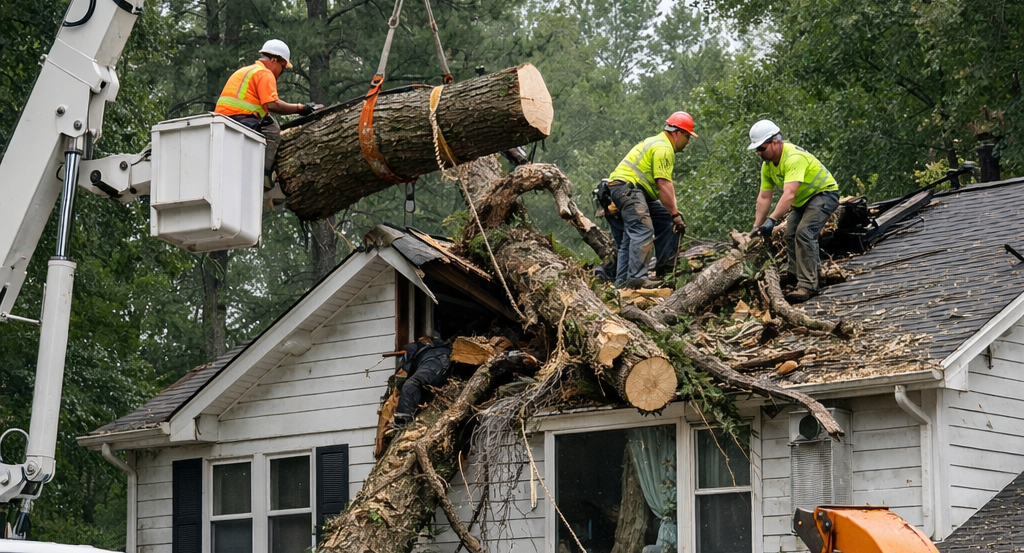
In North Carolina, the term ’emergency tree service’ is often used interchangeably with storm cleanup, but they are not the same. An emergency exists when a tree poses an immediate threat to life, property, or essential utilities. This includes trees that have already fallen onto a house, trees with cracked trunks leaning toward a driveway, or branches entangled with power lines. Routine maintenance, such as pruning or removal of a dead but stable tree, does not qualify for emergency rates. The North Carolina landscape, characterized by diverse species like the Southern Live Oak and various Pine varieties, presents unique challenges during high-wind events. Because these trees can weigh several tons, an emergency response focuses on stabilization, stopping the tree from causing further structural damage before proceeding with complete removal.
- Trees resting on residential or commercial structures.
- Trees blocking primary entrance or exit routes (driveways and roads).
- Hazardous leaning trees with visible root plate upheaval.
- Trees in direct contact with utility lines (requires coordination with Duke Energy or local co-ops).
The Economics of Emergency Response
The increased cost of emergency tree service is a direct reflection of the logistics required to operate in a crisis. When a hurricane or ice storm hits, the demand for tree services spikes exponentially, often exceeding the local labor supply. This creates a high-pressure environment where companies must prioritize resources.
Immediate Mobilization and Overtime Labor
To provide 24/7 coverage, companies must maintain staff on-call, often paying standby wages. When an emergency call comes in during overnight or off-hour periods, the mobilization typically involves overtime labor, rapid fuel use for emergency transit, and the operational impact of shifting scheduled jobs. This immediate availability is a primary driver of emergency response fees, which vary based on response timing, crew availability, storm demand, and hazard severity.
Specialized Machinery and Technical Skill
Emergency removals are rarely straightforward. They often require heavy machinery like 40-ton cranes to lift a tree off a roof without causing further collapse. In North Carolina, the soft soil after heavy rains makes using this equipment even more difficult, often requiring the use of specialized ‘ground mats’ to prevent the machinery from sinking or damaging the yard. The rental and operation of a crane can add thousands to the final invoice.
Risk Mitigation and NCDOL Compliance
Safety is the most significant overhead cost for legitimate NC tree services. Working in storm conditions such as high winds, heavy rain, or near downed power lines is inherently dangerous. Professional companies must adhere to Arboriculture Safety Standards as mandated by the North Carolina Department of Labor. This includes specific training for ‘line-clearance’ and the use of Personal Protective Equipment (PPE). The risk level necessitates higher Workers’ Compensation premiums, which are passed through to the consumer via the service price.
Navigating Insurance Claims in North Carolina
For many North Carolinians, the high cost of emergency tree removal is partially or fully offset by homeowners insurance. However, insurance companies are specific about what they will and will not cover. Understanding these nuances can prevent an unexpected $5,000 bill.
The ‘Structure or Access’ Rule
Standard NC policies generally cover tree removal if a tree falls due to a ‘covered peril’ (wind, ice, lightning) and hits a ‘covered structure.’ This includes your home, a detached garage, or a shed. Furthermore, if a fallen tree blocks your primary driveway, preventing you from entering or leaving your property, most insurers will pay for its removal even if no structure was hit. Conversely, if a tree falls in the middle of your backyard and hits nothing, insurance typically offers zero coverage for the removal.
Neighbor’s Tree Liability
In a storm, your neighbor’s tree might fall on your house. In North Carolina, this is generally handled by your insurance policy, regardless of who owned the tree. This is often referred to as an ‘Act of God.’ The only exception is if you can prove the neighbor was negligent (e.g., they ignored written warnings from an arborist that the tree was dead and hazardous).
Maximizing Your Claim Payout
To ensure your claim is approved, follow these steps immediately after the storm:
- Take 360-degree photos of the damage.
- Do not move the tree until the insurance adjuster gives the okay, unless it is an immediate safety hazard.
- Request an itemized invoice that separates the cost of ‘debris removal’ from ‘structural repair.’
- Keep a log of all communications with your tree service provider and insurance agent.
- Verify your deductible before authorizing work.
- Ask the tree service for a ‘Certificate of Insurance’ (COI).
- Ensure the invoice specifies that the tree was a ‘hazard’ or ‘blocking access’.
State Laws and Consumer Rights
North Carolina has robust consumer protection laws designed to prevent residents from being victimized twice once by the storm and once by unscrupulous contractors.
Price Gouging Protections
Emergency tree service is typically more expensive than routine tree care because it often involves hazardous conditions, urgent scheduling, and specialized equipment. Costs depend on tree size, location, access conditions, and overall safety risk. The most accurate pricing is provided after an on-site inspection, so the scope of work and safety requirements can be properly evaluated.
The Danger of ‘Storm Chasers’
After a major storm, ‘storm chasers’ from out of state often flock to North Carolina. These operators often lack NC-specific workers’ compensation or general liability insurance. If an uninsured worker is injured on your property, you could be held liable for their medical expenses. The NC State Extension recommends hiring local professionals who have an established physical presence in the community and verifiable credentials.
Credential Verification
The NC Department of Agriculture advises homeowners to check if the service provider employs International Society of Arboriculture (ISA) Certified Arborists. These professionals are trained in the physics of tree failure and the safest methods for removing weight from a damaged structure. In an emergency, their expertise prevents further damage to your roof or foundation.
Preventive Maintenance: Reducing Future Costs
While emergency services are essential when a tree has already fallen, the best way to control long term tree care expenses is through preventative maintenance. North Carolina homeowners should conduct an annual hazard assessment with a professional arborist before hurricane season begins on June 1. Removing dead wood, thinning crowns to reduce wind resistance, and identifying root rot early can help prevent major emergency tree removal situations later.
Regular pruning and structural maintenance are significantly less disruptive than emergency storm response work. Keeping records of professional tree maintenance can also help during insurance disputes, helping demonstrate that the property owner was not negligent in maintaining trees on the property.
- Schedule an arborist inspection every spring.
- Identify and remove ‘widow-makers’ (loose hanging branches).
- Monitor trees for signs of Boring Beetles or fungal growth at the base.
- Check for soil erosion around the root zone after heavy rains.
Frequently Asked Questions
Does emergency tree service always cost more than regular tree removal?
Yes, emergency tree service typically costs more in North Carolina because it requires immediate mobilization, after-hours labor, and specialized heavy equipment to mitigate urgent hazards.
What is the average cost for emergency tree removal in North Carolina?
Emergency tree removal pricing in North Carolina is determined by hazard severity, storm impact conditions, structural risk to nearby property, and the technical equipment required to safely remove the tree. Situations involving structural contact, limited access, or utility line coordination typically require more specialized removal planning.
Will my homeowners’ insurance cover emergency tree service costs?
Homeowners insurance often covers the cost if a tree falls due to a covered peril like wind or ice and damages an insured structure, blocks a driveway, or falls on a neighbor’s property.
How can I find a reliable emergency tree service provider in NC?
Look for providers with comprehensive liability and workers’ compensation insurance, positive local references, and transparent pricing. Avoid contractors who demand large cash deposits upfront.
How does North Carolina’s Price Gouging Law protect me?
During a declared state of emergency, this law prohibits businesses from charging excessive prices for essential services. This protects residents from predatory pricing during disaster recovery.
Emergency Tree Service in North Carolina. Protecting Safety and Property Value
Emergency tree service in North Carolina is a necessary investment for protecting property and structural safety after storms. Costs are higher than routine maintenance due to emergency response, specialized equipment, and high-risk working conditions.
Understanding insurance coverage, deductibles, and North Carolina price gouging protections helps reduce financial stress during emergencies. Always verify licensing, insurance, and safety compliance before hiring. Choosing a trusted local provider like Albemarle Landscapes and Tree Service helps ensure emergency tree work is completed safely, legally, and to professional industry standards.