August 19, 2026
Key Takeaways
- Overgrown shrubs fall into three categories, needing a trim, a hard renovation cut, or full removal, and treating the wrong one the wrong way wastes time and money.
- Salt spray, wind exposure, and sandy soil on the Outer Banks change how shrubs grow and how they respond to pruning compared to inland landscapes.
- A shrub that has outgrown its space isn’t automatically a lost cause; many species tolerate hard renovation pruning and rebound within a season or two.
- Shrubs blocking windows, walkways, or sightlines near a driveway create both a maintenance headache and a safety concern.
- Some overgrown, declining, or structurally compromised shrubs are better removed and replaced than repeatedly cut back.
- A professional assessment before cutting anything back saves homeowners from an unintentionally bare, patchy, or dead-looking yard.
Shrubs on the Outer Banks often grow faster and more aggressively than homeowners expect, particularly species selected for their salt tolerance and hardiness in sandy soil. Wax myrtle, yaupon holly, and many ornamental grasses and junipers common in OBX landscaping can put on significant growth in a single season, especially with the warm, humid summers typical of Dare and Currituck Counties.
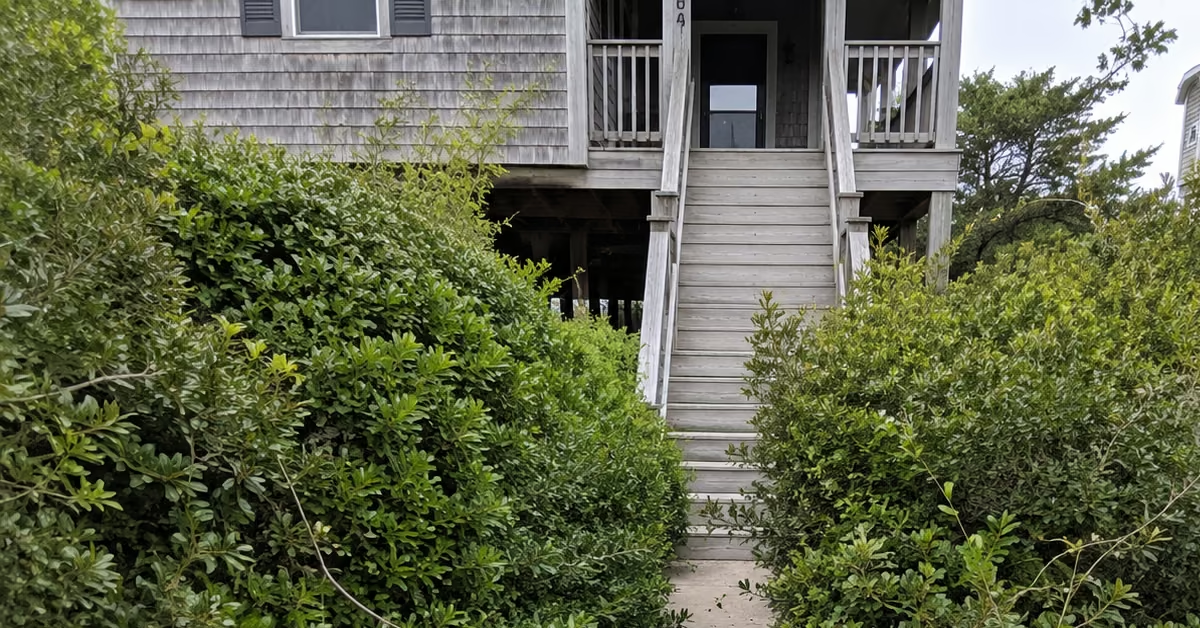
The result is a landscape that can look tidy in spring and completely overtaken by late summer. Shrubs planted a comfortable distance from a walkway or window five years ago may now be brushing against siding, blocking a porch light, or narrowing a path to the point where guests have to turn sideways to get through. The question most homeowners have at that point is simple: does this need a trim, a serious cutback, or does it need to come out entirely?
Seasonal rental properties add another layer to this equation on the Outer Banks. A shrub bed that looked appropriately scaled when a home was last landscaped several seasons ago can grow well past its intended size by the time it’s noticed between guest turnovers, since property managers and owners who don’t live on site year-round may simply not see the gradual change the way a full-time resident would.
When a Trim Is Enough
A routine trim is the right call when a shrub’s overall size and shape are still reasonable, but growth has gotten shaggy, uneven, or slightly out of bounds. This is maintenance pruning: removing the outer layer of new growth to restore a clean line, encourage denser branching, and keep the plant from crowding walkways, windows, or neighboring plants.
Shrubs that respond well to regular trimming are usually ones that have not been neglected for multiple seasons. If a once- or twice-a-year trim keeps a shrub in check and it still has healthy growth throughout, rather than just on the outer surface, a trim is typically all that’s needed. This is the least invasive option, and it’s worth doing consistently before a shrub crosses into more serious overgrowth.
When Renovation Pruning Makes More Sense
Renovation pruning, sometimes called hard pruning or rejuvenation pruning, is a more aggressive cutback used when a shrub has outgrown its space significantly or has become woody, sparse, and leggy at its base after years of only being trimmed on the surface. This approach cuts the shrub back hard, sometimes to within a foot or two of the ground, to force new growth from lower on the plant.
Not every species tolerates this well, which is why identifying the shrub matters before cutting. Many common Outer Banks landscape shrubs, including wax myrtle, yaupon holly, and several viburnum varieties, respond well to renovation pruning and can fill back in within one to two growing seasons. Others are better suited to a more gradual, staged reduction over a couple of years rather than one hard cut, particularly slower-growing or more sensitive species.
When Removal Is the Better Investment
Some shrubs reach a point where trimming or renovation pruning is no longer worth the time or cost. This can happen when the plant has severe dieback, disease, or pest damage. It may also happen when a shrub has outgrown its location and cannot be brought back with regular pruning. In some cases, the plant has so much deadwood that renovation would leave very little healthy growth.
In these situations, removal followed by replacement with a better-suited species is usually the more cost-effective path. It avoids years of repeated hard pruning on a plant that will never really thrive in its current spot, and it gives homeowners the chance to choose something that fits the space and the coastal conditions from the start.
Safety and Sightline Considerations
Overgrown shrubs are not just a cosmetic issue.
- Shrubs that have grown to block a driveway sightline create a real visibility hazard when backing out onto a street, particularly on narrower OBX roads with limited shoulder space.
- Shrubs pressed against a home’s siding can trap moisture against the exterior, contributing to mold or wood rot issues over time in the area’s humid climate.
- Overgrown shrubs near walkways or entryways can also become a tripping or scratching hazard, especially for guests unfamiliar with the property.
Addressing these situations promptly, whether through trimming, renovation, or removal, is as much about safety and property protection as it is about appearance. For rental properties specifically, overgrown landscaping near entry points or parking areas can also affect guest impressions and, in some cases, liability if a guest is injured navigating around encroaching shrubs. Property managers we work with often schedule seasonal shrub maintenance specifically around these safety and presentation concerns, rather than waiting until a complaint comes in.
Common Outer Banks Shrubs and How They Typically Respond
Different shrub species common in OBX landscapes respond differently to overgrowth and pruning, which is part of why a one-size-fits-all approach doesn’t work.
- Wax myrtle, a favorite for its salt tolerance and fast screening ability, grows quickly and generally tolerates hard renovation pruning well, bouncing back within a season.
- Yaupon holly, another Outer Banks staple, is similarly forgiving of aggressive cutbacks and is often used specifically because it can handle repeated hard pruning without long-term decline.
- Ornamental grasses that have overtaken a bed are usually a simpler case: most benefit from being cut back hard, sometimes to just a few inches above ground, on an annual basis regardless of how overgrown they’ve become, since this is part of their normal maintenance cycle rather than a special renovation treatment.
- Broadleaf evergreens like certain viburnum and boxwood varieties tend to respond better to a staged approach, reducing size gradually over two seasons rather than one aggressive cut, since a single hard pruning can sometimes shock these species more than faster-growing natives.
Timing Your Shrub Work Around the OBX Growing Season
When shrub work happens matters almost as much as what kind of work is done.
- Late winter, before new spring growth begins, is generally the best window for renovation pruning, since it gives the plant a full growing season to recover and fill back in before the next winter.
- Pruning too late into summer can stress a shrub during the hottest, most demanding part of the year, right when it should be putting energy into recovery rather than dealing with fresh pruning wounds.
- Routine maintenance trims are more flexible and can generally be done through spring and summer as needed, though we typically recommend avoiding major cutbacks in late fall, since new growth stimulated too close to the first frost can be more vulnerable to cold damage.
- Flowering shrubs add another layer of timing consideration, since pruning at the wrong point in their bloom cycle can remove the current or following season’s flowers even when the cut itself doesn’t harm the plant’s health.
When shrubs become too large, it can be hard to know whether they need a simple trim, a hard cutback, or complete removal. Cutting them back too much can leave them bare or damage healthy growth. Leaving them alone can cause problems with walkways, windows, driveways, and your home’s exterior.
Albemarle Landscapes and Tree Service assesses shrubs and recommends the right solution, from trimming and renovation pruning to removal. We consider each plant’s species, health, location, and growing conditions, including the effects of coastal wind, salt, and sandy soil. Our team helps Outer Banks homeowners restore cleaner, healthier, and safer landscapes.
Frequently Asked Questions About Overgrown Shrubs on the Outer Banks, North Carolina
How do I know if my shrub can handle a hard renovation cut?
It depends on the species and its current health. Many OBX-hardy shrubs like wax myrtle and yaupon holly tolerate hard pruning well, while others need a more gradual approach. Our team identifies the shrub and assesses its condition before recommending a method.
Will renovation pruning leave my yard looking bare?
Temporarily, yes. A hard-pruned shrub will look sparse for a period before new growth fills in, typically within one to two growing seasons for species suited to this method. We can talk through timing of appearance during a specific season, like before a holiday or event, is a concern.
What’s the best time of year to trim or renovate shrubs on the Outer Banks?
Timing depends on the species, but late winter to early spring, before new growth begins, is generally the safest window for hard renovation pruning. Routine maintenance trims can typically be done more flexibly throughout the growing season.
Is it cheaper to keep trimming an overgrown shrub or to remove and replace it?
For a shrub in reasonable health that’s simply outgrown its space, renovation pruning is usually the more economical choice. For a declining, diseased, or poorly sited shrub, repeated pruning often costs more over time than removal and replacement with a better-suited plant.
Can overgrown shrubs damage my home?
Shrubs pressed tightly against siding can trap moisture and contribute to rot or mold over time, especially in the Outer Banks’ humid climate. Keeping a clear gap between plantings and exterior walls helps protect the home.
Summary Checklist: Trim, Renovate, or Remove?
| Factor | Why It Matters | Priority |
| Overall shrub health and density | Determines whether the plant will respond well to pruning | High |
| Species tolerance for hard pruning | Not every shrub rebounds well from renovation cuts | High |
| Extent of dieback, disease, or pest damage | Signals when removal is more practical than pruning | High |
| Sightline and safety impact | Overgrowth near driveways and walkways is a hazard, not just cosmetic | High |
| Proximity to siding or structures | Trapped moisture from overgrowth can contribute to home damage | Moderate |
| Long-term cost of repeated pruning vs. replacement | Removal can be more economical for poorly sited or declining shrubs | Moderate |
Final Advice
Overgrown shrubs are one of the most common landscape issues we see across the Outer Banks, and the right fix depends entirely on the specific shrub, its health, and how it’s being used in the landscape. A quick trim is often enough for shrubs that just need tidying up, renovation pruning can bring back shrubs that have outgrown their space but are still healthy underneath, and removal is sometimes the smarter long-term investment for shrubs that are declining or poorly placed.
If you’re staring at a shrub bed that has clearly gotten away from you and aren’t sure where to start, resist the urge to grab a hedge trimmer and hope for the best. An initial assessment costs far less than undoing a poorly timed or overly aggressive cut on a shrub that could have been saved with the right approach, or conversely, spending years maintaining a plant that was never going to thrive in its current spot.
Albemarle Landscapes and Tree Service has helped homeowners throughout Kitty Hawk, Corolla, Kill Devil Hills, Nags Head, Manteo, and the surrounding Outer Banks bring overgrown landscapes back under control since we opened our doors. Our team is ready to assess your shrubs and recommend the right approach.