October 7, 2026
Salt spray damages trees in the Outer Banks (OBX) by drying out leaves, burning tissue, and stunting growth. Over time, repeated exposure weakens the whole tree. Branches die back, and the canopy thins. On the Outer Banks, constant ocean wind carries salt far inland. Many trees show the damage slowly. Early detection helps you act in time. Proper care can extend a tree’s life.
What Is Salt Spray?
Salt spray is a fine mist of seawater. Wind and breaking waves lift it into the air. It travels well beyond the beach. On the Outer Banks, the ocean sits close on one side. The sound sits close on the other. Salt reaches trees from both directions. Storms push it even farther. The mist lands on leaves, needles, buds, and bark. It dries and leaves salt crystals behind. Those crystals pull moisture out of plant tissue.
How Salt Spray Harms Trees
Salt harms trees in several ways.
- Leaf burn: Salt draws water out of leaf cells. Edges and tips turn brown and crispy.
- Bud damage: Salt kills tender buds on the windward side. New growth fails to appear.
- Water stress: Salt in the soil makes it harder for roots to absorb water. Trees act drought-stressed even when soil is wet.
- Nutrient imbalance: Excess sodium blocks other nutrients. Trees may show yellowing.
- Early leaf drop: Stressed trees shed leaves too soon. That cuts food production.
Each event alone may seem minor. Together, they add up.
Why Damage Builds Over Years
Salt damage is typically a slow process. A single exposure to salt spray will rarely kill a mature tree, as the real harm stems from repeated, chronic stress. Each season, the tree is forced to expend valuable energy replacing burned foliage. That energy would normally be used for healthy root development and overall canopy growth. As these vital energy reserves slowly deplete, the tree becomes progressively weaker.
Unfortunately, weakened trees become easy targets for secondary threats. Harmful pests and diseases, such as pine bark beetles and root rot fungi, actively seek out stressed trees and can quickly turn a manageable environmental issue into a severe structural decline. Furthermore, a coastal storm surge can rapidly accelerate this timeline. Heavy flooding drives high concentrations of salt deep into the soil, forcing the root system to absorb far more salt than it can safely process. The visible consequences of this toxic root exposure may not even appear until weeks or months after the floodwaters have receded.
Signs of Salt Damage to Watch For
Look closely at your trees. These signs often show up first.
- Brown or scorched leaf tips and edges
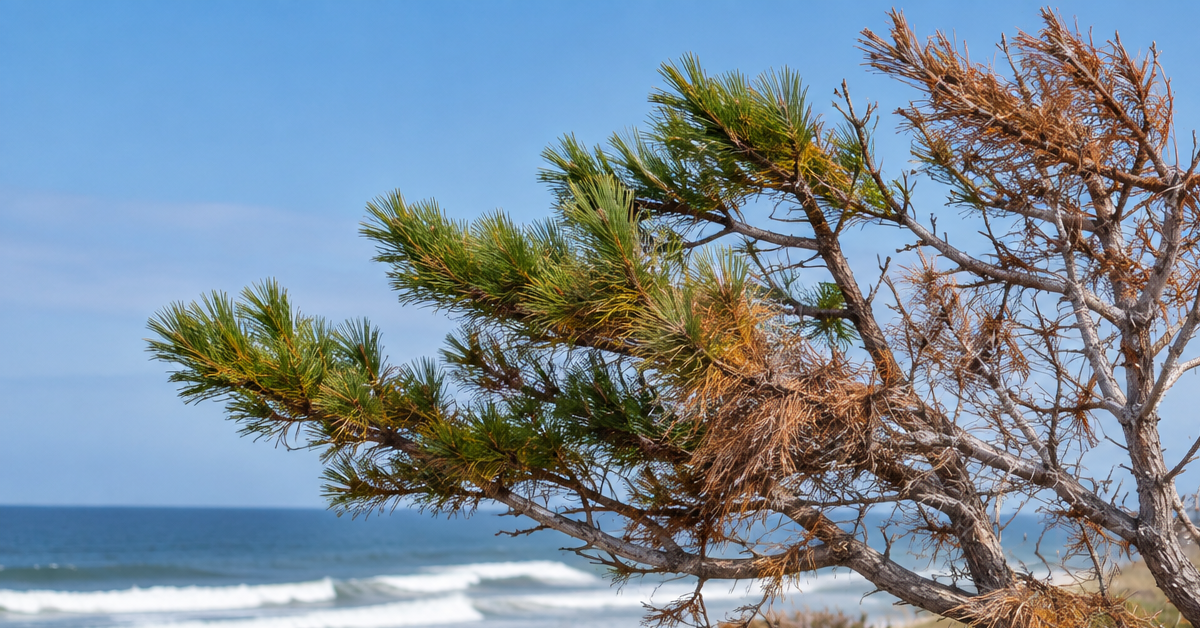
- Needles that turn yellow or brown from the tips inward
- Dead twigs and branch tips on the ocean-facing side
- A thin canopy with small leaves
- A one-sided, wind-swept shape
- White salt residue on bark or leaves
- Slow or stunted growth year after year
Some wind shaping is natural. Trees on the coast often lean away from the sea. But steady decline is a warning sign.
Which Trees Handle Salt Best?
Species matter. Some trees tolerate salt well. Others suffer.
- Better trees that handle salt well in the Outer Banks include – live oak, yaupon holly, wax myrtle, and eastern red cedar. These evolved with coastal conditions. They are tough and wind-firm.
- Less tolerant trees include – many maples, dogwoods, and some pines. Loblolly pines often show salt burn after storms. Pick the right tree for the right place. Planting salt-tolerant species saves money and trouble.
How to Reduce Salt Damage
You cannot stop the wind. You can help your trees cope.
- Rinse foliage. After storms or heavy salt events, rinse leaves with fresh water. Do this soon after exposure.
- Water deeply. Deep watering flushes salt from the root zone. Water slowly during dry spells.
Mulch. A layer of mulch holds moisture. Keep it away from the trunk.
- Avoid over-fertilizing. Fertilizer adds salts. Feed only when a soil test shows a need.
- Improve drainage. Standing saltwater harms roots. Good drainage helps salt wash through.
- Use windbreaks. Tolerant shrubs and trees can shield more delicate plants.
Soil Salt and Storm Surge
Salt does not only land on leaves. It also builds up in soil.
- Storm surge and heavy flooding can push large amounts into root zones.
- Sandy soil drains fast, so rain can help flush salt. But a drought slows that cleanup.
- Salt stays near the roots, and trees struggle to drink.
- Test the soil if a tree declines after a flood. A test shows salt levels. It also shows nutrient needs. Results help you choose the right fix.
- Avoid planting new trees right after major flooding. Let the soil rinse first. Plant when levels drop.
When Pruning Helps
Pruning removes dead or damaged branches, helping trees direct energy toward healthy growth while reducing the risk of falling limbs. Thinning overly dense crowns can also improve airflow and reduce stress during strong coastal winds. However, stressed trees can be damaged by excessive pruning. A trained arborist in Outer Banks (OBX), North Carolina, can determine how much pruning is appropriate and shape your tree safely.

When a Salt-Damaged Tree Needs Professional Help
Some trees decline beyond home care. If a tree loses much of its canopy, call an arborist. The same goes for cracks, fungus, or sudden leaning. A tree risk assessment tells you how safe the tree is and whether it can be saved. Early advice helps you avoid costly emergencies. If a tree is too weak; safe removal protects your home. Tree removal crews handle trees of any size.
Trusted Resources on Coastal Tree Care
Reliable guidance helps you make smart choices.
- NC State Extension offers coastal plant guidance at NC State Extension.
- The North Carolina Forest Service shares tree health information at the NC Forest Service.
- The International Society of Arboriculture covers tree care at Trees Are Good.
- The National Weather Service posts coastal forecasts and storm alerts at the NWS website.
Planning a Salt-Smart Landscape
Design your landscape with coastal conditions in mind. Place salt-tolerant trees and shrubs along exposed areas, while positioning more sensitive plants behind them for added protection. Give trees enough space for wind to move through the canopy. Avoid overcrowding, which can trap salt and moisture and increase disease risk.
Monitor storm forecasts and prepare your trees before severe weather arrives. Professional pruning & trimming, tree inspections, and storm prep. can help reduce storm damage and keep your coastal landscape healthier year-round.
Protect Your Trees With Albemarle Landscapes and Tree Service
Salt, wind, and storms are part of life on the Outer Banks, but they don’t have to take a long-term toll on your trees. Albemarle Landscapes and Tree Service understands the unique challenges coastal trees face throughout the Outer Banks. Our team provides tree trimming and pruning, tree removal, tree inspections, storm preparation, and tree planting to help keep your landscape healthy and safe. We can also recommend salt-tolerant species and help you choose the right trees for your property.
We’re BBB A+ accredited, bonded, and insured, and we offer weekend appointments by request. Serving Kitty Hawk, Kill Devil Hills, Nags Head, Southern Shores, Duck, Corolla, Manteo, and surrounding Outer Banks communities. Concerned about salt damage or declining trees? Call Albemarle Landscapes and Tree Service at (252) 256-9128 to Request Your Free Estimate.
Frequently Asked Questions
Can trees recover from salt spray damage?
Many can. Mild damage often heals when you rinse foliage and water deeply. Severe or repeated damage is harder to reverse. Early care improves the odds.
How far inland does salt spray travel?
It can travel a mile or more. Wind speed and storms matter. On the Outer Banks, most of the land sees some salt exposure.
Does salt damage show up right away?
Sometimes. Leaf burn can appear within days. Other signs, like dieback, take months or years. Watch your trees across seasons.
What trees are most resistant to salt spray?
Salt-tolerant species such as live oak, yaupon holly, wax myrtle, and eastern red cedar generally perform well in Outer Banks conditions. Choosing the right species for your property’s level of coastal exposure can help reduce long-term maintenance and damage.
Should I rinse my trees after a coastal storm?
Yes. Rinsing foliage with fresh water after significant salt exposure can help remove salt deposits from leaves and needles. Be sure to water the root zone as well when conditions are dry to help flush salt from the soil.
Can salt-damaged trees become a safety hazard?
Yes. Repeated salt stress can contribute to declining branches, deadwood, and reduced canopy health. If you notice significant dieback, cracks, or leaning, a professional tree inspection can help determine whether the tree poses a risk.
Can pruning save a salt-damaged tree?
Pruning can help remove dead or damaged branches and reduce potential hazards, but it cannot reverse severe root or structural damage. An experienced arborist can assess the tree’s overall health and determine whether pruning, ongoing care, or removal is the safest option.
Keep Your Coastal Trees Strong
Get a professional assessment and learn what your trees need to stay healthy in harsh OBX conditions. From pruning and storm prep to tree removal and salt-smart planting, Albemarle Landscapes and Tree Service is ready to help. Call (252) 256-9128 today to request your free estimate and protect your coastal landscape.