July 31, 2026
Key Takeaways
- A dense, overgrown canopy catches far more wind than a well-maintained one, turning ordinary trees into serious hazards during tropical storms and hurricanes.
- Canopy weight and wind resistance work together; the more surface area a tree presents to the wind, the more force is transferred to the trunk and root system.
- Outer Banks properties face unique wind exposure compared to inland areas, which raises the stakes for overgrown or poorly maintained trees.
- Proactive canopy thinning and pruning before hurricane season significantly reduces the risk of limb failure or whole-tree uprooting.
- Some overgrown trees are too large or too close to structures for standard pruning equipment, requiring crane-assisted work instead.
- Waiting until a storm is approaching is the worst time to address a hazardous canopy; the best window is well before hurricane season begins.
Every year, hurricane season brings the same question to property owners across the Outer Banks: will the trees on my property make it through the next big storm? For trees that have been maintained with regular pruning and canopy management, the answer is often yes. For trees that have been left to grow unchecked for years, dense, overgrown, and top-heavy, the answer is far less certain. Understanding why an overgrown canopy specifically raises hurricane risk, rather than just tree size in general, helps explain why proactive canopy management matters so much for coastal properties.
Why Canopy Density Matters More Than People Think
When most homeowners think about hurricane risk and trees, they picture a tree simply being too tall or too close to the house.
- Height and proximity matter, but canopy density is just as important, and it’s the factor most people overlook. The denser and fuller that canopy is, the more surface area it presents to high winds, and the more force gets transferred down through the branches, into the trunk, and ultimately into the root system.
- A well-pruned tree with a thinned, balanced canopy allows wind to pass through it more easily. An overgrown tree with years of unmanaged growth, crossing branches, and a thick, heavy crown catches wind like a sail catches a gust, and that force has to go somewhere.
- In many failures, it’s not that the tree wasn’t strong enough in an absolute sense; it’s that an overgrown canopy multiplied the wind load beyond what even a healthy root system and trunk could handle.
Why This Is a Bigger Issue on the Outer Banks Specifically
Coastal properties face wind conditions that inland areas simply don’t. Hurricanes and tropical storms that might weaken somewhat by the time they reach interior regions often make landfall on the Outer Banks at close to full strength, bringing sustained winds and gusts that put far more stress on trees than storms further inland. Add in the area’s often sandy, less anchoring soil, and the combination of high wind exposure and looser root anchoring makes canopy management even more important here than in many other parts of the country.
Properties along the sound side and oceanfront, in particular, deal with consistent wind exposure year-round, which means trees here are already working harder to stay anchored even outside of hurricane season. An overgrown canopy adds unnecessary strain to a system that’s already dealing with more wind stress than most trees experience.
What an Overgrown Canopy Actually Looks Like
Overgrowth doesn’t always look dramatic from a distance. Some of the most common signs include:
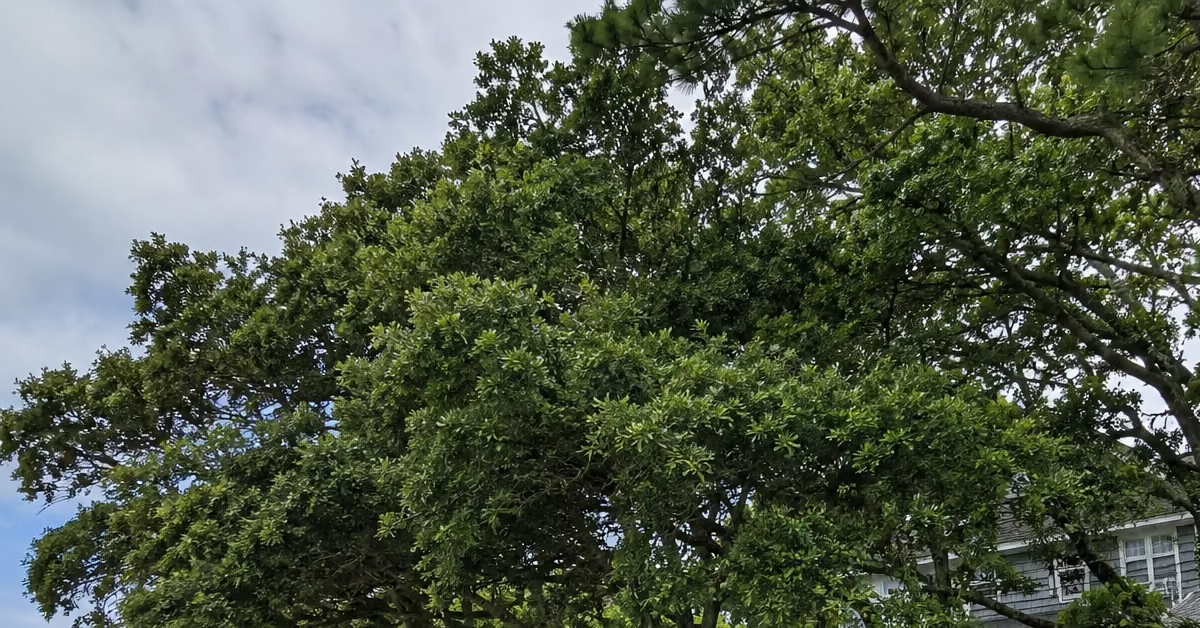
- Dense, uneven growth with little visible structure, where branches have been allowed to grow in every direction without any thinning or shaping
- Heavy limbs extending far from the trunk with a lot of weight concentrated at the outer edges of the canopy, which increases leverage during high winds
- Crossing or rubbing branches, which not only crowd the canopy further but create wound points where decay can start.
- Dead or weak wood scattered throughout the canopy that hasn’t been removed, adding weight without adding any structural benefit
- A canopy that’s grown significantly since the last time the tree was professionally pruned, often years rather than a single season
Many property owners don’t realize how much a canopy has grown until it’s compared to a photo from a few years earlier, since the change happens gradually enough that it’s easy to miss day to day.
How Canopy Thinning Reduces Storm Risk
Canopy thinning, sometimes called crown thinning, involves selectively removing branches throughout the canopy to reduce density without changing the tree’s overall shape or removing its structural integrity. Done correctly, this allows wind to move through the tree more freely instead of catching against a dense wall of foliage and branches.
This is different from simply cutting a tree shorter or removing large sections indiscriminately, which can actually create new problems, exposing previously sheltered branches to wind stress, or creating large wounds that invite decay. Proper thinning is selective and strategic, focused on reducing wind resistance while preserving the tree’s natural structure and health.
For smaller trees, this kind of pruning can often be handled with standard equipment and ground-based rigging. For larger, mature trees, especially those close to a home, dock, or other structure where a fall or falling limb would cause serious damage, crane-assisted access allows crews to safely reach and thin the upper canopy without the risk that comes with extended ladder work or difficult climbing access.
Why Timing Matters
The best time to address an overgrown canopy is well before hurricane season ramps up, not once a storm is already in the forecast.
- Thinning and pruning work takes planning, and trying to schedule emergency canopy work in the days before a storm makes landfall means competing with every other property owner who waited until the last minute.
- Beyond the scheduling issue, hasty, rushed pruning right before a storm is rarely as thorough or careful as work done with proper lead time.
- Late winter through early spring is generally an ideal window for proactive canopy management on the Outer Banks, giving trees time to respond to pruning before the growing season and well ahead of peak hurricane activity later in the year.
What Happens When Overgrown Trees Aren’t Addressed
Property owners who skip proactive canopy management often find out the hard way what an overgrown tree can do in a serious storm.
- Large limbs, sometimes entire canopy sections, can snap under wind load and land on roofs, vehicles, or power lines.
- In more severe cases, an overloaded canopy combined with saturated, wind-loosened soil can lead to a tree uprooting entirely, something that’s far more likely with a top-heavy, overgrown crown than with a well-maintained one.
- The cost of proactive thinning is almost always lower than the cost of storm damage cleanup, emergency removal, and property repair after a preventable failure.
Since 2017, Albemarle Landscapes and Tree Service has helped homeowners, businesses, and HOA communities across the Outer Banks reduce tree-related storm risks through professional pruning, canopy thinning, and hazardous tree removal. Our team evaluates each property’s tree health, canopy density, structure, and proximity to homes, power lines, and other valuable assets to recommend the safest and most effective approach before hurricane season arrives. For larger or difficult-to-access trees, we utilize specialized equipment, including cranes, aerial lifts, and advanced rigging systems, allowing our crew to safely access upper canopies while minimizing risk to surrounding structures and landscapes. Every project is carefully planned to reduce wind resistance, improve tree stability, and preserve healthy trees whenever practical.
If your trees haven’t been professionally pruned or evaluated in the last few years, now is the ideal time to prepare for hurricane season. Call Albemarle Landscapes and Tree Service at (252) 256-9128 to book your free estimate before the next storm arrives.
Frequently Asked Questions About Overgrown Canopies and Hurricane Risk in Outer Banks, North Carolina
Does a bigger tree automatically mean more hurricane risk?
Not necessarily. A large, well-maintained tree with a properly thinned canopy can handle wind better than a smaller tree with a dense, overgrown crown. Canopy density matters as much as overall size.
How often should trees be pruned to manage hurricane risk on the Outer Banks, North Carolina?
Most mature trees benefit from professional pruning or thinning every two to three years, though this can vary based on species, growth rate, and proximity to structures.
Can canopy thinning damage a tree if it’s done incorrectly?
Yes, over-pruning or removing too much canopy at once can stress a tree and create new vulnerabilities. Proper thinning is selective and done by trained professionals who understand how much can safely be removed.
When is the best time of year to have trees pruned ahead of hurricane season?
Late winter through early spring is generally ideal, giving trees time to recover before the growing season and well ahead of peak storm activity later in the year.
Why would a tree removal or pruning job need a crane instead of standard equipment?
Larger or taller trees, especially those close to homes, docks, or power lines, often can’t be safely accessed with ladders or ground-based rigging alone. A crane allows crews to reach and work on the upper canopy safely.
Is it worth thinning a tree’s canopy if it hasn’t caused problems yet?
Yes. Proactive thinning addresses wind resistance before it becomes a failure point, which is far less costly and disruptive than dealing with storm damage after the fact.
Summary Checklist: Overgrown Canopies and Hurricane Risk
| Condition | Risk Level | Recommended Action |
| Dense, Unmanaged Crown | High | Schedule crown thinning to reduce wind resistance and lower the risk of whole-tree failure. |
| Top-Heavy & Extended Limbs | High | Prune outer branches to reduce leverage and minimize stress on the trunk and root system. |
| Deadwood & Crossing Branches | Critical | Remove dead, damaged, or rubbing branches to reduce weight and prevent branch failure. |
| Sandy Soil & Coastal Exposure | Critical | Inspect trees regularly, as loose coastal soils increase the likelihood of uprooting during storms. |
| Tall Trees Near Buildings | High | Use crane-assisted pruning to safely trim upper canopy sections near homes and other structures. |
Final Advice
An overgrown canopy is one of the most preventable hurricane hazards a property can have, and it’s also one of the easiest to overlook, since the growth happens gradually over years rather than all at once. A professional tree service firm in Outer Banks (OBX) can assist you in getting ahead of it with proactive thinning before hurricane season arrives and protects your property, your home, and the tree itself. Call us at (252) 256-9128 to Book Your Free Estimate !!
Reviewed by a Licensed Arborist
This article has been reviewed by a licensed arborist to ensure accuracy in coastal tree care, canopy pruning, hurricane preparedness, and safe tree removal practices throughout the Outer Banks.