September 26, 2025
A mature tree is more than just part of your yard. It provides shade, boosts curb appeal, and even increases your property value. But when you start noticing leaf loss, bark peeling, or branches dying back, it becomes more than a cosmetic issue. A declining tree can pose safety hazards, attract pests, and damage nearby plants.
The good news is not every tree showing symptoms is beyond saving. With early diagnosis and proper care, many trees can recover and thrive for years to come.
How to Tell if Your Tree Is Dying
1. Leaf Changes and Early Drop
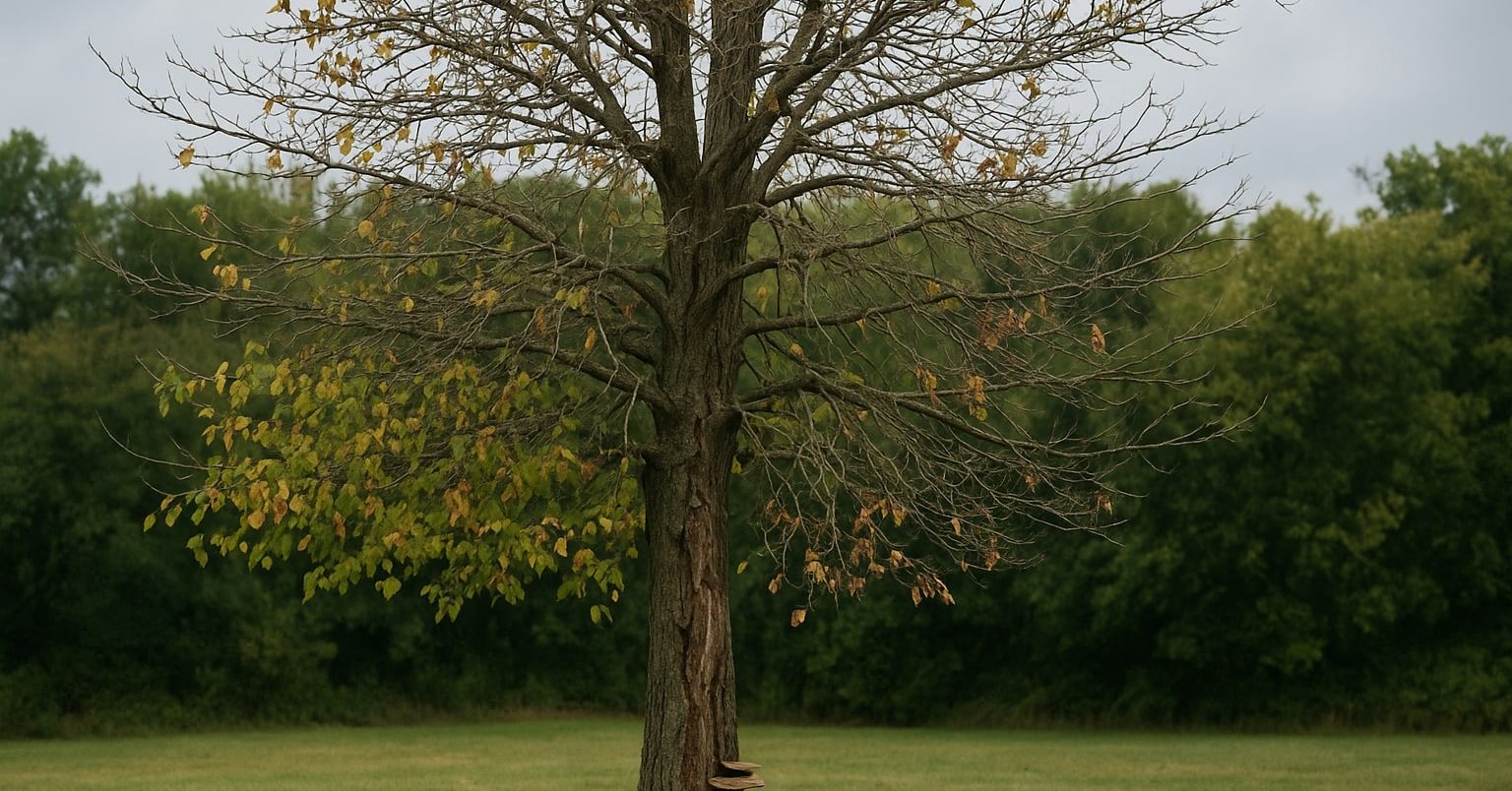
Yellowing, browning, or wilting leaves, especially when they drop early, are often the first sign something is wrong. Yellow leaves may point to nutrient deficiency. Browning or curling can signal drought stress, root issues, or disease.
2. Sparse Canopy and Dead Branches
A thinning canopy or brittle branches in the upper third of the tree indicate it is struggling to send energy upward. Deadwood can snap unexpectedly and cause property damage or injury.
3. Bark Damage and Cracking
Peeling, splitting, or missing bark exposes the tree’s inner layer to pests and disease. If large sections are missing or dead tissue circles the trunk, the tree may not recover.
4. Fungal Growth and Mushrooms
Mushrooms or conks near the base usually mean internal decay. This weakens the tree’s structure and can lead to sudden failure.
5. Insects and Borer Activity
Small holes, sawdust-like frass, and sticky sap are signs of insect infestation. Pests often move in after a tree is stressed or weakened.
Common Causes of Tree Decline
- Soil Problems: Compacted soil, poor drainage, or root damage from construction can starve roots of oxygen and nutrients.
- Watering Issues: Chronic drought, overwatering, or inconsistent watering all weaken roots.
- Disease and Fungus: Root rot, cankers, powdery mildew, and lethal pathogens such as Dutch Elm Disease or Oak Wilt can accelerate decline.
- Physical Damage: Storm breakage, lawn equipment strikes, or trenching near the trunk can sever major roots and compromise stability.
Can A Dying Tree Be Saved?
Act quickly when you notice the first signs of decline.
- Get an Arborist Inspection: A certified arborist can examine the roots, bark, and canopy and may use tools to check for internal decay.
- Consider the Tree Species: Some trees recover well, such as oaks and maples, while others decline quickly under stress, such as birches and pines.
- Evaluate Risk: If more than half of the canopy is dead or the trunk is hollow, removal may be the safest choice.
Reviving a Struggling Tree
-
Prune Dead or Diseased Limbs: Remove problem branches with clean, sharp tools. Avoid over-pruning.
-
Improve Soil and Root Health: Aerate compacted soil, apply organic mulch (2 to 4 inches, not touching the trunk), and adjust nutrients based on a soil test.
-
Water Consistently: Deep soak once or twice per week, checking soil moisture about 6 inches down. Avoid shallow, frequent watering.
-
Fertilize Carefully: Apply slow-release fertilizer only if a soil test confirms deficiencies.
-
Treat Pests or Diseases: Work with an arborist to apply the right treatments such as fungicides or trunk injections if needed.
When Removal Is the Best Option
Some trees cannot be saved and should be removed:
- Severe Structural Damage: Leaning trunks, hollow sections, or major root damage create a fall hazard.
- Contagious Disease: Removing one infected tree can protect nearby healthy ones.
- Legal or Safety Requirements: Many cities require permits for tree removal, especially for protected species.
If you’re unsure whether your tree can be saved or must be removed, it’s best to consult an arborist. Read more about when to cut down or remove a tree to stay safe and compliant.
Quick Reference Table
| Symptom | Severity | Action |
|---|---|---|
| Browning leaves, early drop | Mild to Moderate | Adjust watering, test soil, add mulch |
| Fungal growth at trunk base | Moderate to Severe | Call arborist, assess for decay |
| Cracks in trunk, peeling bark | Moderate to Severe | Get professional inspection |
| Sparse canopy, upper dieback | Moderate | Prune, fertilize, monitor |
| 50% or more canopy dead | Severe | Likely needs removal |
| Girdling roots | Moderate to Severe | Root pruning may help |
Common Questions
What are the first signs a tree is dying?
Look for yellowing leaves, early leaf drop, peeling bark, mushrooms near the base, and dead branches in the canopy.
Can a fungus-infected tree be saved?
Yes, if caught early. Root rot or internal decay are more difficult to reverse. An arborist can confirm severity.
How can I tell if a tree is dead?
Scratch a small twig with your fingernail. If it is green under the bark, it is alive. Brown and dry means dead. Test several branches before deciding.
Will insurance cover tree removal?
Most policies only cover removal if the tree falls and causes damage or poses a clear hazard. Preventive removal is usually not covered.
Can pruning help a dying tree?
Yes, pruning can redirect resources and stimulate new growth, but only if the root system is still healthy.
Call the Experts
A declining tree should never be ignored. Albemarle Landscapes and Tree Service provides inspections, care plans, and safe removals when needed.
📞 Call now: (252) 256-9128 for a professional opinion and to protect your property.