March 3, 2026
Owning a home with mature trees is a privilege that comes with responsibility. While trees add value and beauty, they effectively have a lifespan. When a tree begins to decline or threatens a structure, the homeowner faces a choice: address the issue now or wait until nature takes its course.
In storm-prone areas, the “wait and see” approach often leads to avoidable property damage after severe weather. We often see homeowners call after a storm when the same tree was flagged months earlier as a potential hazard. The difference between a planned removal and an emergency extraction is night and day – financially, emotionally, and logistically. Understanding the true costs and risks associated with both scenarios can help you make a prudent decision that protects your wallet and your property.
Key Takeaways
- Cost Efficiency: Emergency Tree Service can cost 300% to 500% more than a standard removal
- Safety Risks: Preventive work is controlled; emergency work involves unstable trees and hazardous conditions.
- Insurance Nuances: Insurance may not cover removal if the tree was previously documented as negligent or dead.
- Property Protection: Removing a hazardous tree prevents catastrophic damage to roofs, cars, and foundations.
- Timeline Control: You choose the date for preventive work; emergency work puts you on a waiting list during crises.
- Landscape Preservation: Emergency crews prioritize speed over lawn care, often leading to secondary ground damage.
Quick Answer
Preventive tree removal is significantly cheaper and safer than emergency cleanup. Emergency services command premium rates due to the high risk and immediate mobilization required. By removing a hazardous tree on your own schedule, you avoid potential property destruction, insurance disputes, and the stress of dealing with a crisis during a storm.
Why Storm Frequency in Coastal and High-Wind Regions Makes Early Removal Critical
Living in a storm-prone area means “waiting it out” is rarely a viable strategy for hazardous trees. The intense wind loads from hurricanes and nor’easters can cause even moderately compromised trees to fail catastrophically. In our region, a tree with a defect isn’t just a potential problem; it’s a likely projectile. Acting early removes this variable from your storm preparation checklist.
Is Preventive Tree Removal Cheaper Than Emergency Cleanup?
The most immediate difference between preventive and emergency work is the price tag. Tree removal is a specialized industry requiring heavy equipment and skilled labor. When you schedule a removal, the company can fit it into an efficient route, utilize standard crews, and work during normal business hours.
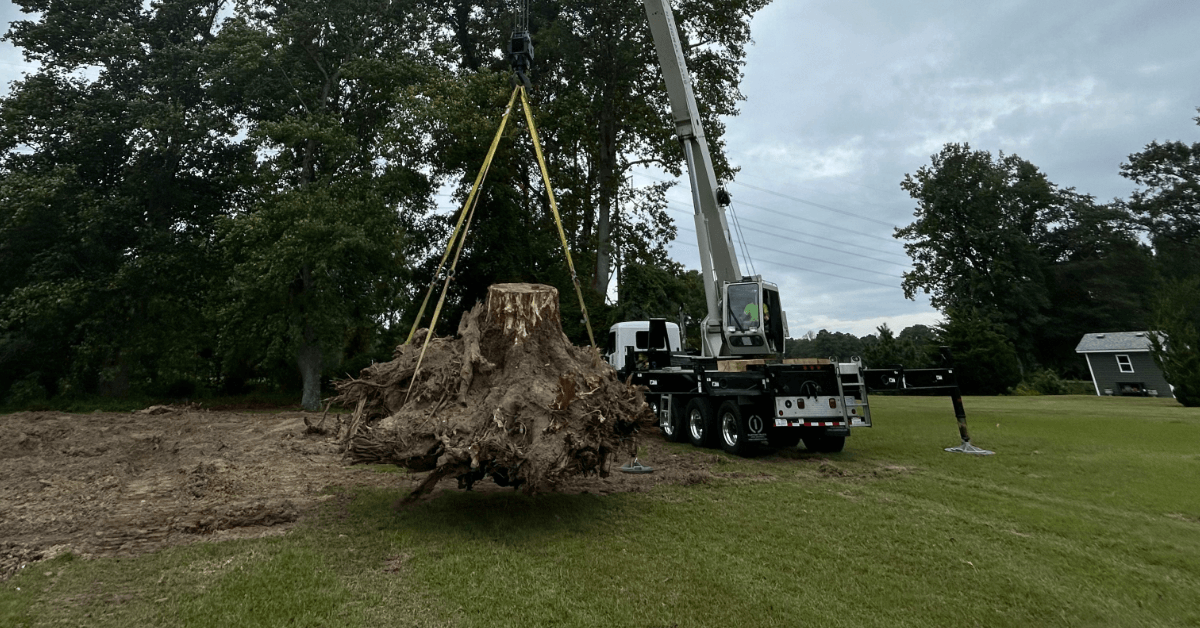
In contrast, emergency calls often happen nights, weekends, or during holidays – times when labor rates are at a premium. Furthermore, emergency work is inherently more dangerous. A tree resting on a house is under tension; cutting it requires advanced rigging and often a Crane-Assisted Tree Removal to lift pieces away without causing further collapse. This complexity increases time, risk, and logistical difficulty. Industry data and reports suggest that Emergency Tree Service can cost 300% to 500% more than a standard removal of the same tree.
What Makes Emergency Tree Work More Dangerous?
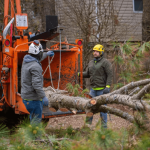
A planned removal is a controlled demolition. Our arborists can assess the tree, determine the best drop zone, and secure the perimeter. We can choose the day based on favorable weather conditions. The risk to our crew and your property is managed and minimized.
Assessing Emergency Hazards
Emergency cleanup usually occurs during or immediately after severe weather. Winds may still be high, the ground may be saturated and unstable, and electrical lines may be downed nearby. The tree itself is often compromised, perhaps split or uprooted, making its reaction to chainsaw cuts unpredictable. In these chaotic environments, the focus shifts from “preservation of landscape” to “immediate threat mitigation,” which means safety protocols are more intense and the margin for error is zero.
Does Insurance Cover Tree Removal Before Damage Happens?
Many homeowners assume their insurance will cover any tree-related incident. This is a dangerous misconception. Homeowners insurance typically covers damage caused by a tree falling on a structure due to an “Act of God,” like a hurricane. However, there is a catch.
If a tree was visibly dead, diseased, or previously identified as a hazard (negligence), the insurance company may deny the claim. According to the Insurance Information Institute, you could be liable for the entire cost of the home repairs and the tree removal if negligence is proven. Preventive removal eliminates this liability. You pay for the service, but you avoid the potential of a rejected six-figure claim for structural repairs.
Impact on Your Landscape and Property
When we perform a preventive removal, we take great care to protect your lawn, driveway, and surrounding plants. We use ground mats to disperse the weight of our trucks and lower branches gently via ropes.
During an emergency extraction, specifically if a crane is needed to pluck a tree off a roof, the priority is saving the house. While professionals always try to be careful, the urgency of the situation and the positioning of heavy equipment in wet soil often result in rutted lawns, broken fences, or damage to nearby flower beds. Arboriculture emphasizes minimal impact, but in emergency triage, preserving a rose bush takes a backseat to removing a tree from a living room.
Why Emergency Tree Removal Costs More After Storm Damage
To visualize the differences, consider this comparison of a standard large oak removal versus an emergency scenario involving the same tree.
| Factor | Preventive Tree Removal | Emergency Storm Damage Cleanup |
|---|---|---|
| Cost | Standard market pricing with planned scheduling | Often 3 to 5 times higher due to urgency and demand |
| Scheduling | Scheduled at your convenience | Limited availability after storms. First-come, first-served |
| Equipment Needs | Standard bucket trucks and chippers | Cranes, heavy machinery, winches, and advanced rigging |
| Risk to Property | Controlled removal with minimal risk | High risk to the roof, siding, vehicles, and landscape |
| Insurance Impact | Typically maintenance expense | Deductible costs and possible premium increases |
| Stress Level | Planned and manageable | High pressure and urgent decision-making |
| Project Timeline | Predictable completion window | Unpredictable delays due to weather and backlog |
The “Peace of Mind” Value
There is an intangible value to preventive removal: peace of mind. Sleeping through a thunderstorm knowing that the leaning pine or the rotting oak is gone is priceless. The anxiety of watching a hazardous tree sway violently in the wind is stressful for the entire family.
Moreover, removing a hazardous tree opens up the opportunity for new landscaping. You can replace a dangerous, senescing tree with a younger, more appropriate native species that will provide beauty for decades without the immediate threat. Preventive removal also allows time for thoughtful replanting and long-term landscape planning, completing the lifecycle of your landscape management.
When Should a Hazardous Tree Be Removed Before a Storm?
You do not need to be an arborist to know when to call one. If you see mushrooms at the base of a tree, large dead branches, deep cracks, or a significant lean, the clock is ticking. These are not cosmetic issues; they are structural failures in progress.
Waiting for the “right time” financially often leads to the “wrong time” meteorologically.
FAQ
Does home insurance cover preventive tree removal?
Generally, no. Insurance views tree removal as property maintenance, similar to replacing an old roof before it leaks. Coverage usually kicks in only after damage has occurred to a structure. Check your specific policy for details.
How quickly can you respond to an emergency?
Most professional tree services prioritize emergency calls involving structural damage or immediate safety risks, though response times can be delayed during widespread storms., demand is incredibly high. Existing clients often get priority status.
Is it cheaper to remove a tree in the winter?
Sometimes. The “dormant season” can be a good time for tree work because the ground is often frozen (harder) and trees lack leaves (lighter). Some companies may offer off-season discounts, but hazardous trees should be removed immediately, regardless of the season.
What happens if a tree falls on my car?
If a tree falls on your car, your auto insurance (comprehensive coverage) usually handles the claim, not your homeowners’ insurance. However, you will still be responsible for the deductible.
Can I sell the wood to offset the cost?
It is rare for residential trees to have timber value that offsets removal costs. Yard trees often contain metal (nails, fencing) and grow in ways that degrade lumber quality. However, the wood can often be left for you to use as firewood, which saves on disposal fees.
Do I need a permit to remove a tree in my yard?
This depends on your local municipality. Some towns in the Outer Banks and surrounding areas have tree preservation ordinances, especially for large trees or specific species like Live Oaks. It is best to check with your local planning department or have our team handle the permitting process for you.
Protect Your Property by Acting Early
The choice between preventive removal and emergency cleanup is ultimately a choice between control and chaos. Preventive removal happens on your terms, fits your budget, and leaves your yard pristine. Emergency cleanup is dictated by the storm, often costs a fortune, and comes with the trauma of property damage. Don’t let a hazardous tree become a gambling chip. Addressing a hazardous tree early gives homeowners more control, safer outcomes, and fewer surprises during severe weather.