May 8, 2026
Key Takeaways
- Definition of Danger: A widowmaker is any broken limb trapped high in a tree canopy.
- Pine Vulnerability: Loblolly pines are prone to snap rather than bend during high winds.
- Ground Signs: Large amounts of fresh bark on the ground often point to damage serious above.
- Safety Zone: Never walk or park under a tree with visible hanging debris.
- Professional Gear: Removing these limbs requires specialized reach equipment and rigging.
If you live in the Outer Banks or the surrounding woods of North Carolina, you know that the calm after a storm is when the real risk starts. While the wind has died down, the trees left standing are often holding onto a deadly secret. In the tree world, we call these widowmakers. These are heavy, broken branches that are detached from the main tree but stay snagged in the upper canopy, just waiting for a light breeze or even just the heat of the sun to bring them down.
In areas like Kitty Hawk and Corolla, our Loblolly pines are very likely to have this type of damage. Unlike a flexible Live Oak, which can bend and twist in the wind, a pine tree is quite rigid and stiff. When a storm hits, the wood tends to snap instead of yielding. This leaves behind jagged hangers that are a major risk to anyone walking below. Understanding how to spot these hazards is the first step in a safe cleanup for your home and family.
Why We Call Them Widowmakers
This name sounds scary because the danger is real. For hundreds of years, people working in the woods have used this term for branches that fall without warning. In a pine forest, the canopy is often very high up, which means you might not even realize you are standing under a branch that weighs two hundred pounds. Because the wood of a pine tree is full of heavy sap, a single limb can fall with enough force to go through a roof or crush a car.
The risk is even higher during the cleanup process. Many people start raking their yards or fixing fences the moment the rain stops. However, the trees are still reacting to the stress of the storm. As the wood dries out, it can shift. As the wind picks back up even slightly, it can nudge a trapped branch loose. This is why you must always look up before you start any work on the ground.
Spotting the Trouble from the Ground
A widowmaker is not always obvious from a glance. Because pines are so tall and have thick needles at the top, a broken limb can stay hidden hundreds of feet in the air. These limbs can stay stuck for days, weeks, or even months before finally falling.
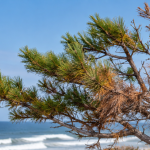
You should never walk directly under the canopy to look for damage. Instead, use binoculars or stand back at a safe distance to check the top of the tree. Look for brown-outs in the green canopy. If you see a cluster of brown needles in the middle of a green tree, it usually means that a specific branch has been snapped and is no longer getting water from the roots. You should also look for branches sitting at odd angles. Most pine limbs grow upward or straight out, so a limb pointing straight down or resting sideways across other limbs is a red flag.
Understanding the Loblolly Pine
Loblolly pines are the most common trees in our coastal area. They grow fast and tall, which makes them great for privacy and shade, but it also makes them vulnerable during hurricane season. These trees have a very shallow root system in our sandy soil. During a storm, the ground gets soft, and the wind pushes against the heavy tops of the pines.
Even if the whole tree does not fall, the twisting force of the wind can cause the upper limbs to shatter. These trees do not have the same internal strength as hardwoods like oaks. Once a pine limb cracks, it loses almost all of its structural integrity. It becomes a loose weight held up only by the friction of the needles around it. This is what makes the pine woods so unpredictable after a big blow.
Why DIY Removal is a Bad Idea
It is a common mistake for homeowners to try to pull down a hanging limb with a rope or a long pole. This is incredibly dangerous for several reasons. First, when a widowmaker is released, it rarely falls straight down like a stone. It can kick back toward the trunk or swing in an unpredictable path like a giant pendulum. If you are standing at the base of the tree, you are in the direct line of fire.
Second, many people try to use a ladder to reach these branches. Using a ladder for tree work is one of the leading causes of yard accidents. If a branch falls and hits the ladder or even just brushes against it, the ladder will tip. Without professional rigging and high-reach equipment, you are putting your life at risk for a task that requires specialized training.
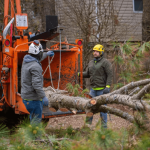
Even the vibrations from a small chainsaw at the base of the tree can be enough to shake a limb loose from the top. This is why professional arborists always scan the canopy and clear the area before they even touch the trunk of a storm-damaged tree. We use ropes and pulleys to control the fall of every piece of wood so that nothing hits your house or your landscape.
How to Identify Widowmakers in the Pine Woods
Spotting a widowmaker requires a careful eye and a safe distance since these hazards are often tucked away high in the canopy where they can fall without warning. To identify these risks and assess the overall safety of your pines, look for the following signs:
- Identify Hangers and Snags: Look for any large limbs that are clearly detached from the main trunk but remain trapped in the upper branches, often sitting at strange or unnatural angles.
- Check the Canopy Color: Watch for clusters of brown or dead needles in an otherwise green tree, which indicates a branch has been snapped and is no longer receiving water.
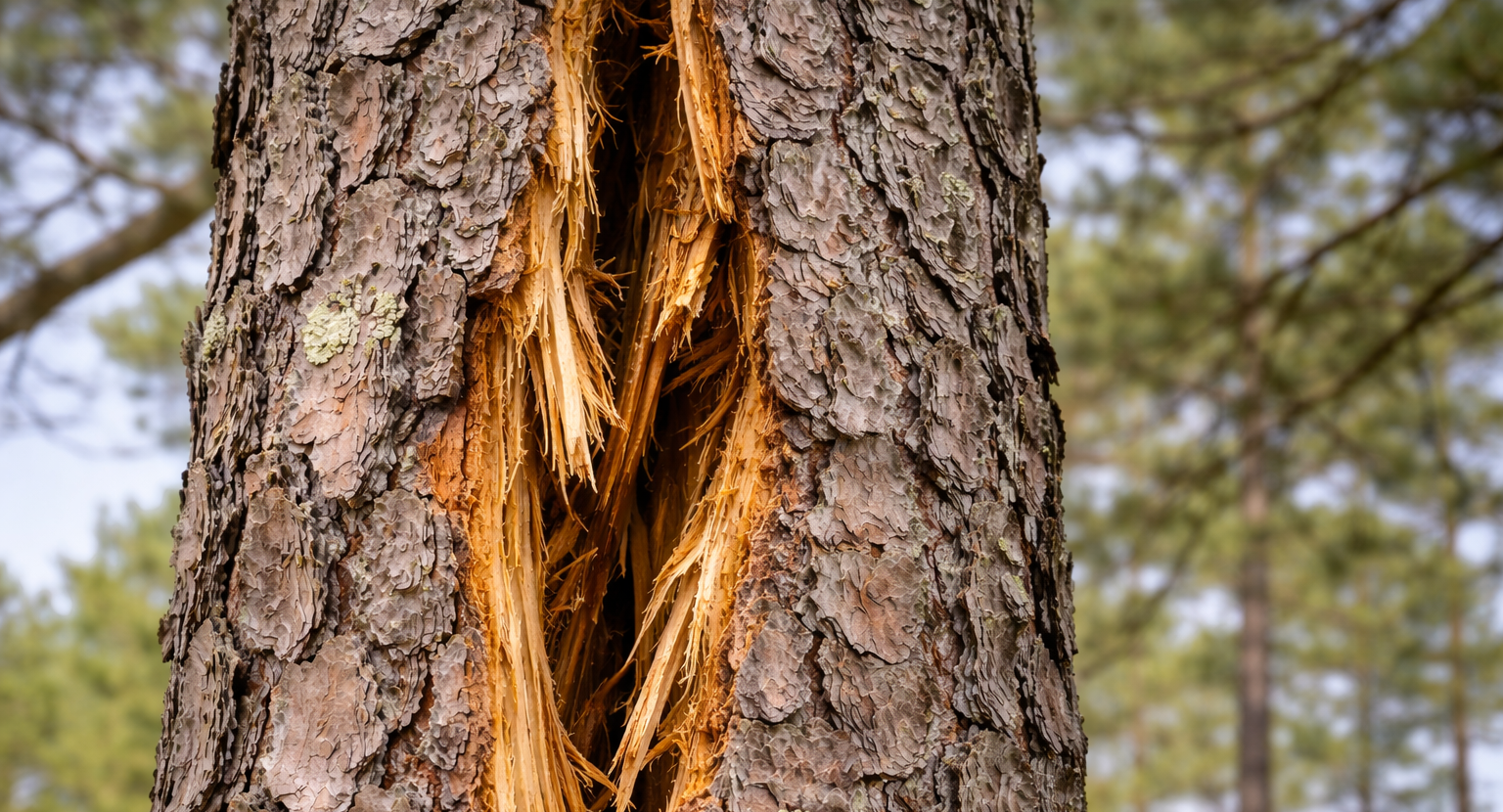
- Scan for Trunk Cracks: Search for vertical splits that might be hiding behind thick bark or look for sap oozing from high points on the trunk, which suggests the wood split internally during high winds.
- Inspect the Root Flare: Check if the ground at the base of the pine is mounded up or cracked, as this is a clear sign the tree is starting to tip and could uproot entirely in sandy soil.
- Study the Silhouette: Stand back and check the shape of the tree against the sky to spot broken pieces resting on other branches or a leaning trunk pointing toward your home.
- Watch for Ground Clues: If you see fresh bark and wood debris on the lawn, it is a strong hint that the tree suffered structural damage high above that you might not see at first glance.
- Maintain a Safety Zone: Because these broken limbs and leaning trees are heavy and unpredictable, the only safe solution is to stay clear of the area and call a professional team with the rigging skills to handle the weight safely.
Safely clearing widowmakers from a storm-battered pine forest requires the kind of local expertise you only find at Albemarle Landscapes and Tree Service. Serving Kitty Hawk, Manteo, Corolla, and all nearby towns, we specialize in identifying hidden hazards that look like simple debris but pose a lethal threat to your home. We know exactly how our Loblolly pines respond to coastal salt and high winds because we have been managing these maritime forests for years.
Albemarle Landscapes and Tree Service is BBB A+ Accredited and has a 5-star rating because we put safety first during every post-storm cleanup. Our team is fully insured and uses state-of-the-art bucket trucks to reach dangerous hangers that are too high for a standard ladder. We don’t just cut and go; we perform a full safety check of your entire canopy to make sure no trapped limbs are left behind to surprise you later. Whether you need an emergency removal of a snapped top or want to prune your pines to prevent future widowmakers, we offer competitive pricing to fit your budget.
Frequently Asked Questions
1. How long can a widowmaker stay in a tree before it falls?
A broken limb can stay snagged for months or fall in the very next breeze. There is no way to predict when gravity will take over, so it is best to remove them as soon as you see them. The longer they stay up there, the more brittle they become, which makes them even more dangerous to remove later.
2. Is it safe to park under a pine tree after a storm has passed?
No. Even if you do not see a hanging branch, pine trees can have internal cracks that fail later when the temperature changes or the wood dries out. It is much safer to park in an open area until the trees have been inspected by a professional.
3. Does my homeowners’ insurance cover the removal of a hanging branch?
Most policies cover damage to your house or fence. If a branch is hanging over a structure and poses an immediate threat, it is often covered as a preventative measure. Every policy is different, but we can help you provide the documentation your insurance company needs.
4. Can I just wait for the branch to fall on its own if it is in the back of the woods?
Waiting is risky because you cannot control where it lands. A falling limb can bounce off other trees and travel a long distance. It can damage power lines, fences, or even hurt pets or neighbors. It is always better to be proactive.
5. How do you reach branches that are high up in a Loblolly pine?
We use specialized bucket trucks that can reach deep into the canopy. If the tree is in a spot where a truck cannot go, our expert climbers use safety ropes and saddles to move through the tree and lower the limbs manually.
6. Will removing a large limb hurt the rest of the tree?
If it is done correctly, the tree can heal over the wound. We make clean cuts at the branch collar, which helps the tree seal itself off from rot and pests. Removing a heavy, broken limb actually helps the tree stay balanced.
7. Should I check my trees even if I do not see any fallen debris on the ground?
Yes. High winds can cause structural cracks high in the trunk that do not result in fallen needles right away. A professional inspection can catch these hidden issues before they turn into a disaster.
8. Do widowmakers only happen in pine trees?
They can happen in any tree, but pines are more likely to have them because their wood is brittle and their dense upper needles act like a net that catches falling limbs.
Summary Checklist: Post-Storm Pine Safety
Final Advice
Storm cleanup is a marathon, not a sprint, and the most dangerous work happens high above your head where gravity is always working against you. If you see branches caught in your pine trees or if a tree looks different after a high-wind event, do not take chances with your safety. A widowmaker can fall at any moment, regardless of how nice the weather looks outside. Establishing a safe perimeter around the tree and getting a professional opinion is the only way to make sure your yard is truly secure for your family and pets. At Albemarle Landscapes and Tree Service, we have the experience and the tools to clear your canopy and give you peace of mind.