November 28, 2025
Homeowners in the Outer Banks often deal with a very particular challenge. Trees grow in sandy soil, they take a beating from storms, and many of them lean or split after nor’easters. At the same time, the towns in this area protect certain species because they help stabilize dunes and prevent erosion. This balance creates the question most people eventually ask: Can I cut this tree down, or is it actually illegal?
The short answer is that it can be illegal if the tree meets certain criteria or if it is located in one of the protected coastal zones. You are free to remove some trees without any problem, but others require local approval, and some cannot be removed unless there is clear evidence of danger. Knowing what category your tree falls into is what keeps you from getting fined or having to replant trees later.
Below is a clearer breakdown of what is considered legal, what is not, and how to avoid accidental violations.
When Tree Removal is Considered Illegal
Tree removal becomes illegal in the Outer Banks when a homeowner cuts a tree that is protected, too large to remove without a permit, or located in a designated maritime forest area. Most towns in the Outer Banks publish clear rules on which trees are protected and when removal requires approval. For example, the Nags Head Planning Department provides official guidelines that outline species protections, size thresholds, and vegetation regulations.
The most common illegal removal situations include:
Protected or regulated species
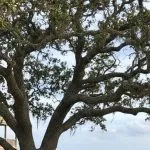
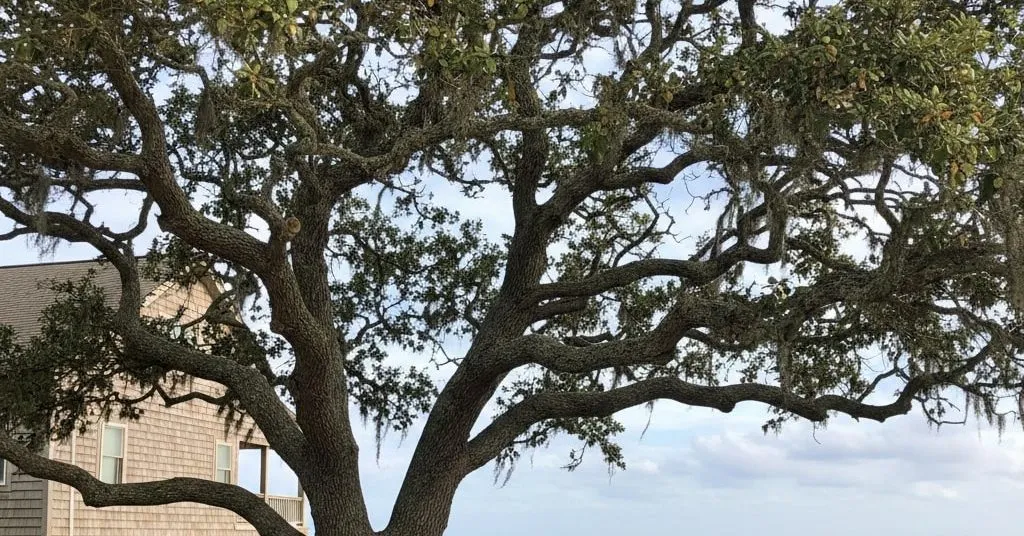
Many Outer Banks towns protect live oaks, red cedars, yaupon hollies, and several native maritime forest trees. Cutting them without approval is considered a violation.
Trees above a certain trunk size
Municipalities define rules based on trunk diameter. If a tree passes a certain size threshold, the town considers it a significant part of the local ecosystem.
Trees located in maritime forest zones
These areas exist to limit erosion and maintain coastal stability. Any unauthorized cutting inside them is prohibited.
Damage to shared property lines
If a tree provides privacy, shade, or serves as a shared buffer between properties, removing it without proper agreement can lead to disputes or legal action.
Ignoring documentation after a storm
Even during emergencies, most towns expect homeowners to document the hazard. Removing a tree without evidence can still cause issues.
Illegal removal is not always intentional. Most violations happen because people assume that owning the land means automatic permission to cut anything on it. Unfortunately, in the Outer Banks, that is not how the rules work.
Protected Trees in Outer Banks Communities
Each town writes its own ordinances, but several patterns repeat across the area. These trees are commonly protected because they anchor dunes, reduce storm damage, and preserve the look of historic neighborhoods:
- Live oaks
- Yaupon hollies
- Red cedars
- Other native maritime forest species
Homeowners can confirm the status of a tree by checking their local town’s vegetation or tree protection ordinance. The Kill Devil Hills Planning and Inspections Department, for example, lists the species and trunk sizes that fall under local protection.
When Tree Removal Is Allowed Without Legal Issues
Plenty of removals are completely legal. You are usually allowed to remove a tree when it falls into one of these categories:
- The tree is dead or dying: Dead trees become brittle and fall apart quickly in coastal wind. Towns rarely restrict dead tree removals because they pose a risk.
- The tree is clearly hazardous: A tree that leans toward a home, has a split trunk, or is only held up by damaged roots is treated as an emergency even if the weather is calm.
- The species is not regulated: Many ornamental or non-native species have no legal protections.
- The tree is small: Most towns only regulate trees above a specific trunk diameter. Smaller trees can usually be removed freely.
Even if a removal seems obvious, it is still smart to take photos before and after, especially after storms. These images protect you if the town later asks for verification.
What Happens if You Remove a Tree Illegally
The penalties are simple but inconvenient. Homeowners who remove trees without approval may face:
- Fines starting around two hundred dollars per tree
- Requirements to plant replacement trees of a specific species
- Delays or complications with future property permits
- Complaints from neighbors if the removal affected shared privacy or shade
Towns enforce these rules because tree loss in coastal areas affects more than one property. Removing a single live oak can accelerate erosion or reduce storm protection for an entire street.
How Different Outer Banks Towns Handle Illegal Removal
This summary keeps it simple while still being different from the permit page.
| Town | Illegal Without Approval | Notes |
|---|---|---|
| Nags Head | Yes for protected or large native trees | Diameter rules apply and maritime forest areas have stricter oversight |
| Kill Devil Hills | Yes for certain oaks, cedars, and hollies | Species protection is the main factor |
| Duck | Case by case | Strong protections for native maritime forest trees |
| Southern Shores | Yes | Several local species require approval |
| Dare County | More flexible | Fewer protected species but hazardous trees still need documentation |
Emergency Removal and When It Is Allowed
In a true emergency, safety comes first. Towns allow immediate removal when:
- A storm has caused the tree to crack or uproot
- The tree is blocking access to the home
- The tree has fallen on structures or vehicles
- The tree is touching or threatening power lines
- The tree is unstable enough to fall at any moment
Homeowners should still take photos and notify the town afterward, but towns do not fine people for dealing with genuine hazards.
Permit Requirements
Even though this article focuses on legality, permits still help determine whether a removal is allowed. A permit is simply the town’s way of confirming the tree is not protected and that the removal will not cause erosion or harm the surrounding area.
You usually need a permit when removing:
- Large native trees
- Trees growing in maritime forest zones
- Regulated species such as live oaks or red cedars
If you want a full explanation of sizes, protected species lists, and step-by-step instructions, visit our detailed tree removal permit guide.
How to Stay Compliant Without Guesswork
You do not need to memorize every rule. A simple process keeps you on the safe side:
- Confirm what species the tree is
- Measure the trunk at breast height
- Look up your town’s tree ordinance
- Document any hazardous conditions with photos
- Ask a local tree service for an assessment if you are unsure
Local tree companies work with these ordinances every day. They know which trees towns protect and how to identify risks. This is often the easiest way to avoid mistakes.
FAQs
Is it illegal to cut down a tree on my property in the Outer Banks?
It can be illegal if the tree is protected, large enough to fall under the ordinance, or located in a regulated area. Some removals are unrestricted, but others require approval.
Can I remove a hazardous tree without permission?
Yes. Hazardous trees can be removed immediately, but you should take photos and notify the town when possible.
What if I am not sure what species the tree is?
Local professionals can identify it for you. You can also bring photos to your town’s planning office for confirmation.
Will I get fined if I accidentally cut a protected tree?
Fines are possible, but towns often work with homeowners if there is proof of danger or misunderstanding.
Final Thoughts
Tree removal in the Outer Banks is about more than clearing space. It affects safety, property value, and the stability of the coastal landscape. Some removals are unrestricted while others require careful review. When you are uncertain, a quick call to a local tree service or your town’s planning department can prevent avoidable violations and help you document hazards properly.
For homeowners who want guidance through the permit process or a clear explanation of what is legally allowed, Albemarle Landscapes and Tree Service can help you understand the rules, assess tree risks, and complete removals safely and compliantly.