October 8, 2026
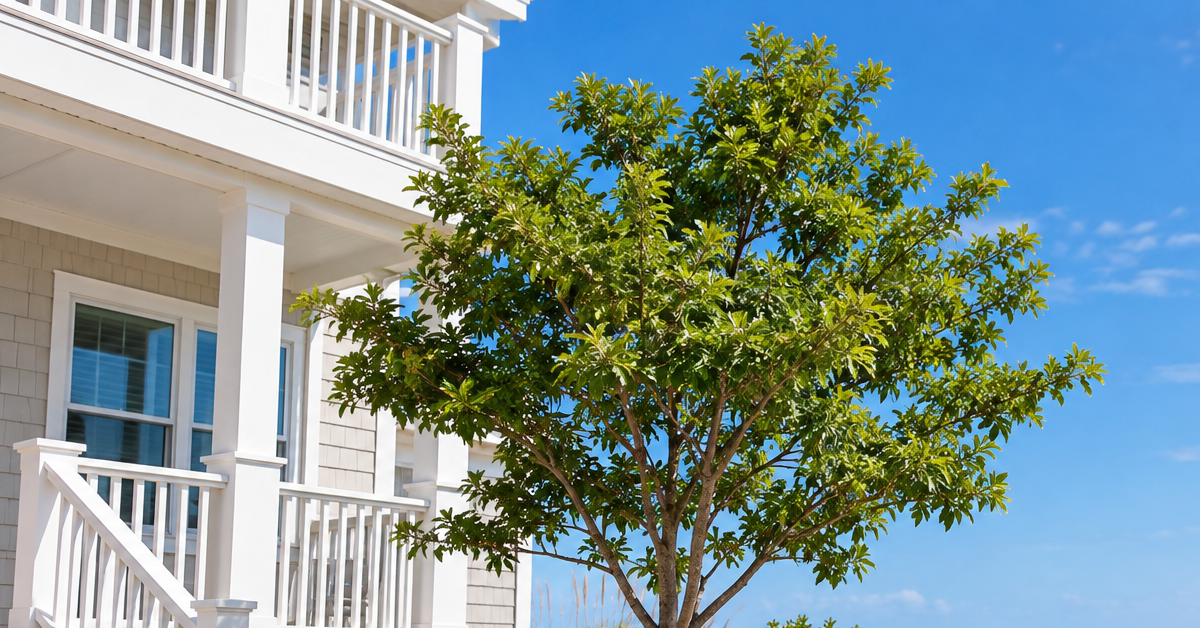
The right tree can improve an Outer Banks (OBX) vacation rental or second home for decades. The wrong tree can create storm hazards, excessive maintenance, root damage, or constant cleanup between visits.
Start with the property’s location and exposure. Oceanfront, soundside, and sheltered neighborhoods place different demands on trees. Your decision should also account for mature size, watering needs, guest safety, privacy, appearance, and maintenance access.
Here are 9 factors to review before planting.
1. How Much Wind and Salt Exposure Does the Property Receive?
Coastal exposure is one of the most important factors. A tree near the ocean receives stronger wind and more salt spray than one protected by buildings or existing vegetation. Oceanfront trees often develop wind-shaped or asymmetrical canopies. They may also experience browning or dieback on the side facing prevailing winds. Soundside properties may offer more shelter. That can allow taller growth and a wider selection of trees. However, strong storms can still affect trees throughout the Outer Banks.
- Red cedars can be useful in exposed settings because they tolerate sandy soil, coastal wind, and salt better than many less-adapted species.
- Live oaks are also known for coastal tolerance, although their mature limbs require adequate room and periodic assessment.
2. What Is the Soil Like?
Outer Banks soils often drain quickly. That benefits trees that dislike wet roots, but it can make establishment difficult for newly planted trees. A young tree may need consistent watering while its roots expand into surrounding soil. Vacation homeowners may not be present often enough to provide that care manually.
Before planting, consider drainage, soil depth, compaction, and nearby construction. Paving, excavation, septic work, and fill soil can affect root growth. Professional planting includes site assessment and soil preparation.
- What Mature Size Can the Property Handle?
A tree that looks small at the nursery may eventually spread across a roof, deck, driveway, or neighboring lot. Mature height and canopy width should be considered before planting. Keep large trees away from structures when possible. Account for overhead wires, septic systems, paved areas, fences, and views.
A vacation rental needs extra planning because guests may not notice early conflicts. Branches rubbing against the roof or roots lifting pavers can become maintenance issues before the owner sees them. The tree should fit the property at maturity, not just look appropriate on planting day.
4. How Much Maintenance Can You Manage?
A second home may sit empty for weeks or months. A vacation rental may have guests arriving every few days. That makes low-maintenance planting especially valuable.
- Consider leaf drop, fruit, flowers, dead branches, pest concerns, and watering needs. A tree that requires frequent pruning may not be the best choice for a property managed from a distance.
- Routine care still matters even for coastal species. Trees should be inspected, watered during establishment, and pruned when necessary.
- A maintenance agreement can help property owners stay ahead of storm damage and overgrowth. Regular inspections are particularly important when the owner does not visit after every major weather event.
5. Does the Tree Improve Guest’s Comfort?
Trees can improve the guest experience by creating shade over decks, patios, walkways, and outdoor seating areas. They can also reduce glare and make a property feel more private.
- Placement matters. A tree planted too close to a deck may drop leaves onto seating areas. One planted too far away may provide little shade where guests spend time.
- A smaller ornamental tree may be appropriate beside a walkway. A larger shade tree may work better in a spacious yard. The best option depends on the outdoor areas guests actually use.
- Shade can also help keep paved surfaces and outdoor furniture more comfortable during summer.
6. Will the Tree Protect Privacy Without Blocking the Property?
Privacy is often a major concern for vacation rentals. Guests want to enjoy decks and yards without feeling exposed to nearby homes or roads. Trees can screen windows, outdoor showers, pools, and seating areas. They should not completely block important views or create hidden areas that are difficult to inspect.
- Red cedars can provide dense screening.
- Live oaks can create broad overhead privacy.
- Smaller trees and shrubs may be better for protecting a first-story window without overwhelming the yard.
Layered planting often works better than one solid row of large trees. It creates privacy while preserving airflow and sightlines.

7. How Will the Tree Handle Storms?
Storm resilience is essential on a barrier island. Tropical systems, nor’easters, and strong coastal winds can break limbs, uproot trees, and damage structures.
Tree selection is only one part of storm preparation. Planting depth, root establishment, pruning, spacing, and surrounding site conditions also affect stability. Avoid planting large trees where a failure could damage the rental home, guest vehicles, pool equipment, or power lines. Young trees may require temporary support while roots become established. Mature trees should be inspected for dead limbs, decay, weak branch unions, and root disturbance.
8. What Is the Tree’s Impact on Safety and Liability?
A vacation rental has more people using the property than a private second home. Guests may not recognize a hazardous limb, exposed root, or unstable tree.
- Avoid planting trees where falling branches could reach seating areas, play spaces, parking spots, or entrances.
- Keep walkways clear of low branches and surface roots.
- Regular inspections are important because owners may be responsible for addressing known hazards.
- Storm damage should be evaluated promptly, especially before the next guest arrives.
- A tree that is attractive but poorly placed can create unnecessary liability. Plan for mature growth and routine maintenance from the beginning.
9. Does the Tree Match the Property’s Long-Term Goals?
Finally, think about what the tree should accomplish. The best selection depends on your priorities. You may want shade over a deck, privacy from a neighboring rental, wind protection, improved curb appeal, erosion control, or a stronger connection to the local maritime landscape.
- Live oaks provide broad shade and a distinctive coastal character.
- Red cedars offer screening and tolerance in exposed areas.
- Crape myrtles provide flowers and relatively compact ornamental growth.
- Loblolly pines can grow quickly but need careful placement and monitoring as they mature.
No single tree is best for every Outer Banks lot. The right choice balances beauty, function, exposure, space, and maintenance.
Tree Selection Factors at a Glance
| Factor | Why it matters | Questions to ask |
| Wind and salt | Coastal exposure affects survival and form | Is the property oceanfront, soundside, or sheltered? |
| Soil and drainage | Sandy soil can dry quickly | Will the tree receive enough moisture while establishing? |
| Mature size | Large trees can conflict with structures | How wide and tall will it become? |
| Maintenance | Vacant properties may go unchecked | Who will water, prune, and inspect it? |
| Guest comfort | Shade and beauty improve outdoor use | Where do guests spend time? |
| Privacy | Screening can improve the rental experience | Will the tree block too much view or airflow? |
| Storm resilience | Wind can damage weak or poorly placed trees | Could a failure reach the home or guest areas? |
| Safety and liability | Guests may not notice hazards | Are walkways, parking areas, and seating protected? |
| Long-term goals | Planting should serve a clear purpose | Is the priority shade, screening, curb appeal, or erosion control? |
When Should You Plant a Tree at a Vacation Rental?
Planting is easiest when the property’s landscape plan is clear. Before planting a tree at a vacation rental –
- Identify views, guest areas, utilities, drainage, septic systems, and future construction before selecting the tree.
- The planting location should allow the tree to reach mature size without requiring severe pruning. It should also be accessible for watering and maintenance.
- Newly planted trees need particular attention during establishment. Sandy soil may dry quickly, so owners should create a dependable watering plan before leaving the property vacant.
- Professional planting can improve the odds of long-term success. Proper depth, soil preparation, mulching, staking, and early watering all matter.
How Can Albemarle Landscapes and Tree Service Help?
The right tree can make an Outer Banks vacation rental or second home more comfortable, attractive, private, and resilient. The wrong tree can become a recurring source of watering, pruning, storm, and safety problems.
Albemarle Landscapes and Tree Service helps Outer Banks homeowners and property managers choose, plant, and maintain trees suited to local conditions. Our local team understands the specific environmental demands of exposed oceanfront lots, soundside properties, and sheltered neighborhoods.
We provide expert tree selection, planting, trimming, pruning, tree risk assessments, stump grinding, tree cabling & bracing, and 24/7 emergency response. Call our team at (252) 256-9128 to Book Your Free Estimate !!
Frequently Asked Questions
What is a good tree for an oceanfront vacation rental?
The best choice depends on exact exposure, soil, available room, and maintenance goals. Red cedars and live oaks can perform well in many coastal settings, but no species should be selected without reviewing the planting site.
Are live oaks a good choice for second homes?
They can be excellent shade and character trees when the property has enough room for mature growth. Their large limbs and broad canopies require appropriate placement and periodic structural assessment.
How often should trees at a vacation rental be inspected?
Inspect trees at least during regular property visits and after major storms. Properties with mature trees near buildings, parking areas, or guest spaces may benefit from scheduled professional assessments.
Do newly planted trees need watering in sandy soil?
Usually, yes. Sandy soil drains quickly, and young trees need consistent moisture while roots establish. Owners should arrange watering when the property is vacant.
Can trees reduce vacation rental energy costs?
Strategically placed shade trees may reduce heat gain around outdoor spaces and parts of the home. The result depends on tree location, canopy size, building orientation, and local weather.
Should I plant a tree close to the deck for shade?
Not always. Planting too close can create leaf cleanup, root, branch, and storm concerns. Choose a location that provides shade at maturity while keeping branches and roots away from the structure.
Get Professional Tree Selection Help Before You Plant
Albemarle Landscapes and Tree Service can evaluate your property and recommend trees based on coastal exposure, soil, mature size, guest use, and long-term maintenance needs. We also provide planting, pruning, removal, stump grinding, and emergency tree service throughout the Outer Banks. Call (252) 256-9128 to book your free estimate. Plan the tree around the property now, so the property does not have to be managed around the tree later