September 15, 2026
Key Takeaways
- The Outer Banks supports a mix of maritime forest species and planted ornamental trees across its communities.
- Salt spray, sandy soil, and coastal wind all shape which trees thrive and how they grow.
- Live oaks, loblolly pines, red cedars, and crape myrtles are commonly found throughout OBX neighborhoods.
- Coastal conditions create specific maintenance needs, including pruning for wind resistance and monitoring for salt stress.
- Understanding the trees common to a community helps homeowners plan care, spot problems early, and protect long-term tree health.
The Outer Banks (OBX) is home to a diverse mix of trees shaped by coastal wind, salt spray, and sandy soil. Common species include – live oaks, loblolly pines, red cedars, and crape myrtles.
From the maritime forests of Corolla and Southern Shores to the residential neighborhoods of Kill Devil Hills, Nags Head, and Manteo, local trees reflect the unique conditions of barrier island living.
Understanding which trees thrive in each community can help homeowners choose appropriate landscaping, identify signs of stress, and plan effective tree care. This article explores common Outer Banks tree species and the coastal conditions that influence their health and growth.
The Maritime Forest Influence
Maritime forests are a major influence on the tree canopy across the Outer Banks. These coastal ecosystems are shaped by salt-laden wind, sandy soil, and periodic storms.
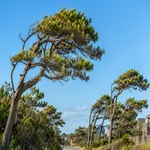
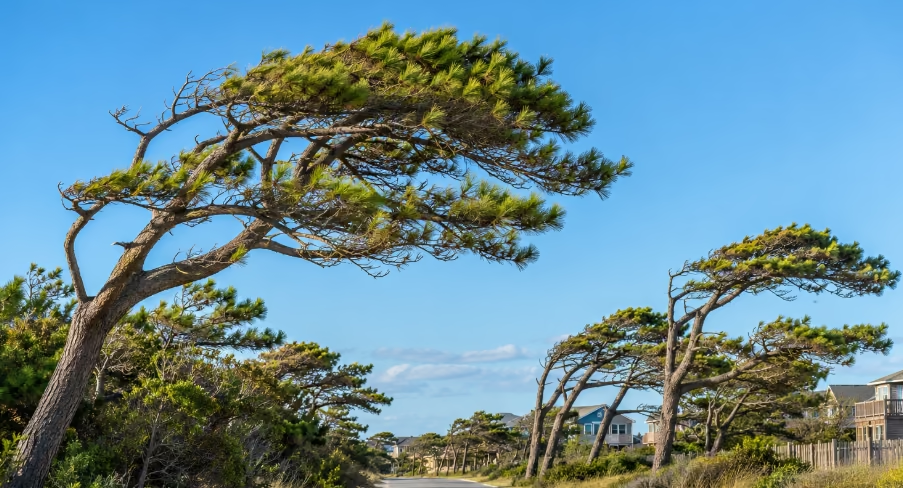
Trees near exposed areas often grow shorter and develop wind-sculpted forms. Farther inland, natural wind protection allows trees to develop taller and denser canopies.
Communities such as Corolla, Duck, and Southern Shores contain areas of natural or preserved maritime forest. This existing canopy influences property layouts and creates specific tree-care considerations for homeowners.
Live Oaks: The Iconic Coastal Tree
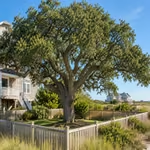
Live oaks are among the most recognizable trees throughout Outer Banks neighborhoods. Their broad canopies, strong trunks, and twisting branches make them well suited to the region’s coastal environment.
Live oaks generally tolerate salt spray and sandy conditions better than many other tree species. However, mature trees can develop large, heavy limbs that require periodic structural assessment and pruning.
Homeowners should pay particular attention to branches extending over homes, driveways, roads, or other structures. Some HOA communities may also have specific rules governing the removal or significant pruning of mature live oaks.
Loblolly Pines and Coastal Wind Exposure
Loblolly pines are common throughout the Outer Banks, particularly in areas with sandy, well-drained soil. They grow relatively quickly but can become more vulnerable to wind damage as they mature.
- Construction activity can increase this vulnerability. Root systems may be affected by paving, excavation, soil compaction, or other changes around the tree.
- Mature pines near homes and other structures should be periodically assessed.
- Signs of leaning, dead branches, decay, or root disturbance can indicate a need for professional evaluation.
Red Cedars and Their Role in Dune Areas
Red cedars are well adapted to the harsh conditions found in many Outer Banks dune and transitional areas. They tolerate sandy soil, salt exposure, and coastal wind better than many less-adapted landscape species.
Red cedars commonly develop dense, columnar growth. Their structure can also provide wind protection for nearby vegetation and properties.
Because of their coastal tolerance, red cedars can be useful in landscapes near oceanfront or soundfront properties where other trees may have difficulty becoming established.
3. Ornamental Trees in Residential Neighborhoods
Outer Banks neighborhoods also contain many planted ornamental trees chosen for landscaping and curb appeal. Crape myrtles are particularly common because of their summer flowers and relatively compact growth.
Magnolias and certain ornamental palms can also be found in more sheltered locations. These planted species may require more irrigation and site-specific care than native or naturally established maritime forest trees.
Homeowners should consider coastal exposure when selecting new trees. A species that performs well in a sheltered neighborhood may require more maintenance on an exposed oceanfront property.
How Coastal Conditions Shape Tree Care
Coastal conditions directly influence tree health across the Outer Banks. Salt spray, sandy soil, and persistent wind can affect how trees grow, how often they need attention, and which species perform best.
- Salt spray may cause browning or dieback on foliage, especially on the windward side of a tree. Established coastal species can often recover from occasional exposure, but repeated stress may weaken trees over time.
- Sandy soil also drains quickly. Newly planted trees may therefore require consistent watering while their root systems become established.
- Wind exposure is another major factor. Trees growing in open areas or near the water typically experience more stress than trees protected by buildings or other vegetation. Structural pruning can help manage weak or poorly balanced growth.
Common Tree Health Issues in the Region
Storm damage and root disturbance are two recurring tree-health concerns across Outer Banks communities. Tropical systems, nor’easters, and strong coastal winds can weaken branches and affect tree structure.
- Repeated wind exposure may create weak branch unions or damaged limbs that are difficult to identify from ground level. A professional tree service firm in Outer Banks (OBX), NC can perform detailed assessment after a major storm to identify problems before they become hazards.
- Root health also deserves attention. Construction, paving, excavation, septic systems, and other site changes can disturb roots and affect tree stability.
Oceanfront Vs. Soundside Tree Conditions
Oceanfront and soundside properties can experience noticeably different tree-growing conditions.
- Oceanfront trees generally receive stronger wind and more direct salt exposure. These conditions can produce shorter, asymmetrical, or heavily wind-shaped canopies. They can also limit which tree species thrive without additional maintenance.
- Soundside properties may receive somewhat more protection from direct ocean winds. This can allow taller growth and provide better conditions for a wider range of planted species.
Seasonal Considerations for OBX Tree Care
Tree-care priorities change throughout the year in the Outer Banks. Before periods of increased storm activity, homeowners should inspect mature trees for dead branches, weak unions, and other structural concerns.
- Fall and winter can provide practical opportunities for structural pruning because many trees have reduced foliage or are dormant. The best timing still depends on the tree species and the type of work required.
- Homeowners should also consider local wildlife activity before scheduling significant pruning or removal. A tree-care professional familiar with the Outer Banks can help determine an appropriate time for the work.
The Value of a Professional Tree Assessment
A professional tree assessment can identify structural, root, and health concerns that homeowners may not notice during a routine visual inspection. Coastal trees can develop problems gradually, particularly after repeated exposure to storms and wind.
Periodic assessments are useful because conditions can change from one season to the next. An evaluation can identify early signs of decay, root disturbance, storm damage, or unbalanced growth before they become more serious problems.
Supporting Healthy Trees Across OBX Communities
The Outer Banks is home to live oaks, loblolly pines, red cedars, and ornamental trees such as crape myrtles. Albemarle Landscapes and Tree Service provides tree risk assessments, tree trimming & pruning, and tree removal throughout Outer Banks communities. Our team understands how salt spray, sandy soil, coastal wind, and storms affect local trees.
Albemarle Landscapes and Tree Service assess trees for storm damage, root disturbance, decay, weak branches, and unbalanced growth. Tree-care needs can vary between exposed oceanfront properties and more sheltered soundside neighborhoods. Understanding local species and growing conditions helps homeowners make informed tree-care decisions.
Albemarle also provides services tailored to the specific conditions and tree species found on each property. Our goal is to help homeowners maintain healthy, resilient trees across the Outer Banks.
Frequently Asked Questions About Trees in the Outer Banks (OBX), North Carolina
Why do trees in the Outer Banks look wind-shaped or leaning?
Consistent coastal wind exposure causes many trees to develop asymmetrical or leaning growth patterns. The effect is usually most noticeable near oceanfront and soundfront properties.
Are live oaks protected in Outer Banks communities?
Many HOAs have additional rules regarding mature live oaks because of their ecological and aesthetic value. Requirements vary by community, so homeowners should check applicable HOA or local regulations before removing or heavily pruning a tree.
Why do newly planted trees sometimes struggle in this area?
Sandy soil drains quickly and can make it difficult for young root systems to access consistent moisture. Newly planted trees often require attentive watering while they become established.
What causes browning or dieback after a storm?
Salt spray carried by strong coastal winds can cause browning or dieback, particularly on the windward side of a tree. Established coastal species can often recover, although repeated exposure may create long-term stress.
How often should coastal trees be inspected?
Periodic inspections are recommended, especially after major storms. Assessments can help identify weakened branches, root disturbance, decay, and other structural concerns before they become hazardous.
Summary Checklist: Community Tree Care in Outer Banks (OBX)
| Evaluation Area | What to Confirm |
| Species present | Native maritime forest trees versus planted ornamentals |
| Location type | Oceanfront, soundside, or more sheltered inland setting |
| Wind exposure | How prevailing coastal wind has shaped canopy growth |
| Soil and drainage | Sandy, fast-draining conditions and irrigation needs for new plantings |
| Salt exposure | Signs of browning or dieback after storms or sustained onshore wind |
| Storm history | Prior wind damage or weakened branch unions |
| Root health | Disturbance from nearby construction, paving, or utility work |
| Seasonal timing | Appropriate windows for pruning and awareness of local nesting seasons |
Final Advice
The trees found throughout Outer Banks communities reflect decades of adaptation to salt spray, sandy soil, and coastal wind. Those conditions influence which species thrive and how homeowners should care for them.
Live oaks, loblolly pines, red cedars, and ornamental trees such as crape myrtles each have different strengths and maintenance needs. Understanding those differences can help homeowners identify problems early and make better decisions about tree care.
Albemarle Landscapes and Tree Service works throughout Outer Banks communities, offering assessment and care suited to the specific conditions found on each property, from sheltered soundside lots to exposed oceanfront locations.