September 15, 2026
Key Takeaways
- Many Outer Banks communities have HOAs with specific rules governing tree removal, trimming, and replanting.
- Homeowners typically need written approval from an architectural review committee before removing a tree.
- Rules often address setbacks, protected species, tree size thresholds, and replacement requirements.
- Removing a tree without HOA approval can result in fines or a required replanting order.
- Working with a tree service familiar with local HOA processes can help homeowners avoid delays and violations.
HOA tree removal rules in the Outer Banks, North Carolina vary by community, but many homeowners must obtain approval before removing certain trees from their property. These rules may apply to trees based on their size, species, location, or proximity to property lines and common areas. HOAs may also require replacement trees after approved removal, while hazardous or storm-damaged trees may qualify for an expedited process.
Homeowners should review their current HOA governing documents and confirm the approval requirements before scheduling tree removal. Understanding these rules early can help prevent delays, fines, or unexpected replanting requirements.
What Are Common HOA Tree Removal Rules?
HOA tree policies vary by community, but many address tree size, species, location, and replacement requirements. Homeowners should review their association’s current governing documents before scheduling removal.
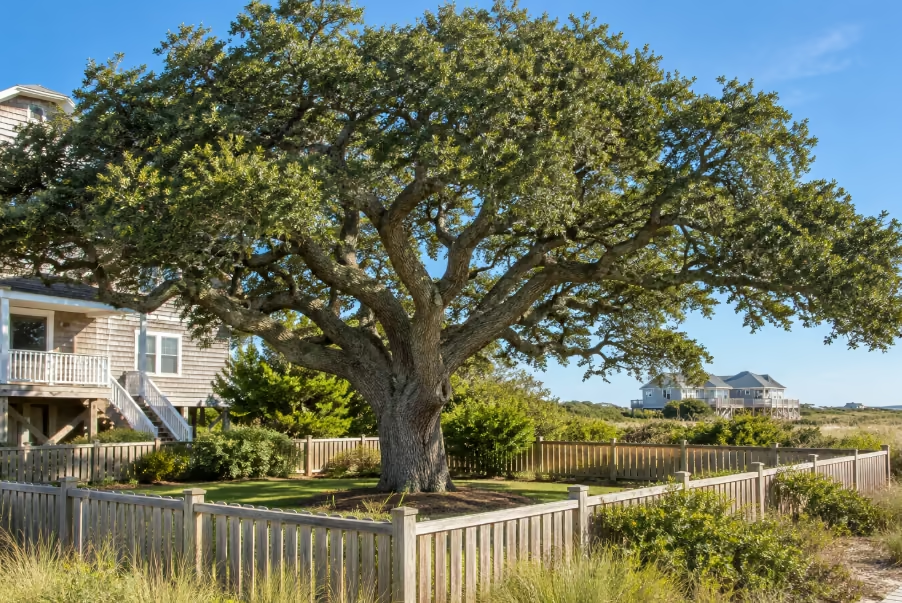
Some communities require approval for trees above a specific trunk diameter, while smaller trees may have fewer restrictions. Certain species, including mature live oaks, may receive additional protection because of their environmental and aesthetic value.
Rules may also apply to trees near property lines, common areas, designated buffers, or neighboring homes. Some HOAs require homeowners to replace qualifying trees after removal, including requirements for species, number, or minimum planting size.
What Is the Typical HOA Approval Process?
Most HOAs require homeowners to submit a tree removal request to an architectural review committee before removing a protected tree. The application may request the tree’s location, species, approximate size, reason for removal, and photographs.
Some communities may conduct a site inspection, while others review photographs and supporting documentation. Processing times vary, so homeowners should submit requests well before their planned removal date.
Hazardous or storm-damaged trees may qualify for expedited removal. However, homeowners may still need to notify the HOA and provide documentation from a qualified tree service or arborist.
What Happens If a Tree Is Removed Without HOA Approval?
Removing a protected tree without required HOA approval can result in fines, enforcement action, or a requirement to replace the tree. Some communities may require a replacement tree of a specified species or size at the homeowner’s expense.
The consequences can be more significant when tree preservation is connected to environmental requirements or designated conservation areas. Confirming the HOA requirements before removal can help homeowners avoid unnecessary costs and disputes.
How Should Homeowners Document Hazardous Trees?
Documentation from a qualified tree service in Outer Banks, North Carolina can help support an expedited HOA removal request for a hazardous tree. The assessment should explain the tree’s condition and identify the specific safety concern.
Photographs can also document visible decay, cracks, dead branches, leaning, storm damage, or other structural problems. Homeowners should ask the HOA whether it has a specific hazardous-tree form or emergency removal procedure.
Do Trees Near Property Lines Require Special Attention?
Trees near property lines, common areas, or neighboring homes may involve additional HOA requirements. Some associations may require notice to adjacent homeowners when a tree affects shared views, shade, privacy, or community areas.
Trees located in HOA-maintained common areas are generally the association’s responsibility. Homeowners should confirm ownership and responsibility before arranging pruning or removal of a tree outside their individual lot.
How Do Tree Rules Differ Between Older and Newer Communities?
Older Outer Banks communities may have covenants written decades ago with limited tree-specific language. Their rules may rely on broader architectural review provisions rather than detailed tree preservation requirements.
Newer developments may have more specific provisions covering protected species, trunk diameter, preservation areas, and replacement planting. Homeowners should never assume that rules from one Outer Banks community apply to another.
What Role Do Property Management Companies Play?
Some HOAs use property management companies to handle architectural review requests and other administrative responsibilities, while the actual approval may come from an architectural review committee or the HOA board. For example, HOA architectural review procedures can require homeowners to submit exterior modification requests through a management or property coordinator before committee review. HOA architectural review and property management procedures.
Response times can vary depending on the association’s review schedule, meeting dates, application requirements, and governing documents. Homeowners should submit all required information, photographs, supporting documents, and any requested tree-related documentation at the time of application to avoid unnecessary delays. If a tree presents an immediate safety concern, clearly explain the situation to the HOA or property manager and ask whether an expedited review process is available. Do not assume that an emergency automatically eliminates the HOA’s approval requirements.
For example, some HOA architectural committees meet on a set schedule and review applications during those meetings, while others establish a specific review period for completed applications. Example HOA architectural review process and meeting schedule.
Why Should Homeowners Keep HOA Records?
Homeowners should retain copies of their tree removal request, HOA approval, supporting documentation, and photographs. These records can help resolve questions during a future property sale, HOA review, or dispute with a neighbor.
Keeping approval records is particularly useful when the HOA requires replacement planting. Documentation provides a clear record of what was approved and what requirements applied at the time of removal.
What Should Homeowners Do Before Removing a Tree?
Homeowners should first review their current HOA governing documents or contact the property management company to confirm the applicable tree removal rules. Next, determine whether the tree meets any size, species, location, or preservation thresholds.
If approval is required, submit a complete application with photographs and a clear explanation of the reason for removal. For potentially hazardous trees, a professional assessment can provide useful documentation and may support an expedited request.
Why Does Local HOA Knowledge Matter?
HOA tree removal requirements can differ significantly between Outer Banks communities. A tree service familiar with the area may understand the documentation commonly requested and help homeowners identify information needed for an approval application.
Albemarle Landscapes and Tree Service helps homeowners navigate tree removal requirements across Outer Banks communities. Our team assesses trees for storm damage, decay, weak branches, and other safety concerns.
Albemarle Landscapes and Tree Service also provides documentation to support HOA removal or expedited approval requests, including tree condition, location, photographs, and the reason for removal.
Our team also considers property lines, common areas, protected trees, and site conditions. Homeowners should confirm their HOA rules before scheduling removal. Early assessment and proper documentation can help prevent delays and potential violations.
Frequently Asked Questions About HOA Tree Removal in the Outer Banks (OBX), North Carolina
Do all HOA communities in the Outer Banks require approval for tree removal?
No. HOA requirements vary between communities. Some associations closely regulate tree removal, while others have fewer restrictions. Homeowners should review their specific governing documents before scheduling work.
What if a tree is a safety hazard?
Many HOAs have procedures for expedited or emergency removal of hazardous trees. However, notification may still be required. Documentation from a qualified tree service can help demonstrate why removal is necessary.
Will I have to replant a tree after removal?
Some HOAs require replacement planting after qualifying tree removal. Requirements may specify the tree species, size, or number of replacement trees. The applicable HOA documents determine whether replanting is required.
Who handles trees in shared common areas?
Trees located in HOA common areas are typically the association’s responsibility rather than the individual homeowner’s. Removal or significant pruning may require approval from the HOA board or another designated authority.
Can Albemarle Landscapes and Tree Service help with HOA documentation?
Yes. Albemarle Landscapes and Tree Service can assess tree conditions, document potential hazards, and provide information that may support an HOA tree removal request.
Summary Checklist: HOA Tree Removal Rules
| Evaluation Area | What to Confirm |
| Governing documents | Current covenants and tree-specific provisions |
| Approval process | Who reviews requests and typical response times |
| Size and species thresholds | Trunk diameter or protected species requiring approval |
| Hazardous tree exceptions | Documentation needed for expedited or emergency removal |
| Replacement requirements | Species, size, or number of trees required |
| Common area trees | Whether the HOA is responsible for the tree |
| Neighbor notice | Whether adjacent homeowners must be informed |
| Records | Copies of requests, approvals, and photographs |
Final Advice
HOA tree removal rules vary across Outer Banks communities, so homeowners should review the specific requirements that apply to their property before scheduling work. A complete and well-documented request can help prevent delays, fines, and unexpected replanting requirements.
Albemarle Landscapes and Tree Service supports homeowners throughout the Outer Banks by assessing tree conditions and providing documentation that may help with the HOA approval process. Understanding the rules before removing a tree can make the process more predictable and help homeowners protect both their property and the surrounding landscape.