August 24, 2026
Key Takeaways
- Mature trees add real value to a coastal property, but they can also carry hidden risks that a standard home inspection doesn’t evaluate.
- A tree risk assessment looks specifically at structural stability, decay, root health, and proximity to structures, none of which a general home inspector is trained to assess.
- Outer Banks trees face unique stressors, including salt exposure, sandy soil, and repeated storm wind, that can accelerate structural problems.
- Discovering a hazardous tree after closing can mean an unexpected, sometimes urgent, removal expense that a pre-purchase assessment could have flagged.
- A risk assessment gives buyers real negotiating leverage, whether that means a price adjustment, a pre-closing removal request, or simply informed peace of mind.
- Not every large or old tree is a risk; a professional assessment distinguishes between trees that are simply mature and genuinely hazardous trees.
Home inspectors are trained to evaluate a property’s structure, systems, and major components, including roofing, plumbing, electrical, foundation, and similar categories. Trees, even large, mature ones standing just a few feet from the house, typically fall outside the scope of a standard inspection. A home inspector might note a tree’s proximity to the roofline as a general observation, but they are not trained or equipped to assess whether that tree is structurally sound, declining, or a genuine hazard. This gap matters more on the Outer Banks (OBX) North Carolina than in many inland markets, where large, established trees are common on residential lots and where those same trees have often spent years experiencing conditions, salt exposure, sandy soil, repeated storm wind, that create stresses inland trees rarely face. A tree that looks completely healthy from a distance can have significant internal decay, root damage, or structural weakness that only becomes apparent during a proper assessment or, worse, during a storm.
Buyers relocating from inland areas are sometimes the least prepared for this gap, since they may not be used to weighing large trees as a meaningful factor in a home purchase at all. Long-time Outer Banks residents, by contrast, often have a more instinctive sense that a big tree close to a house deserves a second look, even if they can’t articulate exactly what to check for without professional help.
What a Tree Risk Assessment Actually Involves
Tree Risk Assessment is a systematic evaluation of a tree’s structural condition and the likelihood of failure, weighted against what that failure could hit if it happened, a home, a driveway, a power line, or an area where people regularly walk or park. A professional tree service firm in Outer Banks (OBX) North Carolina can assist in performing a detailed tree risk assessment to identify the hidden problems which typically includes –
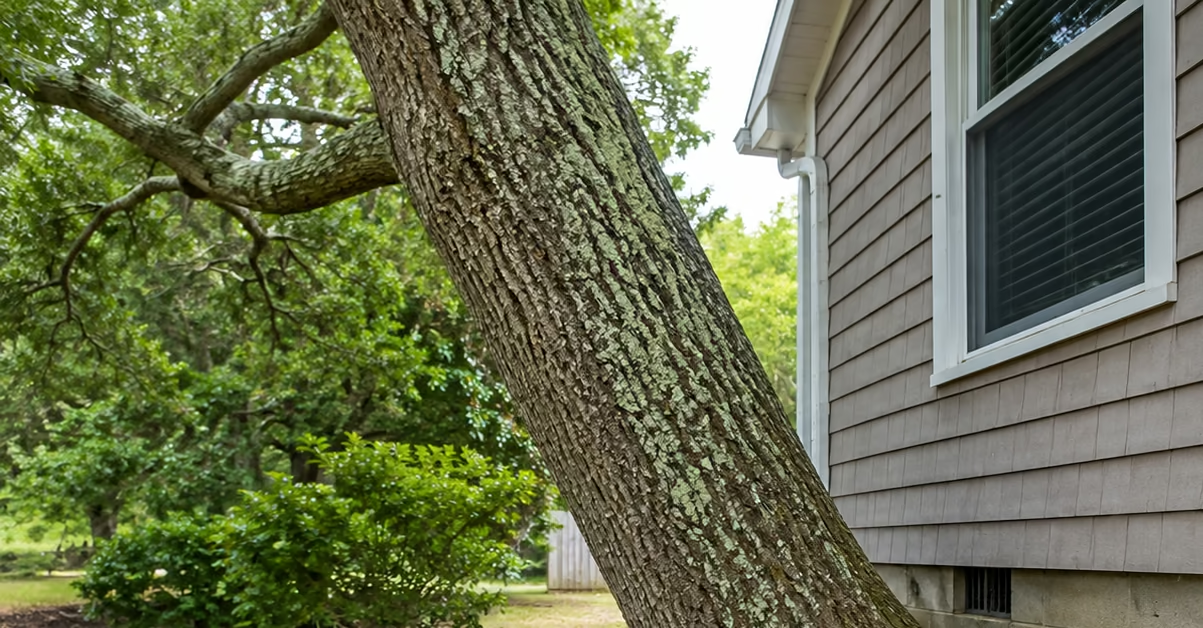
- a visual inspection of the trunk for signs of decay, cavities, or included bark
- an assessment of the root flare and any visible root damage or soil heaving
- evaluation of major limb attachments for weak unions or excessive weight, and
- consideration of the tree’s lean, canopy density, and overall vigor.
For trees where visual inspection raises questions that can’t be fully answered from the outside, additional tools like resistance drilling or sonic tomography can assess internal decay without needing to remove significant material from the tree. Not every assessment requires this level of detail, but for large trees close to a home, especially ones that will influence a purchase decision, a thorough evaluation is worth the additional step.
Why This Matters More for Coastal Outer Banks Properties
Trees on the Outer Banks live under a different set of pressures than trees in most inland markets.
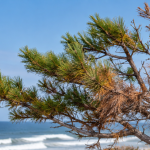
- Salt spray can stress foliage and, over years, contribute to overall tree decline.
- Sandy, low-bearing soil provides less anchoring stability for root systems than denser inland soils, which can make trees more prone to leaning or uprooting during high wind events.
- The region’s exposure to tropical storms and nor’easters means trees here experience repeated significant wind loading throughout their lives in a way that shapes, and sometimes weakens, their structure over time.
- A tree that has survived multiple storms is not automatically a safe bet going forward; each significant wind event can add cumulative stress to root systems and weak limb unions, even when the tree shows no obvious external damage. This is exactly the kind of accumulated risk that a general visual glance from a home inspector or even a homeowner walking the property is unlikely to catch, but that a trained arborist assessment is built to identify.
The Cost of Skipping This Step
Discovering a hazardous tree after closing puts a new homeowner in a difficult position. Removal of a large, mature tree, particularly one close to a home or requiring careful, section-by-section work to protect the structure, can be a significant unplanned expense. If the tree fails before it’s addressed, whether during a storm or simply due to internal decay reaching a critical point, the cost can escalate further, involving not just tree removal but potential structural repair to the home itself.
A pre-purchase tree risk assessment, by comparison, is a relatively modest cost that gives a buyer clear information before they are financially committed. In many cases, buyers use assessment findings to negotiate directly, either asking the seller to address a confirmed hazard before closing or factoring the anticipated removal cost into their offer.
Not Every Large or Old Tree Is a Risk
It’s worth saying clearly: a large, old tree is not automatically a dangerous one. Many mature trees on Outer Banks properties are perfectly healthy, structurally sound, and add real value to a home through shade, privacy, and curb appeal. The purpose of a risk assessment isn’t to find a reason to remove every big tree on a property; it’s to distinguish between trees that are simply mature and trees that carry a genuine, identifiable structural risk.
This distinction is exactly why the assessment should come from a trained professional rather than a general impression. A buyer walking a property and seeing a large, healthy-looking oak has no reliable way to know whether that tree is structurally sound or hiding internal decay. An arborist trained in tree risk assessment can make that distinction and give a buyer confidence either way, whether that confidence is in the tree’s soundness or in the need for further action.
How to Fit a Tree Assessment Into Your Buying Timeline
Most home purchases operate on a tight inspection period, typically a window of just a week or two to complete all due diligence before contingencies expire. Fitting a tree risk assessment into this timeline requires acting early, ideally scheduling it alongside your general home inspection rather than waiting to see the inspection results first, since arborists, like home inspectors, often need advance notice to fit a new assessment into their schedule.
Experienced tree service firms in OBX, North Carolina work with buyers, real estate agents, and sometimes directly with listing agents to schedule assessments efficiently within a typical due diligence window. In many cases, they can provide a preliminary verbal assessment on site the same day, with a full written report following within a few business days, giving buyers enough information to make timely decisions without jeopardizing their contract deadlines.
What a Written Assessment Report Includes
A thorough tree risk assessment report goes beyond a simple pass or fail judgment. It typically documents each tree evaluated, its species, approximate age and size, the specific conditions observed, decay, lean, root issues, or weak limb attachments, and an overall risk rating that considers both the likelihood of failure and the potential consequences based on what the tree could strike if it did fail. This level of documentation is useful well beyond the purchase decision itself. Many buyers who move forward with a purchase keep the assessment report as a baseline reference, useful for tracking any changes in a tree’s condition over time and for informing future maintenance decisions, whether that means scheduling a follow-up assessment in a few years or budgeting for eventual removal of a tree flagged as declining but not yet an immediate concern.
Before purchasing an Outer Banks home, Albemarle Landscapes and Tree Service can evaluate mature trees for hidden hazards and structural issues. Our team checks for decay, cracks, weak branches, leaning, root instability, and coastal damage from wind and salt. We provide clear findings and recommendations, including pruning, cabling, bracing, or removal when needed. We proudly serve Kitty Hawk, Corolla, Kill Devil Hills, Nags Head, and Manteo, and surrounding communities.
Frequently Asked Questions About Tree Risk Assessments in Outer Banks, North Carolina
How is a tree risk assessment different from a general home inspection?
A home inspector evaluates the house’s structure and systems and is not trained to assess tree health or structural stability. A tree risk assessment is performed by an arborist who specifically evaluates decay, root health, lean, limb attachments, and the likelihood and consequences of failure.
How long does a tree risk assessment take?
For a typical residential property, a visual assessment of the trees closest to the home and any high-value targets like driveways or power lines can usually be completed within a few hours. More detailed evaluation using tools like resistance drilling may take longer for specific trees flagged during the initial walk-through.
What happens if the assessment finds a hazardous tree?
You’ll receive a clear explanation of the specific risk identified and recommended next steps, which could range from monitoring, to pruning to reduce risk, to full removal. This information gives you options for negotiating with the seller or planning for the expense as part of your purchase decision.
Should I get an assessment even if the property doesn’t have obviously large or leaning trees?
If the property has mature trees near the home, driveway, or areas where people regularly walk or park, an assessment is worth considering even if nothing looks obviously wrong. Many structural issues aren’t visible without a trained evaluation.
Can you assess trees on a property I don’t own yet?
Yes, with the seller’s or listing agent’s permission to access the property. Many buyers coordinate this during their inspection period alongside their standard home inspection.
Summary Checklist: Tree Risk Assessment
| Factor | Why It Matters | Priority |
| Trunk and canopy visual inspection | Identifies visible decay, cavities, and structural weakness | High |
| Root flare and soil condition review | Sandy OBX soil can reduce anchoring stability over time | High |
| Limb attachment and canopy density check | Weak unions are a common source of storm-related failure | High |
| Consideration of storm and wind history | Cumulative wind stress can weaken trees with no visible signs | High |
| Proximity to home, driveway, and walkways | Determines what a tree failure could actually impact | High |
| Written report for negotiation or planning | Gives buyers concrete information before closing | Moderate |
Final Advice
Mature trees are one of the things that make Outer Banks properties genuinely special, but they come with a category of risk that a standard home inspection simply is not built to catch. Salt exposure, sandy soil, and repeated storm winds create structural stresses unique to this coastal environment, and a tree that looks perfectly healthy can be hiding real problems underneath. A tree risk assessment closes that gap, giving buyers clear, professional information before they are financially committed to a property.
Whether you’re actively under contract on a coastal property right now or simply planning for a future purchase, understanding this step exists and knowing to ask for it, puts you in a stronger position than buyers who only think about a property’s trees after they’ve already moved in. Albemarle Landscapes and Tree Service has assessed and cared for trees throughout Outer Banks for years. Our team is ready to help you make an informed decision before you close on your next coastal home.
Reviewed by Licensed Arborist
This article has been reviewed by a licensed arborist to ensure the information on tree risk assessment methods and coastal structural stress factors reflects current field practice for the Outer Banks region.
Sources & Credible References