August 20, 2026
Key Takeaways
- A tree’s first year in the ground is its most vulnerable period, and Outer Banks salt spray and wind add stress that inland trees never face.
- Consistent, deep watering matters more than frequent light watering for helping new roots establish in sandy soil.
- Proper staking protects a young tree from wind damage without restricting the trunk movement it needs to develop strength.
- Salt spray from storms and prevailing coastal winds can burn foliage, making species selection and placement important from the start.
- Mulching correctly retains moisture and moderates soil temperature, but mulch piled against the trunk causes its own problems.
- A tree that makes it through its first full year with proper care has a significantly better long-term survival rate on coastal properties.
A newly planted tree has not yet developed the root system it needs to reliably pull moisture and nutrients from the surrounding soil. For the first year or more, it is essentially living off a much smaller root ball than a mature tree relies on, which makes it far more vulnerable to drought stress, wind damage, and salt exposure than an established tree of the same species would be.
On the Outer Banks, North Carolina this vulnerability is compounded by conditions inland trees never have to deal with. Salt spray carried by coastal wind, sandy soil that drains quickly and holds less moisture, and exposure to stronger, more consistent wind all add stress during the exact period when a young tree can least afford it. Getting a new tree through this first year in good condition sets the foundation for decades of healthy growth.
We often meet homeowners who assume that because a tree survived planting and looked fine for the first few weeks, it’s past the point of real risk. In practice, stress from inadequate watering, wind damage, or salt exposure frequently doesn’t show up as visible wilting or browning until weeks or months after the underlying damage occurred, which is why consistent proactive care throughout the full first year matters more than reacting only when a tree already looks unwell.
Watering: Deep and Consistent, Not Frequent and Shallow
One of the most common mistakes with newly planted trees is watering too often but too lightly, which encourages roots to stay near the surface rather than growing down and outward in search of moisture. On sandy Outer Banks soil, which drains quickly, this mistake is even easier to make since the surface can look dry within a day of watering even when deeper soil still holds moisture.
A better approach is deep, less frequent watering, typically a slow soak that reaches well below the root ball, done two to three times per week during the first growing season, adjusted for rainfall. This encourages roots to extend downward and outward, building the kind of root structure that will help the tree withstand both drought stress and wind in years to come. During the hottest, driest stretches of summer, watering frequency may need to increase temporarily.
Staking for Wind Without Weakening the Trunk
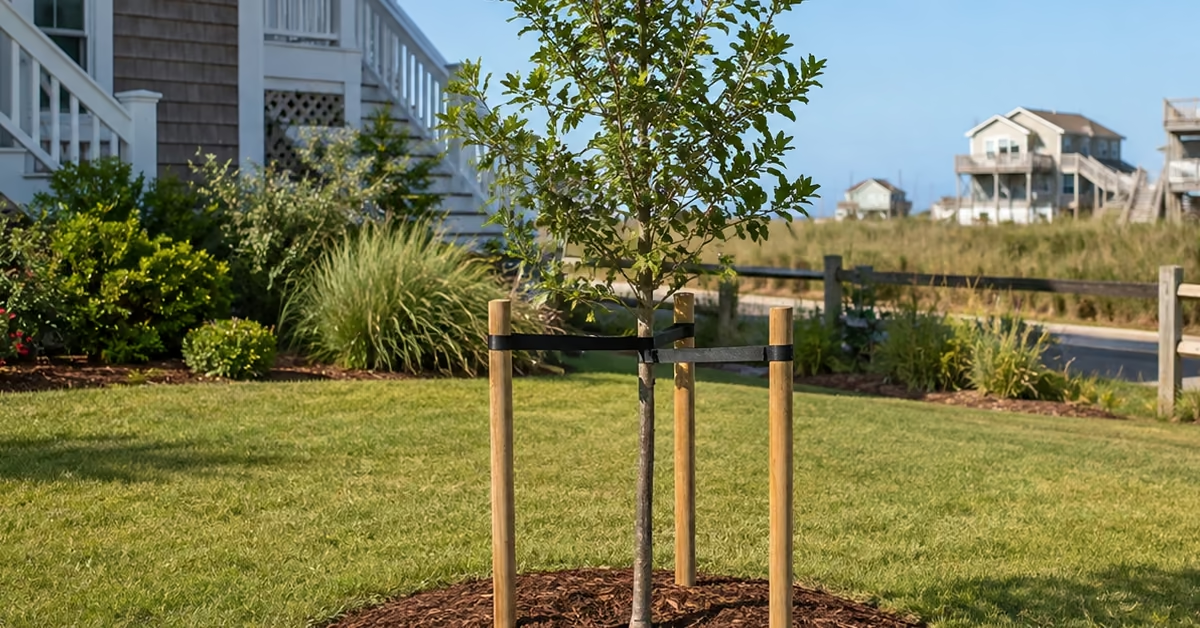
Coastal wind is a near-constant factor on the Outer Banks, and a newly planted tree’s root ball has not yet anchored firmly enough to resist strong, sustained gusts. Staking provides temporary support, but it needs to be done correctly. Stakes that are too rigid, or ties that are too tight, prevent the trunk from moving at all, which actually weakens the tree over time by preventing it from developing the trunk taper and root strength that comes from resisting wind naturally.
The right approach uses flexible ties that allow some trunk movement while still preventing the root ball from shifting or tipping in strong wind. Stakes should generally be removed after the first full growing season, once the root system has established enough to anchor the tree on its own. Leaving stakes in place too long is almost as common a mistake as not staking at all.
Managing Salt Spray Exposure
Salt spray, carried inland by wind during storms and even during routine breezy days close to the sound or ocean, can burn foliage and stress a young tree’s ability to photosynthesize effectively. This is especially true for trees planted on more exposed lots without the wind buffer that mature landscaping or structures can provide.
For newly planted trees in more exposed locations, we sometimes recommend temporary windbreaks, burlap screening or similar barriers positioned on the prevailing wind side of the tree, during the first year or after a significant storm event. Rinsing salt residue from foliage with fresh water after a storm can also help reduce leaf burn on sensitive species. Choosing species with genuine salt tolerance for exposed planting sites from the start reduces how much intervention is needed later.
After a tropical storm or nor’easter brings a significant salt spray event, checking on recently planted trees within the following day or two, rather than waiting for visible symptoms to appear, gives you the best chance to rinse foliage and limit lasting damage. Established trees can typically shrug off a single salt event without lasting harm, but a first-year tree has far less reserve capacity to recover on its own.
Mulching the Right Way
A properly applied mulch ring helps a newly planted tree in several ways: it retains soil moisture between waterings, moderates soil temperature, and suppresses competing weed growth near the root zone. On sandy OBX soil that drains and dries quickly, this moisture retention matters more than it might in heavier inland soils.
The mistake we see most often is mulch piled directly against the trunk, sometimes called a mulch volcano. This traps moisture against the bark, which can lead to rot and creates a favorable environment for pests and fungal issues. Mulch should be spread 2 to 3 inches deep in a wide ring around the tree, kept a few inches clear of the trunk itself so the bark stays dry and exposed to air.
Choosing Planting Location to Reduce First-Year Stress
Where a tree goes into the ground has a real effect on how much intervention it needs during that critical first year. A planting spot with some natural wind buffer, close to an existing structure, fence line, or established landscaping on the prevailing wind side, faces less direct salt spray and wind stress than a tree planted in a fully open, exposed area of the yard. This doesn’t mean exposed areas can’t be planted successfully, but it does mean they typically require more active first-year care, more consistent windbreak protection, and closer monitoring.
Soil conditions at the planting site matter just as much as wind exposure. Low-lying areas that collect standing water after rain can be just as harmful to a newly planted tree as overly dry, fast-draining sandy soil, since most tree species need consistent moisture without prolonged saturation around their root systems. We assess drainage patterns on a property before recommending a specific planting location, since correcting a poor site choice after the fact is far more difficult than choosing well from the start.
Fertilization: Less Is More in the First Year
It’s tempting to think a newly planted tree needs fertilizer to help it establish, but heavy fertilization during the first year can actually do more harm than good. A young tree’s priority immediately after planting is root establishment, not top growth, and pushing rapid above-ground growth with high-nitrogen fertilizer before the root system can support it creates an imbalance that leaves the tree more vulnerable to stress, not less.
In most cases, it is recommended to hold off on fertilization entirely during the first growing season, allowing the tree to focus its energy on root development. If a soil test reveals a specific nutrient deficiency in the planting site, a light, balanced application timed appropriately can help, but this should be based on an actual assessment of the soil rather than a routine, one-size-fits-all fertilization schedule applied to every new planting.
Albemarle Landscapes and Tree Service helps Outer Banks homeowners give newly planted trees the care they need to thrive. We recommend suitable species and locations while providing planting, staking, mulching, and ongoing care. Our team also helps protect young trees from coastal wind, salt, and severe weather.
Frequently Asked Questions About Newly Planted Tree Care on the Outer Banks
How often should I water a newly planted tree in my first year?
Generally two to three deep waterings per week during the growing season, adjusted based on rainfall and heat. Deep, less frequent watering encourages stronger root growth than frequent shallow watering, especially in sandy coastal soil.
When should I remove the stakes from my new tree?
Most trees are ready to have stakes removed after one full growing season, once the root system has established enough to anchor the tree against normal wind without support. Leaving stakes on too long can actually weaken trunk development.
Can salt spray really damage a tree that isn’t right on the water?
Yes. Wind can carry salt spray well inland, especially during storms, and even properties several blocks from the sound or ocean can see some leaf burn on sensitive species during a bad wind event.
How much mulch should I put around a new tree?
Two to three inches deep in a ring extending out from the trunk, but kept a few inches away from the trunk itself. Piling mulch against the bark traps moisture and can lead to rot.
What tree species handle Outer Banks conditions best in their first year?
Species with proven salt and wind tolerance, like live oak, wax myrtle, and certain cedar varieties, tend to establish more reliably in exposed coastal locations. We can recommend species suited to your specific site during a consultation.
Summary Checklist: First-Year Tree Care on the Outer Banks
| Factor | Why It Matters | Priority |
| Deep, consistent watering schedule | Encourages strong root development in fast-draining sandy soil | High |
| Correct staking with flexible ties | Supports the tree without preventing healthy trunk movement | High |
| Salt spray protection for exposed sites | Prevents foliage burn that stresses a young tree’s growth | High |
| Proper mulch depth, kept off the trunk | Retains moisture without trapping rot-causing moisture at the bark | High |
| Species selection suited to exposure | Reduces the amount of ongoing intervention needed | Moderate |
| Stake removal after one growing season | Prevents long-term weakening from restricted trunk movement | Moderate |
Final Advice
A newly planted tree’s first year on the Outer Banks is genuinely more demanding than it would be almost anywhere inland. Salt spray, sandy soil, and near-constant coastal wind all add stress at exactly the point when a young tree has the least capacity to handle it. Consistent deep watering, correct staking, salt protection where needed, and proper mulching give a new tree the best possible chance to establish strong roots and thrive for decades to come.
Investing this extra attention during the first year pays off well beyond that initial season. A tree that establishes a strong, well-developed root system early on is far more resilient in the years that follow, better able to withstand drought stretches, storm wind, and the general stresses of coastal life without the same level of ongoing intervention a poorly established tree would need indefinitely.
Albemarle Landscapes and Tree Service has helped property owners throughout Kitty Hawk, Corolla, Kill Devil Hills, Nags Head, Manteo, and the surrounding Outer Banks select, plant, and care for trees suited to our unique coastal environment. Our BBB A+ accredited, locally owned team is ready to help your new tree get through its first year and beyond.