May 11, 2026
Key Takeaways:
- Spring pruning in the OBX must account for high salt spray and sandy soil conditions.
- Structural pruning in early spring reduces the risk of limb failure during hurricane season.
- Avoid topping trees; instead, use thinning cuts to allow wind to pass through the canopy.
- Target dead, diseased, or crossing branches to improve sunlight penetration and air circulation.
- Hiring a local expert ensures compliance with Dare and Currituck County environmental regulations.
Spring in the Outer Banks (OBX) is a season of dramatic transition. As the maritime forests and coastal landscapes of Kitty Hawk, Nags Head, and Corolla begin to wake from their winter dormancy, homeowners face a unique set of challenges. Unlike inland regions, the OBX environment is defined by relentless salt spray, high winds, and sandy, nutrient-poor soil. These factors make spring pruning not just an aesthetic choice but a vital necessity for property safety and tree longevity.
Pruning during the spring window allows you to assess winter damage while preparing your canopy for the upcoming hurricane season. Proper technique ensures that your Live Oaks, Loblolly Pines, and Eastern Red Cedars remain resilient against the Atlantic’s elements.
The Importance of Timing in a Coastal Climate
Timing is everything when it comes to the health of your trees. In the Outer Banks, the spring window can be narrow. You want to prune just as the sap begins to flow, but before the tree has expended too much energy on new leaf production.
For deciduous trees, pruning in late winter or very early spring before the buds break is ideal. This allows the tree to direct its spring energy surge toward healing the pruning wounds. For our iconic evergreens and salt-hardy shrubs, light pruning in mid-spring helps manage growth without exposing tender new shoots to the late-season nor’easters that can still bring salt-heavy winds.
Identifying the Three Ds: Dead, Damaged, and Diseased
The first step in any spring pruning project is the removal of the Three Ds. The OBX winter can be harsh, often leaving behind brittle branches coated in salt crust.
- Deadwood: Branches that failed to survive the winter are more than just an eyesore; they are a safety hazard. In high-wind events, deadwood is the first to break, potentially damaging roofs or vehicles.
- Damaged Limbs: Look for branches that have cracked or rubbed against each other during winter storms. These open wounds are entry points for pests and fungal pathogens.
- Diseased Sections: If you notice unusual cankers, fungal growth, or discolored wood, these sections should be removed immediately to prevent the spread of infection throughout the tree’s vascular system.
Structural Pruning for Wind Resistance
One of the most critical aspects of tree care in the Outer Banks is wind firming. Because we live in a high-velocity wind zone, your trees need to act as a filter rather than a sail. Dense canopies catch the wind, which can lead to uprooting in sandy soils.
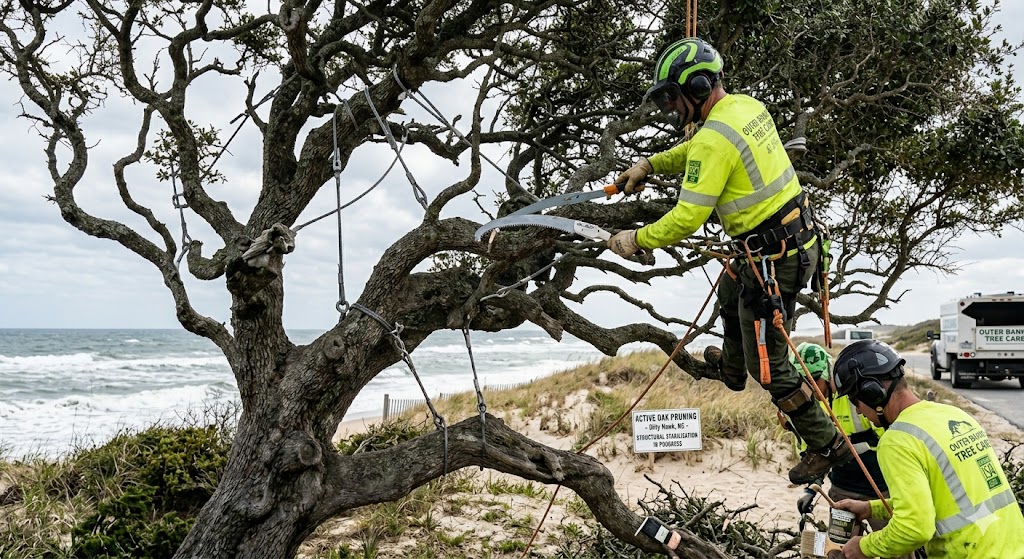
Structural pruning involves thinning the interior of the canopy. By strategically removing select branches, you allow air to flow through the tree. This reduces the drag on the trunk and root system during tropical storms. Focus on removing co-dominant stems where two large branches grow from the same point in a ‘V’ shape. These unions are structurally weak and prone to splitting. Aim for a strong, single leader (trunk) wherever possible.
The Dangers of Topping and Improper Cuts
A common mistake made by well-meaning homeowners is topping the practice of cutting off the tops of large trees to reduce their height. In the OBX, this is disastrous. Topping triggers the growth of water sprouts, which are weak, fast-growing limbs that break easily in the wind. Furthermore, it leaves large, flat wounds that rarely heal properly in our humid, salty air.
Instead, use thinning cuts that remove a branch at its point of origin or reduction cuts that shorten a limb to a lateral branch large enough to assume the terminal role. Always cut just outside the branch collar, the swollen area where the limb meets the trunk. This ensures the tree’s natural defense chemicals can seal the wound.
Soil and Root Health Post-Pruning
Pruning is only half the battle. Because Outer Banks soil is primarily sand, it leaches nutrients quickly. After pruning, it is beneficial to apply a layer of organic mulch around the base of the tree. This helps retain moisture during our dry spring spells and provides a slow release of nutrients as the organic matter breaks down.
However, avoid mulch volcanoes. Piling mulch against the trunk traps moisture against the bark, leading to rot and insect infestations. Keep the mulch a few inches away from the flare of the trunk to ensure the tree can breathe.
Coastal Species Specifics
Different trees in our region require different approaches:
- Live Oaks: These are the crown jewels of the OBX. They require very little pruning once established, but removing low-hanging limbs that interfere with structures or walkways is common in the spring.
- Loblolly Pines: These are prone to self-pruning their lower limbs. Spring is a great time to clear out those dead lower branches to reduce fuel for potential fires and improve the view.
- Wax Myrtles: These hardy shrubs often grow out of control. Spring thinning helps maintain their shape and keeps them from becoming too top-heavy.
Safety First: When to Call an Expert
While many homeowners enjoy light gardening, tree pruning in a coastal environment can be dangerous. Working near power lines, using chainsaws on ladders, or handling large, heavy limbs requires professional equipment and training. Given the importance of structural integrity for storm season, having a professional risk assessment is often the smartest investment a property owner can make.
Protecting your Outer Banks home starts with a healthy, resilient landscape. Albemarle Landscapes and Tree Service is the most experienced tree service company in the region, serving Kitty Hawk, Nags Head, Manteo, and beyond. We offer a wide range of services such as – tree removal, tree trimming / pruning, shrub removal/trimming, stump removal/grinding, 24/7 emergency service, storm prep., tree planting, tree cabling & bracing, tree limb removal, tree risk assessment, turf & irrigation, land management, crane service, landscaping, and lawn care.
Whether you need expert tree trimming to prep for storm season, safe removal of hazardous pines, or professional stump grinding, our BBB A+ accredited team is ready to help. We are fully bonded and insured, offering top-of-the-line equipment and a workmanship guarantee on every job. We value our community and offer discounts for military members, teachers, and cash payments.
Don’t wait for the next storm to test your trees. Call us today at (252) 256-9128 for a free quote or to schedule a weekend appointment.
Frequently Asked Questions by Homeowners in North Carolina
Is spring the best time to prune trees in the Outer Banks?
Yes, early spring is ideal for most species as it allows wounds to heal before the heat of summer and the peak of hurricane season.
Can salt spray affect how a tree heals after pruning?
Absolutely. Fresh cuts can be sensitive to heavy salt deposits. A professional can determine if a pruning sealer is necessary or if timing should be adjusted based on recent weather patterns.
What is the difference between thinning and topping?
Thinning removes specific branches to improve airflow, while topping is the harmful practice of cutting the main vertical stem, which weakens the tree.
How much of the canopy can be safely removed?
Generally, you should never remove more than 25% of a tree’s living canopy in a single season to avoid stressing the root system.
How do I know if my tree is a hazard for the upcoming storm season in Kitty Hawk, North Carolina?
Look for signs of decay, large cracks, or a sudden lean. A professional tree risk assessment is the most reliable way to identify hidden dangers.
Should I prune my trees myself?
Small shrubs and low branches are fine for DIY, but anything involving heights, power lines, or heavy machinery should be left to the experts for safety and tree health.
What should I do with the debris after pruning?
Albemarle Landscapes and Tree Service provides full cleanup and chipping services, ensuring your property is left clean and hazard-free.
Summary Checklist: Spring Pruning & Maintenance
| Condition | Risk Level | Recommended Action |
|---|---|---|
| Salt-crusted deadwood | High | Remove dead limbs promptly to reduce the risk of wind-borne branch failure |
| V-shaped co-dominant stems | Moderate to High | Use structural pruning to improve tree form and reduce splitting risk during storms |
| Dense, wind-catching canopy | High | Thin the canopy strategically to improve airflow and lower wind resistance |
| Rubbing or crossing branches | Moderate | Prune conflicting branches to prevent bark damage and reduce disease entry points |
| Mulch piled against the trunk | Moderate | Pull mulch away from the trunk to expose the root flare and prevent decay issues |
Final Advice
Implementing the right spring tree pruning tips for your Outer Banks home is the single most effective way to safeguard your property before the Atlantic hurricane season arrives. To ensure your coastal landscape remains healthy, always prioritize the removal of salt-damaged deadwood and structural thinning over harmful topping practices. By opening up the canopy, you allow salt-heavy winds to pass through rather than pushing the tree over in our sandy soil.
The homeowners in Kitty Hawk and surrounding areas should inspect their Live Oaks and Loblolly Pines for any co-dominant stems or internal decay that could compromise stability. Furthermore, timing your cuts for early spring ensures that the tree has the seasonal energy required to seal wounds quickly before the humidity and pests of summer take hold. If you are uncertain about a specific limb or the height of a tree requires specialized equipment, do not hesitate to seek a professional risk assessment. Our final suggestion is to focus on long-term vitality by coupling your pruning with proper mulching and deep-root fertilization to combat the nutrient deficiencies common in our barrier island environment. Taking these proactive steps now prevents the high costs and safety risks of emergency removals later in the year.