May 9, 2026
Key Takeaways:
- Dormant season (late winter) is the safest time to trim Live Oaks in the OBX.
- Avoid pruning during the spring growth flush to prevent unnecessary tree stress.
- Structural pruning is essential for helping Live Oaks survive hurricane-force winds.
- Salt spray and sandy soil require specialized coastal tree care techniques.
- Professional arborists help manage the unique wind-sculpted growth of OBX oaks.
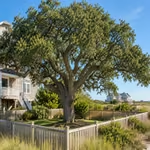
The maritime forests of the Outer Banks (OBX), North Carolina, are anchored by the iconic Live Oak. These resilient, salt-tolerant giants are the biological heartbeat of our coastal barrier islands, from Corolla down to Nags Head. However, the very environment that makes them so unique, sandy soil, constant salt spray, and high-velocity winds, also dictates a very specific set of rules for their maintenance. Trimming a Live Oak in Kitty Hawk is not the same as trimming an oak in the Piedmont. To preserve the health and structural integrity of these historic trees, timing and technique must align with the local coastal ecology.
The Biological Cycle of the Coastal Live Oak
Live Oaks (Quercus virginiana) are evergreen oaks, meaning they don’t drop all their leaves at once in the fall like their inland cousins. Instead, they gradually replace their canopy in the early spring. This unique growth cycle is the primary factor in determining the best time for maintenance.
When you prune a tree, you are removing energy-producing foliage and creating an open wound. The tree must use its stored starch reserves to seal the cut through compartmentalization. In the Outer Banks, the goal is to prune when the tree’s energy reserves are at their peak and when the risk of fungal infection or pest infestation is at its lowest.
The Gold Standard: Late Winter Dormancy
For residents of Dare and Currituck Counties, the absolute best window for trimming Live Oaks is late winter, specifically January and February. During this time, the tree is in its deepest state of dormancy. The sap is not flowing aggressively, and the tree is not putting energy into new leaf production.
Pruning in late winter offers several advantages for the coastal homeowner:
- Wound Recovery: When the spring growth flush begins in March, the tree can immediately begin the healing process, closing the pruning wounds quickly.
- Pest Avoidance: Many opportunistic insects and fungal pathogens are inactive during the colder winter months.
- Storm Preparation: By thinning the canopy in late winter, you ensure the tree is aerodynamically ready for the spring nor’easters and the upcoming hurricane season.
Why You Should Avoid Spring Pruning
The most dangerous time to trim a Live Oak in the Outer Banks is during the spring flush, usually from late March through May. This is when the tree is pushing out new buds and catkins. During this phase, the tree’s energy is being directed entirely toward growth, leaving very little for defense.
Trimming during the spring can lead to sap bleeding, which attracts pests. Furthermore, the bark is loose during the growing season, making it prone to tearing or stripping when branches are removed. If you miss the winter window, it is often better to wait until the new growth has hardened off in mid-summer rather than risking the health of the tree during its spring vulnerability.
Summer Maintenance and Salt Spray Management
While winter is best for structural changes, summer pruning (July and August) is often necessary for removing deadwood or storm-proofing a tree that has become too dense. In the Outer Banks, the salt spray from the Atlantic can cause salt burn on the outer leaves of the canopy.
Strategic summer trimming can help remove the most damaged outer layers, allowing the tree to maintain its health. However, summer pruning should be conservative. Removing too much of the outer canopy can expose the tender interior leaves to direct salt spray, which can cause significant dieback. An experienced local arborist understands the balance between opening up the tree for airflow and maintaining the salt shield that the outer leaves provide.
Structural Pruning for Hurricane Resilience
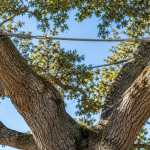
In the OBX, we don’t just prune for beauty; we prune for survival. Live Oaks are famous for their sprawling, horizontal limbs. While beautiful, these long branches act as levers during high winds. If a limb is too heavy at the tip, the torque generated by a hurricane-force gust can snap the branch or even uproot the entire tree.
End-weight reduction is a critical technique used by coastal tree experts. By selectively removing weight from the tips of long branches, you reduce the leverage that wind exerts on the tree’s trunk and root system. This, combined with canopy thinning to reduce wind resistance, is the best insurance policy a homeowner can have against storm damage.
The Importance of the Root Flare and Sandy Soil
The stability of a Live Oak in the Outer Banks is entirely dependent on its root system’s grip on the sand. Unlike clay soils, sandy soil shifts easily when saturated by heavy rain or storm surge. Proper tree care includes ensuring the root flare (where the trunk meets the roots) is clear of excess mulch or sand.
If sand or mulch is piled high against the trunk, a common mistake in coastal landscaping, it traps moisture and salt against the bark. This leads to crown rot and weakens the tree’s foundation. During your pruning appointment, a professional should also inspect the base of the tree to ensure the structural roots are healthy and unobstructed.
Managing the Wind-Sculpted Aesthetic
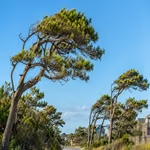
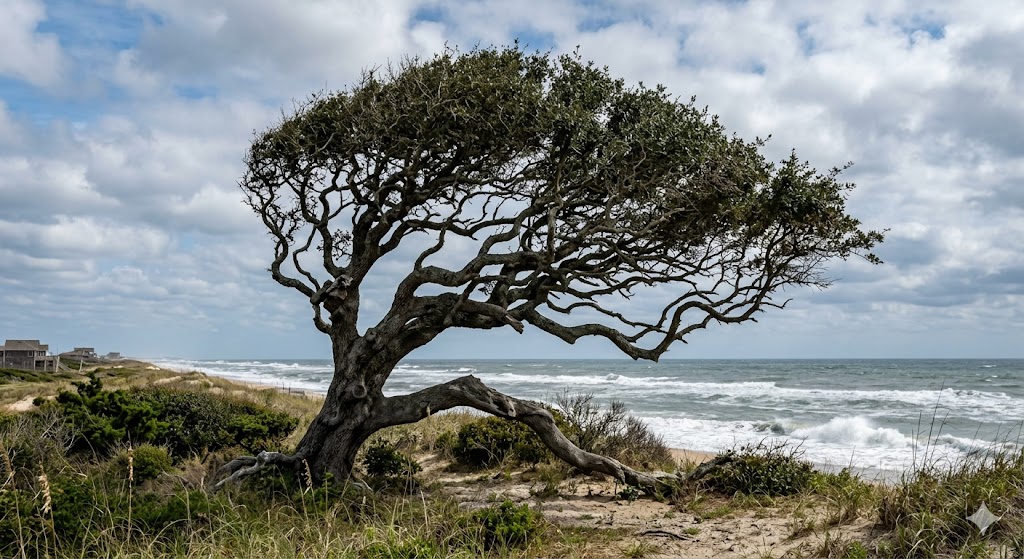
One of the most beautiful aspects of the Outer Banks is the wind-sculpted look of the Live Oaks. These trees have grown in response to the prevailing winds, leaning away from the ocean and developing twisted, gnarled trunks.
When trimming these trees, it is vital to respect their natural form. Over-pruning to correct a lean can actually destabilize the tree, as the lean is its natural way of balancing against the wind. A skilled arborist will work with the tree’s wind-swept shape, removing only what is necessary for safety and health while preserving the iconic OBX silhouette that takes decades to form.
Caring for Live Oaks in a coastal environment requires a deep understanding of local ecology that only years of experience in the Outer Banks can provide. Albemarle Landscapes and Tree Service is the most experienced tree service company in North Carolina, serving Kitty Hawk, Nags Head, Duck, and Corolla with precision and care. As a locally-owned and BBB A+ accredited business, we understand the specific threats posed by salt spray, sandy soil, and tropical storms. Albemarle Landscapes and Tree Service offers a wide range of tree services like tree removal, tree trimming / pruning, shrub removal/trimming, stump removal/grinding, 24/7 emergency service, storm prep., tree planting, tree cabling & bracing, tree limb removal, tree risk assessment, turf & irrigation, land management, crane service, landscaping, and lawn care.
Our team is fully bonded and insured, utilizing top-of-the-line equipment to handle everything from delicate structural pruning to complex, crane-assisted removals.
We take pride in our 5-star reputation and our commitment to the community, offering military and teacher discounts as well as 24/7 emergency response. Whether you need to stabilize a historic oak with cabling and bracing or prepare your property for hurricane season, we bring professionalism and a neighborhood touch to every project. Don’t leave your valuable trees to chance; trust the experts who know the Outer Banks best. Call Albemarle Landscapes and Tree Service today at (252) 256-9128 for a free estimate and let us help your landscape flourish for years to come.
Frequently Asked Questions by the Homeowners in Outer Banks, NC
Is it okay to prune Live Oaks in the summer in Outer Banks, NC?
Yes, but it should be limited to light thinning or deadwood removal. Avoid heavy structural cuts in the summer to prevent exposing the inner canopy to salt spray.
Does salt spray affect how I should prune my trees?
Absolutely. We avoid over-thinning the seaward side of a tree, as those outer leaves act as a sacrificial barrier that protects the rest of the tree from salt damage.
Why is late winter the best time for oak trimming in Outer Banks, NC?
During dormancy, the tree’s energy is stored in the roots. Pruning now prevents sap loss and allows the tree to heal rapidly as soon as the spring growth begins.
Can a leaning Live Oak be saved?
In the OBX, many oaks naturally lean due to the wind. If the lean is old and the root plate is stable, it is usually safe. If the lean is new after a storm, it is an emergency.
How often should I have my Live Oaks inspected in Outer Banks, NC?
Given our storm frequency, a professional risk assessment every 2 to 3 years is recommended to identify structural weaknesses before they become hazards.
What is tree cabling and bracing?
It is a method of using high-strength cables to support weak limbs or split trunks, helping the tree withstand high winds without having to be removed.
Does pruning help with hurricane resistance?
Yes. Proper thinning allows wind to pass through the canopy (the sail effect) and reduces end-weight on long limbs, preventing them from snapping.
Summary Checklist: Live Oak Maintenance
| Condition | Risk Level | Recommended Action |
|---|---|---|
| Dead or dying limbs | High | Remove hazardous limbs promptly in any season to reduce fall and storm failure risks |
| Excessive salt burn on foliage | Moderate | Lightly prune damaged growth and flush the root zone with fresh water to reduce salt stress |
| Overweight horizontal limbs | High | Schedule structural pruning to reduce end weight and improve branch stability |
| Sand or mulch piled against the trunk | Moderate | Clear the root flare to prevent moisture buildup, crown rot, and trunk decay |
| Visible cavities or trunk cracks | Critical | Request an immediate professional tree risk assessment for structural safety concerns |
Final Advice
Maintaining Live Oaks in the Outer Banks is a practice of patience and environmental awareness. The most important thing you can do for your trees is to respect their natural dormant cycle. By scheduling your major structural pruning in the late winter, you give your oaks the best chance to heal and thrive. However, safety should always be your primary concern. If you notice a hanger (a broken branch caught in the canopy) or a significant new crack after a storm, do not wait for winter; these are immediate hazards that require professional attention regardless of the month. Always ensure your tree service provider understands the maritime forest dynamics. Proper pruning in our area is about reducing wind load while maintaining the tree’s natural defense against salt. Avoid the temptation of lion-tailing, which involves removing all the interior branches and leaving only the tufts at the ends; this makes the tree more likely to fail in a hurricane. Instead, look for a service that prioritizes the long-term health and structural balance of the tree. A well-maintained Live Oak is more than just a plant; it is a legacy that protects your home and adds immense value to your property for generations.