March 16, 2026
The Outer Banks is a distinct horticultural environment. The combination of sandy soil, high water tables, salt spray, and intense wind creates a “survival of the fittest” scenario for landscape plants. While native Live Oaks and Yaupon Hollies thrive with benign neglect, many other popular trees planted in our residential neighborhoods require significant ongoing maintenance to stay safe and attractive.
At Albemarle Landscapes and Tree Service, we believe that any tree can be an asset if managed correctly. However, understanding the specific needs of the trees in your yard is the key to preventing them from becoming liabilities. Whether you have inherited a mature landscape or are planting new stock, paying extra attention to these specific varieties will pay dividends in the long run.
Key Takeaways
- Bradford Pears: Highly prone to splitting; require aggressive structural pruning or removal.
- Pines: Shallow root systems make them susceptible to windthrow; they need regular root zone inspection.
- Crepe Myrtles: susceptible to aphids and sooty mold; require proper airflow and careful pruning (no “crepe murder”).
- Leyland Cypress: Prone to canker diseases and bagworms in humid coastal climates; needs monitoring.
- Soil Amendments: Sandy OBX soil lacks nutrients; regular compost and slow-release fertilizer are essential.
- Wind Protection: Staking young trees and planting windbreaks helps establish roots in exposed areas.
Quick Answer
In OBX neighborhoods, trees like Bradford Pears, Leyland Cypress, and certain Pines require extra attention due to their susceptibility to wind damage, pests, and poor soil conditions. Regular monitoring for structural weakness, specific pruning techniques, and soil enrichment are critical for keeping these common species healthy and safe because OBX conditions amplify weaknesses that might be manageable inland.
Why Bradford Pear Trees Fail in High-Wind Coastal Areas
The Bradford Pear was once the darling of suburban landscaping due to its perfect shape and white spring flowers. Today, it is largely considered a nuisance. The tree naturally grows with a weak branch structure, where multiple heavy limbs attach at a single point on the trunk.
Managing the Split Risk
In the windy environment of the OBX, Bradford Pears are ticking time bombs. As they age, they become incredibly prone to splitting down the middle. If you have these in your yard, they need aggressive weight reduction pruning to reduce the leverage on those weak unions. In many cases, we recommend replacing them entirely with stronger alternatives like Serviceberry or Fringe Tree before they fail.
Why Leyland Cypress Requires Constant Monitoring in OBX
Leyland Cypress trees are ubiquitous as privacy screens, but they struggle in our humidity. They are highly susceptible to Seiridium canker, a fungal disease that causes branches to turn brown and die back. Once a tree is infected, the disease is difficult to control and often spreads to the entire row.
They are also a favorite food for bagworms. These pests can strip a cypress of its foliage in a matter of weeks. Extension services like Clemson Home & Garden emphasize that if you have a wall of Leyland Cypress, you must inspect them monthly for “bags” (cocoons) and browning needles. Ensuring they have adequate spacing for airflow can help reduce fungal pressure, but they are far from a “plant it and forget it” option.
Are Pines Safe to Keep Near Homes in Sandy Soil?
Pines are native and common, but in a residential setting, they pose risks. Loblolly pines grow very fast, which makes their wood somewhat brittle. More importantly, they often have shallow, plate-like root systems.
In the sandy soils of the Outer Banks, a tall pine acts like a giant lever against its roots. When the ground becomes saturated during a hurricane, pines are notorious for uprooting whole. Homeowners should regularly have the crowns of their pines inspected and thinned to reduce wind resistance. Additionally, looking for signs of pine bark beetles is crucial, as these pests can kill a mature pine in a single season.
Crepe Myrtles: Avoiding “Crepe Murder”
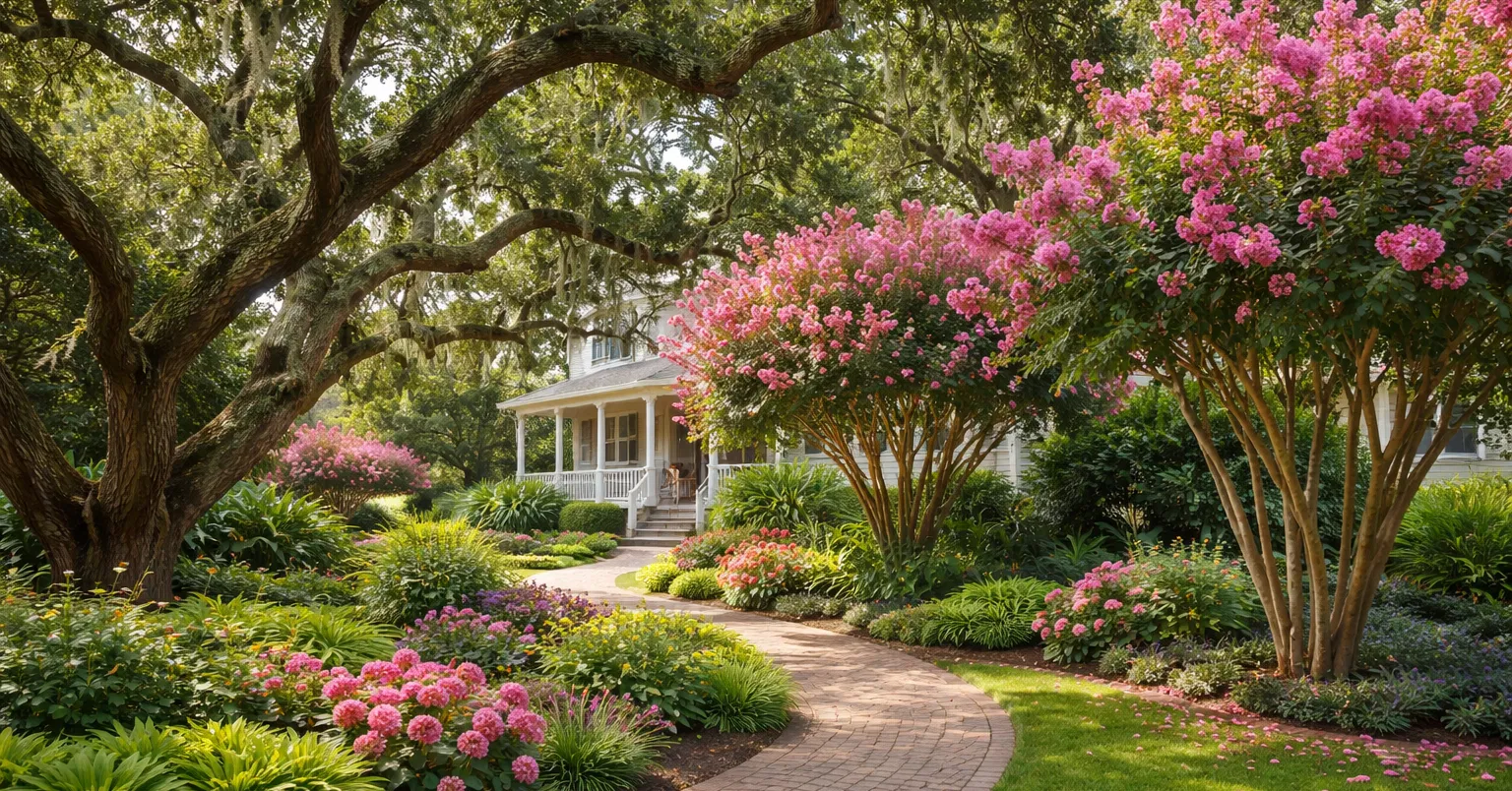
Crepe Myrtles love our heat, but they are often mistreated. Many homeowners and unskilled landscapers top them severely in winter, a practice known as “crepe murder.” This results in weak, spindly new growth that cannot support the weight of the massive flower heads, causing branches to droop or snap during summer rains.
Pest Pressure: Aphids and Sooty Mold
Beyond pruning, Crepe Myrtles in the OBX are prone to aphids. These insects secrete a sticky substance called honeydew, which leads to the growth of black sooty mold on the leaves and anything beneath the tree (like your car or patio). Managing the aphid population is essential for keeping the tree looking clean and healthy.
Which Trees Thrive With Minimal Maintenance in the Outer Banks
While some trees are demanding, others thrive with minimal maintenance in OBX neighborhoods. If you are looking to replace a high-maintenance tree, consider native options that have evolved to handle the salt and wind. The Live Oak, Yaupon Holly, and Eastern Red Cedar are incredibly resilient and require very little inputs once established. These “set it and forget it” trees are often the better choice for homeowners who want a beautiful landscape without the constant worry of pests or structural failure.
How Sandy Soil Impacts Tree Stability in Coastal Neighborhoods
The soil in OBX neighborhoods is essentially ancient sand dunes. It drains water instantly and holds very few nutrients. Trees that are accustomed to rich, loamy clay (like Maples or Dogwoods) will starve and dehydrate here without help.
“High attention” maintenance for these trees involves:
- Soil Amendments: Regularly adding organic compost to improve water retention.
- Fertilization: Using slow-release, granular fertilizers that won’t immediately wash away with the first rain.
- Irrigation: Installing drip systems to provide consistent deep watering, encouraging roots to grow down rather than stay on the surface.
Maintenance Checklist for High-Risk Species
To help you manage your landscape, here is a quick guide to the specific needs of these demanding trees.
| Tree Species | Primary Risk | Essential Maintenance | Best Time for Action |
|---|---|---|---|
| Bradford Pear | Structural splitting and limb failure | Weight reduction, pruning, and cabling support | Late winter before spring growth |
| Leyland Cypress | Canker disease and bagworm infestation | Preventive fungicide treatment and pest inspection | Spring through early summer |
| Loblolly Pine | Wind uprooting and pine beetle activity | Crown thinning and root collar inspection | Winter to early spring |
| Crepe Myrtle | Sooty mold and weak structural growth | Selective structural pruning and aphid control | Late winter and mid-summer |
| River Birch | Drought stress and iron chlorosis | Deep root watering and iron supplementation | Summer through early fall |
The Importance of Mulch and Root Protection
For all these species, the root zone is the engine of the tree. In our sandy environment, protecting the roots is non-negotiable. A 2-to-3-inch layer of organic mulch (hardwood or pine straw) mimics the forest floor. It moderates soil temperature, retains moisture, and adds organic matter as it breaks down.
Avoid “volcano mulching,” where mulch is piled high against the trunk. This rots the bark and invites pests. Instead, spread the mulch wide out to the drip line if possible to minimize competition from grass and prevent lawnmower damage to the surface roots.
FAQ
Why are my Crepe Myrtle leaves turning black?
This is likely sooty mold, a fungus that grows on the honeydew excreted by aphids. You need to treat the aphids (the source) rather than just washing the leaves. Systemic insecticides or insecticidal soaps are effective treatments.
Can I save a splitting Bradford Pear?
If the split is minor, bolting or cabling might extend the tree’s life, but this is a temporary fix. Given their propensity for failure, investing in a removal and replanting with a superior species is usually the smarter long-term financial decision.
How do I know if my pine tree has beetles?
Look for “pitch tubes,” small globs of resin that look like popcorn on the bark. You might also see sawdust at the base of the tree or needles turning yellow/brown rapidly. If you see pitch tubes, call Albemarle Landscapes and Tree Service immediately; the tree likely needs removal to save neighboring pines.
Is it okay to plant Maples in the OBX?
Red Maples can survive in wetter areas, but they generally struggle with the salt and sand. If you plant one, ensure it is in a protected area (Zone 2 or 3) and be prepared to provide supplemental water and fertilizer for its entire life.
What is the best alternative to Leyland Cypress for privacy?
Green Giant Arborvitae is a superior choice. It is fast-growing, deer-resistant, and much more disease-resistant than Leyland Cypress. Wax Myrtle is another excellent native option that handles salt spray and sandy soil effortlessly.
How often do I need to water new trees in sandy soil?
New trees in sandy soil need water almost daily for the first two weeks, then 2-3 times per week for the first year. Because sand drains so quickly, frequent but deep watering is key to establishment.
Conclusion
The trees in our OBX neighborhoods face a tough life, battling sand, salt, and wind daily. While species like Bradford Pears and Leyland Cypress require extra vigilance, they can still be part of a beautiful landscape if managed correctly. The key is consistency – regular inspections for pests, structural pruning, and soil care. If you are tired of the constant maintenance, consider transitioning your yard to native species that have evolved to thrive here effortlessly. Whichever path you choose, staying ahead of problems is the secret to a green and healthy garden.