Understanding The Gravity of the Situation.
February 10, 2026
A leaning tree can be more than just an eyesore; it might pose a serious threat to your home, property, and family. Knowing how to tell if a leaning tree is dangerous is crucial for safety and preventing costly damage. For homeowners in Kitty Hawk, Dare, and Currituck Counties, understanding these risks and acting quickly makes all the difference.
Growth Lean vs. Structural Failure: Know the Difference
The first step in assessment is determining how the tree came to lean. Trees are biological organisms that prioritize light and balance. Not every tilt is a death sentence.
-
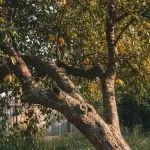
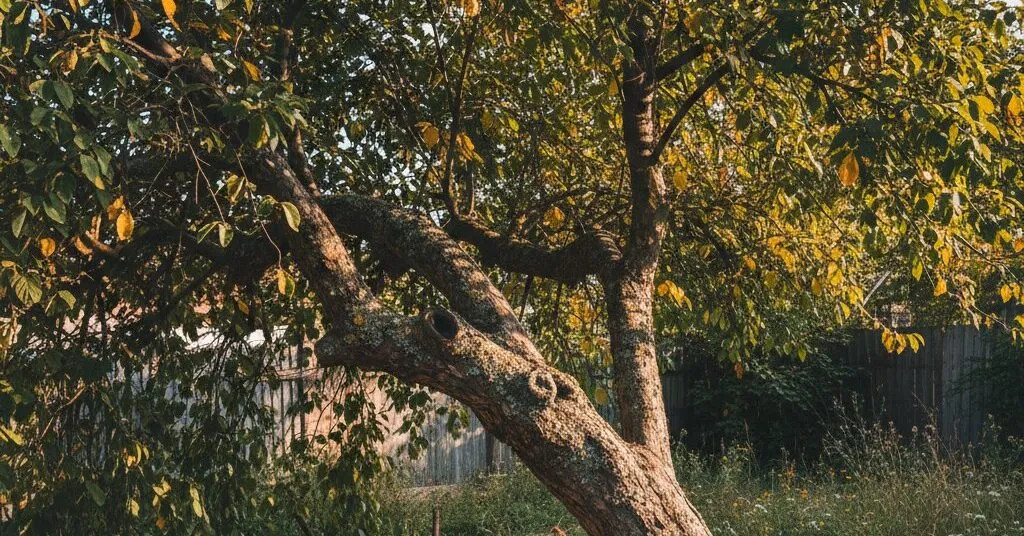
Phototropism (Growth Lean): This occurs when a tree leans toward sunlight, often seen if the tree is shaded by a larger building or a denser canopy. These trees typically have a curved trunk—the base may be straight, while the top reaches toward the light. These are generally stable because the tree has grown “reactive wood” to support the weight.
-
Active Failure (Heaving): This is a structural emergency. It occurs when the root plate or the trunk itself can no longer support the tree’s vertical load. Unlike a growth lean, an active failure usually involves the entire trunk leaning at a sharp angle from the ground up, often accompanied by disturbed soil at the base.
The Anatomy of a Dangerous Lean
When assessing a tree, you must look for specific “red flag” symptoms. If a tree displays any of the following, its structural integrity is likely compromised beyond repair.
The Root Plate and Soil Heave
The most critical area to inspect is the “root flare”—where the trunk meets the dirt.
- Soil Mounding: Look at the side of the tree opposite the lean. If the ground is lifting, mounding, or cracking, the roots are physically pulling out of the earth. This is a clear sign that the tree’s “anchor” has snapped.
- Exposed Feeder Roots: If you see fine, fresh roots exposed to the air that were previously underground, the tree is in motion.
- Water Saturation: In the Outer Banks, our sandy soil loses almost all its “clutch” power when saturated by heavy rain or storm surges. A leaning tree in wet sand is exponentially more dangerous than one in dry, compacted soil.
Trunk Integrity and Compression Wood
Trees manage a lean by growing specialized wood. On a leaning tree, the side under tension (the “top” side) and the side under compression (the “bottom” side) undergo immense stress.
- Vertical Cracks: A deep, vertical split in the trunk suggests that the tree is literally tearing itself apart under the torque of the lean.
- Buckling Bark: If the bark on the leaning side looks crushed, wrinkled, or “buckled,” the internal wood fibers are collapsing under the weight.
- The 15-Degree Threshold: While not a universal law, arborists generally consider a sudden lean of 15 degrees or more to be a high-risk hazard. If a tree reaches a 45-degree angle, it is considered to be in a state of imminent failure.
The “V-Crotch” and Co-Dominant Stems
Trees with two main trunks (co-dominant stems) that form a tight “V” shape are inherently weaker than those with a single leader. If one of these stems begins to lean away from the other, the “included bark” between them acts as a wedge. Wind or ice can easily split these trees down the middle, causing half the tree to crush whatever is beneath it.
Outer Banks Environmental Stressors
Coastal North Carolina presents a unique set of challenges that make leaning trees more volatile than those found further inland.
-
The “Sail” Effect: Many local trees, particularly unpruned pines, have dense “heads” of foliage at the very top. In high winds, this canopy acts like a giant sail. The leverage exerted on a leaning trunk during a 60-mph gust is astronomical. Without regular thinning to let the wind “blow through” the canopy, a leaning tree is a prime candidate for uprooting.
-
Saltwater Intrusion and Ghost Forests: As sea levels rise and storm surges push saltwater further inland, many trees are suffering from salt toxicity. This kills the root system before the top of the tree shows signs of distress. A leaning tree with a dead or dying root system has no foundation; it is essentially a telephone pole balanced on a needle.
-
Pests and Decay: The Emerald Ash Borer and various fungal pathogens thrive in our humid climate. These organisms hollow out the “pipes” of the tree (the xylem and phloem). A tree can look green and healthy on the outside while being a hollow shell on the inside. When you add a lean to a hollow trunk, the structural “safety factor” drops to near zero.
Assessment: Understanding the Risk
A leaning tree in the middle of a large wooded area usually isn’t a big concern if it can’t hit anything important. The real risk is when a tree is close to something that matters—what arborists call a “target.”
Common targets include:
- Homes, especially bedrooms and living areas
- Power lines or utility equipment
- Driveways and parked cars
- Nearby homes or property (which can also create legal issues)
The Fall Zone
To estimate the danger, picture a circle around the tree that’s about one and a half times the tree’s height. If your home or another target is inside that circle, a leaning tree should be taken seriously and addressed quickly.
If you’re unsure how risky a tree really is, schedule a tree risk assessment to get clear, professional guidance before it becomes a problem.
The Financial and Legal Reality
Ignoring a hazardous leaning tree is a gamble that rarely pays off.
-
The Cost of Removal: It is a common misconception that waiting for a tree to fall is cheaper. In reality, a “controlled removal” by a professional crew using bucket trucks or climbers is far more affordable than an emergency crane removal after a tree has crashed through a roof.
-
Insurance Implications: Most homeowners’ insurance policies cover damage from “Acts of God.” However, if a tree was a “known hazard”—meaning it showed obvious signs of decay or heaving soil—the insurance company may argue that the damage was due to negligent maintenance. If they win that argument, you could be left footing the bill for the repairs yourself.
-
Liability: If your tree leans over a neighbor’s property and you have been warned (or it is clearly dangerous) and it falls, you may be held legally liable for their property damage and any personal injuries.
Next Steps: Mitigate, Don’t Medicate
If you have identified a leaning tree on your property, do not attempt to “stake” or “brace” a mature tree yourself. The tension involved can snap consumer-grade cables, creating a “slingshot” effect that is deadly.
Professional mitigation usually involves one of three paths:
- Weight Reduction Pruning: Removing heavy limbs from the leaning side to shift the center of gravity back over the root plate.
- Cabling and Bracing: Installing high-strength steel cables between stems to provide supplemental support (only for trees with sound root systems).
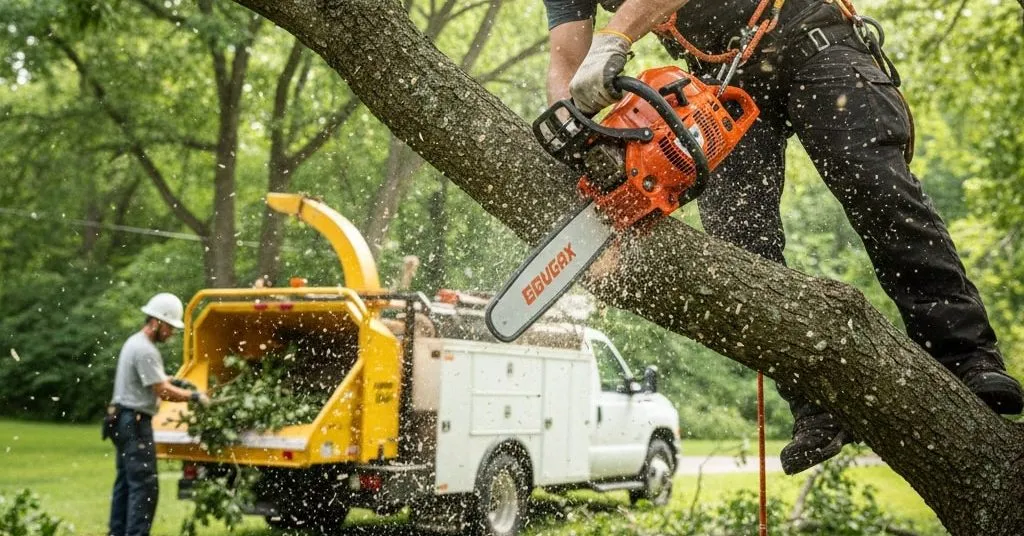
- Complete Removal: If the root plate is heaving or the trunk is hollow, removal is the only safe option.
Conclusion
A leaning tree is a message from the landscape. It tells you that the balance between the earth, the wind, and the wood has shifted. In the Outer Banks, where the weather can turn from calm to hurricane-force in a matter of hours, listening to that message is the difference between a safe home and a catastrophic loss.