December 24, 2025
Mature trees are valuable assets that add beauty, privacy, and shade to your property. Yet even the strongest trees can develop structural problems over time. Weak branches, poor trunk attachments, or unbalanced growth can make them unstable during heavy winds or storms. Installing structural support can strengthen weak points, prevent dangerous limb failures, and protect your investment.
This guide explains what structural support is, the warning signs your trees may need it, and how professionals at Albemarle Landscapes and Tree Service evaluate and reinforce trees safely and effectively.
What Structural Support Means for Trees
Structural support refers to systems that help trees remain stable and reduce the chance of limb or trunk failure. These systems include:
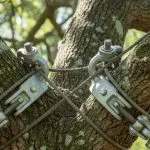
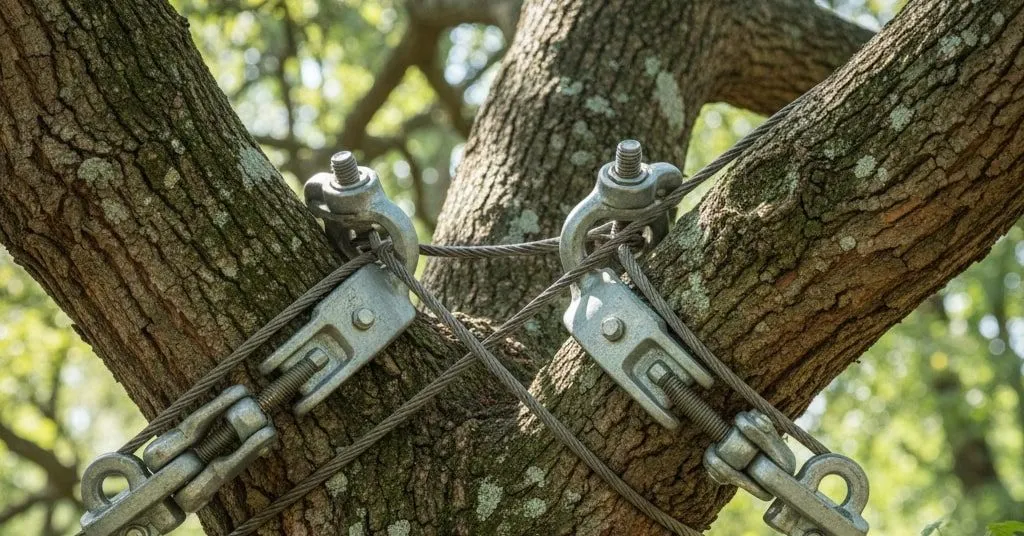
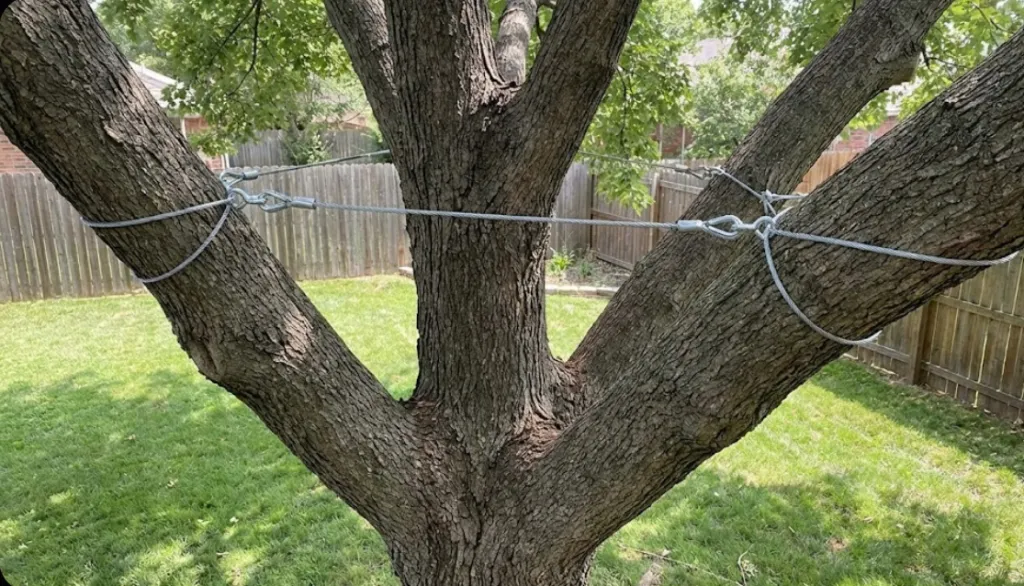
- Cabling: Steel cables attached between upper branches to reduce movement and share weight.
- Bracing: Threaded rods placed through weak trunk unions or cracks to strengthen the tree internally.
- Staking or Guying: Temporary external supports for newly planted or recently transplanted trees until their roots are established.
The goal is not to restrict natural movement but to limit extreme motion and mechanical stress that could cause splitting or collapse.
When Tree Structural Support Isn’t the Safe Option
Several natural and environmental factors can weaken a tree’s structure:
- Co-Dominant Stems: Two or more trunks of equal size growing from the same junction often split apart under weight or wind pressure.
- Narrow Branch Angles: Sharp V-shaped branch attachments create stress points that fail over time.
- Overextended Limbs: Large horizontal limbs that grow without proper support can sag or break under their own weight.
- Wind and Storm Damage: Repeated wind exposure or lightning strikes can weaken branch attachments.
- Improper Pruning: Cutting too much from one side can cause imbalance or decay.
- Root Problems: Shallow roots, compacted soil, or excavation damage reduce stability.
- Tree Species: Fast-growing varieties such as Bradford pear, silver maple, and red oak often have weaker structures than slow-growing hardwoods.
Understanding why structural weakness develops helps determine the best corrective action before serious damage occurs.
Signs Your Tree May Need Structural Support
Early detection prevents costly damage and potential hazards. These signs suggest your tree could benefit from support:
1. Cracked or Splitting Branch Unions
If you notice open seams where large branches meet the trunk, internal fibers may already be tearing. Without reinforcement, these splits can spread until the branch fails completely.
2. Multiple Trunks Pressing Together
When two trunks grow closely together, bark becomes trapped between them. This prevents proper bonding and creates a weak union prone to separation. Cabling between the trunks can balance their movement and prevent breakage.
3. Heavy Limbs Extending Over Structures
Large limbs hanging above roofs, driveways, or walkways create liability if they fail. Cables can redistribute the stress so that the limb remains secure during storms.
4. Sudden Lean or Shifting Roots
Leaning trees with exposed or lifted roots signal instability. Structural support may stabilize them temporarily, but professional evaluation is essential to determine long-term safety.
5. Excessive Movement in Moderate Wind
If a mature tree sways noticeably in normal wind, it may have an internal weakness or poor root anchorage. Support systems can reduce this motion and minimize risk.
6. Visible Decay or Hollow Areas
Cavities or soft wood reduce structural integrity. Bracing combined with selective pruning may be needed to maintain stability while preserving the tree.
7. Storm or Construction Damage
Trees affected by storms, nearby excavation, or root disturbance often develop structural imbalances. Adding cables or braces can help them recover and regain stability.
How Cabling and Bracing Strengthen Trees
Cabling
Cabling uses high-strength steel lines to connect branches or trunks in the upper canopy. Properly installed cables reduce the strain on weak unions and limit how far branches can move in high winds.
Key benefits of cabling include:
- Preventing large limb failure
- Protecting nearby structures from falling debris
- Extending the lifespan of valuable shade trees
- Supporting multiple trunks that could otherwise separate
Bracing
Bracing involves inserting threaded steel rods through the trunk or large limbs to strengthen internal support. This technique is ideal for trees with visible cracks or split crotches that need internal reinforcement.
Bracing often complements cabling when a tree requires both internal and external stability.
Staking and Guying for Young Trees
Newly planted or recently transplanted trees sometimes need temporary external support while roots establish. However, incorrect staking can harm trees instead of helping them.
Proper staking practices:
- Use flexible, wide ties that allow limited movement.
- Position stakes outside the root ball zone.
- Remove stakes after one growing season once the tree stands upright without assistance.
Over-staking or leaving supports too long can cause weak trunks, bark damage, or restricted growth.
When to Inspect Your Trees
Routine inspection ensures early detection of structural issues before they cause damage. Schedule evaluations:
- Each spring, before active growth
- After major storms or hurricanes
- When new cracks or leaning appear
- Following nearby construction or soil disturbance
Qualified arborists from Albemarle Landscapes and Tree Service use visual inspection, resistance testing, and aerial assessment to determine tree strength and risk.
Benefits of Structural Support
Installing tree supports offers multiple long-term benefits:
- Improved Safety: Reduces the risk of falling limbs that could injure people or damage property.
- Extended Lifespan: Preserves mature trees that might otherwise need removal.
- Cost Efficiency: Prevents expensive emergency removals or structural repairs after storms.
- Enhanced Appearance: Maintains natural shape and balance while reducing heavy limb sag.
- Increased Property Value: Healthy, stable trees enhance curb appeal and real estate value.
When Structural Support May Not Be Enough
Support systems cannot save every tree. If decay extends through more than half the trunk or if root systems are severely compromised, reinforcement will not guarantee safety.
Arborists may recommend removal if:
- The tree leans dangerously toward a structure
- Cracks extend deeply through the trunk
- Cavities or rot weaken major load-bearing limbs
- The tree shows signs of irreversible decline
Professional evaluation ensures that safety always comes first.
Seasonal Timing for Support Installation
Timing affects how well support systems work.
- Winter: Ideal for cabling or bracing since branches are leaf-free and easier to access.
- Early Spring: Good for inspecting and adjusting older support systems before new growth.
- Summer: Allows follow-up inspections after storms or heavy winds.
- Fall: Best for assessing mature trees before winter storms arrive.
Regular inspections help ensure cables remain properly tensioned and free from corrosion.
Why Tree Support Should Always Be Installed by a Qualified Arborist
Tree cabling and bracing require precision. Improper placement or incorrect tension can cause more harm than good. Qualified arborists have the tools, training, and knowledge to install systems safely without damaging the tree.
A professional arborist will:
- Evaluate the tree’s structure and condition
- Select appropriate hardware and placement points
- Install systems according to industry standards
- Monitor and adjust supports as the tree grows
DIY installations often fail because they use the wrong materials or placement, leading to bark wounds or premature failure.
Tree Cabling and Bracing Services by Albemarle Landscapes & Tree Service
Albemarle Landscapes and Tree Service provides comprehensive tree support and maintenance solutions. Our qualified arborists assess structural stability, recommend suitable systems, and perform expert installation using high-quality materials.
Our services include:
- Complete tree structure evaluations
- Custom cabling and bracing design
- Corrective pruning for weight balance
- Root zone care and soil improvement
- Scheduled monitoring for long-term support systems
We combine safety and science to protect both your property and the natural beauty of your landscape.
Proactive Tree Care Tips to Prevent Structural Problems
- Inspect trees after every major weather event.
- Prune regularly to remove weak or dead branches.
- Avoid topping trees, which weakens the structure.
- Water and fertilize properly to promote strong root systems.
- Keep heavy equipment away from root zones.
- Schedule annual arborist evaluations for large or old trees.
Proactive maintenance reduces the likelihood that structural support will become necessary later.
Frequently Asked Questions About Tree Structural Support
How can I tell if my tree needs structural support?
Look for cracks in major branches, leaning trunks, or branches that move excessively in moderate wind. Other warning signs include decay, co-dominant stems, and limbs growing over roofs or driveways. If any of these appear, contact a qualified arborist for an evaluation.
What types of supports are best for trees?
The three main systems are cabling, bracing, and staking. Cabling connects upper limbs to reduce movement, bracing reinforces weak unions with steel rods, and staking stabilizes young trees until roots anchor them. The right method depends on the tree’s age, species, and structural condition.
Can I install cabling or bracing myself?
No. Installing tree supports without proper training can injure the tree or create unsafe tension points. Qualified arborists have the equipment and expertise to install hardware safely, ensuring the tree remains stable without damage.
How long do tree support systems last?
Well-installed cabling or bracing can last for many years, but regular inspections are essential. Trees grow and shift, which changes the stress on the hardware. Annual checkups ensure tension remains correct and materials are corrosion-free.
What happens if I ignore a tree that needs support?
A structurally weak tree may fail unexpectedly, causing property damage or injury. Early intervention with cabling, bracing, or pruning prevents breakage and helps preserve valuable trees. Albemarle Landscapes and Tree Service can assess risk and recommend the safest, most effective solution for your landscape.